A great prize and compliant rules mean nothing if no one enters. The biggest differentiator between a sweepstakes that generates 500 entries and one that generates 50,000 isn't the prize value — it's the promotion strategy.
This guide covers every distribution channel and tactic available for promoting sweepstakes, with specific playbooks for paid and organic channels, timing strategies, and the promotion calendar that maximizes entry volume while controlling costs.
The Promotion Math: Why Distribution Matters More Than Prize
A $500 gift card sweepstakes with strong promotion will outperform a $5,000 prize with weak distribution every time. The funnel is simple: impressions → landing page visits → entries. Each stage has a conversion rate, and your promotion strategy determines the volume at the top of the funnel.
Typical conversion rates for sweepstakes entry pages:
| Traffic Source | Landing Page → Entry Rate | Notes |
|---|---|---|
| Email list | 25-40% | Warmest audience — already opted in |
| Social media (organic) | 10-20% | Lower intent but high volume potential |
| Social media (paid) | 8-15% | Scalable with budget, targetable |
| Influencer referral | 12-25% | Trust transfer drives higher conversion |
| Website banner/popup | 5-12% | Existing visitors, moderate intent |
| Search (organic) | 15-30% | High intent — actively looking for giveaways |
| Search (paid) | 10-20% | Targetable, but expensive for sweepstakes keywords |
| Partner/cross-promotion | 15-25% | Warm intro from trusted brand |
Channel 1: Email Marketing
Your email list is the single most valuable promotion channel. These are people who've already given you permission to contact them — they're pre-qualified.
Email Promotion Strategy
Sweepstakes Email Sequence
Announcement email (Day 1)
Announce the sweepstakes with a clear subject line, hero image of the prize, one-click entry link, and deadline urgency. This drives 40-60% of total email entries.
Reminder email (Mid-promotion)
Remind subscribers who didn't open or enter. Different subject line, add social proof ('5,000 people have already entered'). Drives 20-30% of remaining entries.
Last chance email (Final 48 hours)
Urgency-driven: 'Last chance to enter — drawing in 48 hours.' This drives a second spike in entries, often 15-25% of total.
Winner announcement (Post-drawing)
Announce the winner to your full list. Builds credibility for future promotions. Include a CTA for your next offer or promotion.
Segment your list for higher conversion
Don't blast the same email to your entire list. Segment by engagement level, past promotion participation, and purchase history. High-engagement subscribers get the richest creative. Lapsed subscribers get a 're-engagement via sweepstakes' angle. Past participants get 'you entered last time — back again with a bigger prize.'
Channel 2: Social Media (Organic)
Social media is where sweepstakes get their viral coefficient. Every entry, share, and comment is a potential impression for new participants.
Platform-Specific Tactics
- Instagram: Feed post with clear CTA, Stories with swipe-up link, Reels for reach. Pin the giveaway post. Update your bio link. Use carousel posts to showcase the prize from multiple angles.
- TikTok: Short-form video announcing the giveaway. Show the prize, explain how to enter, create urgency. Use trending sounds. Consider a branded hashtag challenge alongside the sweepstakes.
- Facebook: Page post with entry link (never "share to your timeline" — it's against Facebook rules). Facebook Groups for community-based promotions. Consider Facebook Events for time-limited sweepstakes.
- X (Twitter): Thread format works well for explaining prizes and rules. Quote-repost mechanic for organic reach. Pin the sweepstakes tweet.
- LinkedIn: Best for B2B sweepstakes or professional audience prizes (conference tickets, software subscriptions, business tools).
For platform-specific legal requirements, see our social media contest guide.
Channel 3: Paid Advertising
Paid ads give you control over reach, targeting, and timing. They're the most predictable way to scale entry volume.
| Platform | Best For | Typical CPE | Targeting Strength |
|---|---|---|---|
| Meta (Facebook/Instagram) | B2C sweepstakes, broad reach | $0.50-$2.00 | Excellent — interest + behavior |
| TikTok Ads | Younger demographics, viral potential | $0.30-$1.50 | Good — interest + engagement |
| Google Ads (Search) | High-intent sweepstakes seekers | $1.00-$4.00 | Excellent — keyword intent |
| Google Ads (Display) | Brand awareness, retargeting | $0.20-$1.00 | Moderate — contextual + audience |
| YouTube | Prize showcase, brand storytelling | $0.05-$0.30 (CPV) | Good — interest + demographic |
| Niche communities, authentic engagement | $0.50-$2.00 | Good for niche targeting |
CPE = Cost Per Entry. These ranges vary significantly by industry, prize value, targeting, and creative quality.
FTC disclosure applies to paid promotion
If you're running paid ads for a sweepstakes, all ads must include the 'No Purchase Necessary' disclosure and a link or reference to official rules. This applies to paid social posts, display ads, and sponsored content. Additionally, if influencers promote your sweepstakes, they must disclose the paid relationship per FTC endorsement guidelines.
Channel 4: Influencer Partnerships
Influencers bring built-in audiences and trust. A well-matched influencer partnership can generate more high-quality entries than any paid ad campaign.
Influencer Partnership Structure
- Micro-influencers (10K-100K followers): Higher engagement rates, lower cost, more authentic. Best for niche products and targeted campaigns.
- Mid-tier (100K-500K): Balance of reach and engagement. Ideal for most brand sweepstakes.
- Macro/celebrity (500K+): Maximum reach, lower engagement rate, highest cost. Best for brand awareness campaigns with large budgets.
Key requirements for influencer-promoted sweepstakes:
- Influencer must disclose the paid partnership (#ad, #sponsored, platform-native branded content tools)
- Post must include or link to official rules
- "No purchase necessary" must be visible
- Influencer cannot make claims about winning that aren't in the rules
Channel 5: On-Site and In-App Promotion
Your website and app are owned channels with built-in traffic. Use them.
- Homepage banner: Prominent banner or hero section announcing the sweepstakes. Highest visibility, drives consistent entries throughout the promotion.
- Exit-intent popup: Triggered when a visitor is about to leave. Convert bouncing visitors into entrants.
- Sticky bar: Persistent notification bar at the top or bottom of every page. Non-intrusive but always visible.
- In-app notification: Push notification or in-app banner for mobile app users.
- Post-purchase page: For purchase sweepstakes — show the entry form immediately after checkout.
- Blog content: Write content around the sweepstakes theme, embed entry forms or prominent CTAs within articles.
 Revup
Revup
Revup provides embeddable entry forms, landing pages, and widget integrations for promoting sweepstakes across your website and app.
Channel 6: PR and Media
For high-value sweepstakes ($10,000+ in prizes), earned media can drive significant entry volume at zero media cost.
- Press release: Distribute through a wire service. Focus on the prize value, the brand story, and the consumer benefit — not the mechanics.
- Sweepstakes directories: Submit to sites that aggregate giveaways and sweepstakes. These drive high volumes of entries from sweepstakes enthusiasts.
- Blogger outreach: Pitch to bloggers in your niche who cover deals, giveaways, or product reviews.
- Local media: Local TV and newspaper coverage for regional promotions or locally-tied brands.
Channel 7: Cross-Promotion and Partnerships
Partner with complementary brands to expand reach beyond your own audience.
- Co-branded sweepstakes: Two brands contribute prizes, both promote to their audiences. Doubles reach at half the cost.
- Newsletter swaps: Feature each other's sweepstakes in email newsletters.
- Retail partnerships: In-store displays, register inserts, and receipt messages for purchase-linked promotions.
- Event integrations: Booth activations, event sponsorship tie-ins, and conference giveaways.
The Promotion Calendar
Optimal Promotion Timeline
Pre-launch (1-2 weeks before)
Tease on social media, warm up email list, brief influencers, set up paid ad campaigns. Build anticipation without giving away all details.
Launch day (Day 1)
Full push across all channels simultaneously. Email blast, social posts, ad campaigns live, influencer posts go live, website banners activated. Aim for 30-40% of total entries in the first 48 hours.
Sustain phase (Week 1-3)
Ongoing social posts, paid ads optimized based on performance data, influencer reminder posts, email reminders to non-openers. Maintain steady entry flow.
Final push (Last 3-5 days)
Urgency messaging across all channels. 'Last chance' emails, countdown timers on landing page, increased ad spend. Drives a second entry spike.
Post-promotion (After drawing)
Winner announcement, thank-you messages, redirect traffic to next offer. Analyze performance data for next campaign.
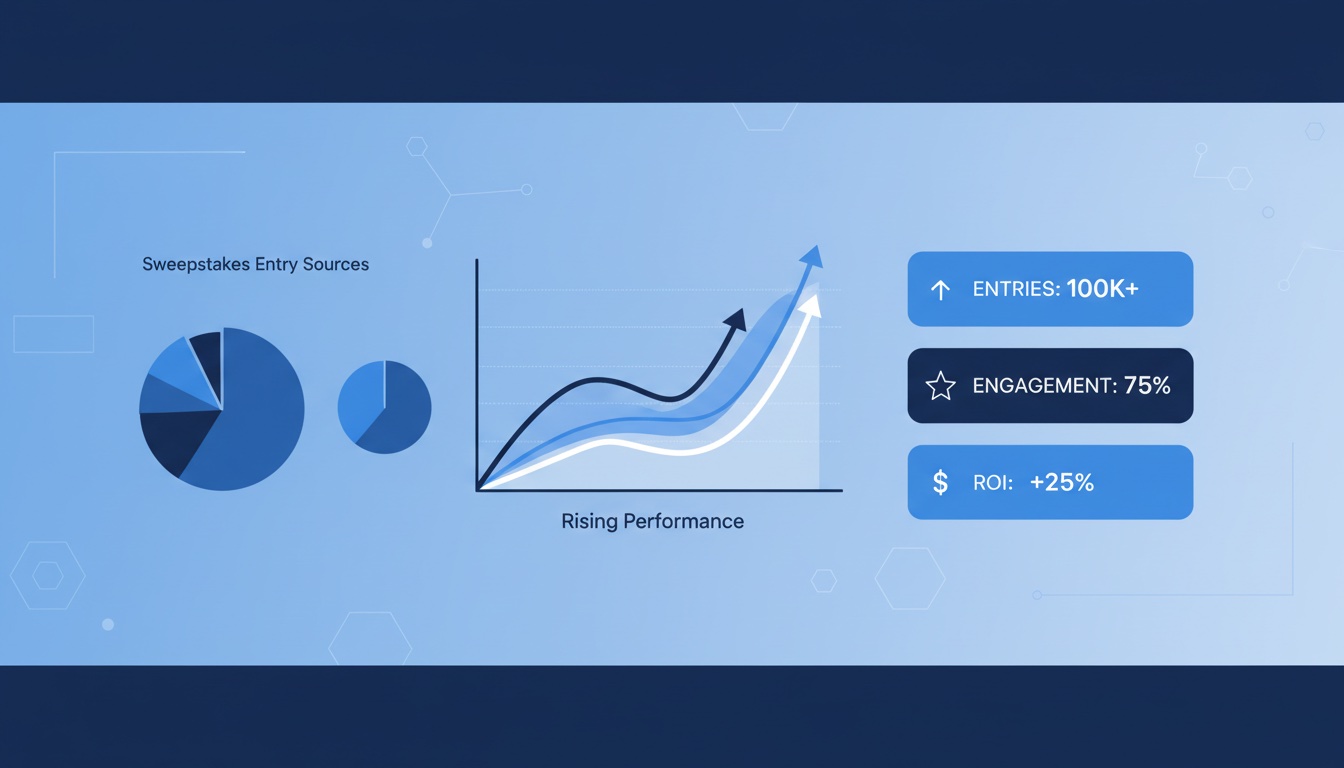
Measuring Promotion Effectiveness
Track these metrics for each channel to optimize your promotion mix:
Promotion Channel Metrics to Track
- Impressions per channel (total reach)
- Click-through rate to entry page
- Entry conversion rate (visitors → entries)
- Cost per entry (CPE) for paid channels
- Social shares and referral entries
- Email open rate and click rate by segment
- Influencer attribution (entries from each partner)
- Daily entry velocity (are you on pace?)
- AMOE vs. primary entry ratio
For a complete measurement framework including ROI calculation, see how to measure sweepstakes ROI.
Frequently Asked Questions
How much should I spend on promoting a sweepstakes?
A common benchmark: allocate 1-3x the prize value for promotion. A $5,000 prize sweepstakes might have a $5,000-$15,000 promotion budget. The exact ratio depends on your goals — if the sweepstakes is primarily for email acquisition, calculate the allowable cost per email and work backward.
Should I promote on every channel?
No. Focus on 2-3 channels where your target audience is most active. Spreading a modest budget across 7 channels dilutes impact. A concentrated push on Instagram + email will outperform a thin presence everywhere.
When is the best time to run a sweepstakes?
Engagement is generally higher during Q1 (New Year motivation) and Q4 (holiday season). Avoid launching during major holidays when inboxes are crowded. Tuesdays through Thursdays see the highest entry rates. Run for 2-4 weeks — shorter promotions create urgency, but you need enough time for word-of-mouth to build.
How do I get entries from outside my existing audience?
Three approaches: paid advertising (most scalable), influencer partnerships (most trusted), and sweepstakes directory submissions (most volume from sweepstakes enthusiasts). Cross-promotions with complementary brands are also highly effective for reaching new audiences.
For the complete playbook, see our How to Run a Sweepstakes guide or dive into prize selection strategy to make your promotion irresistible.