
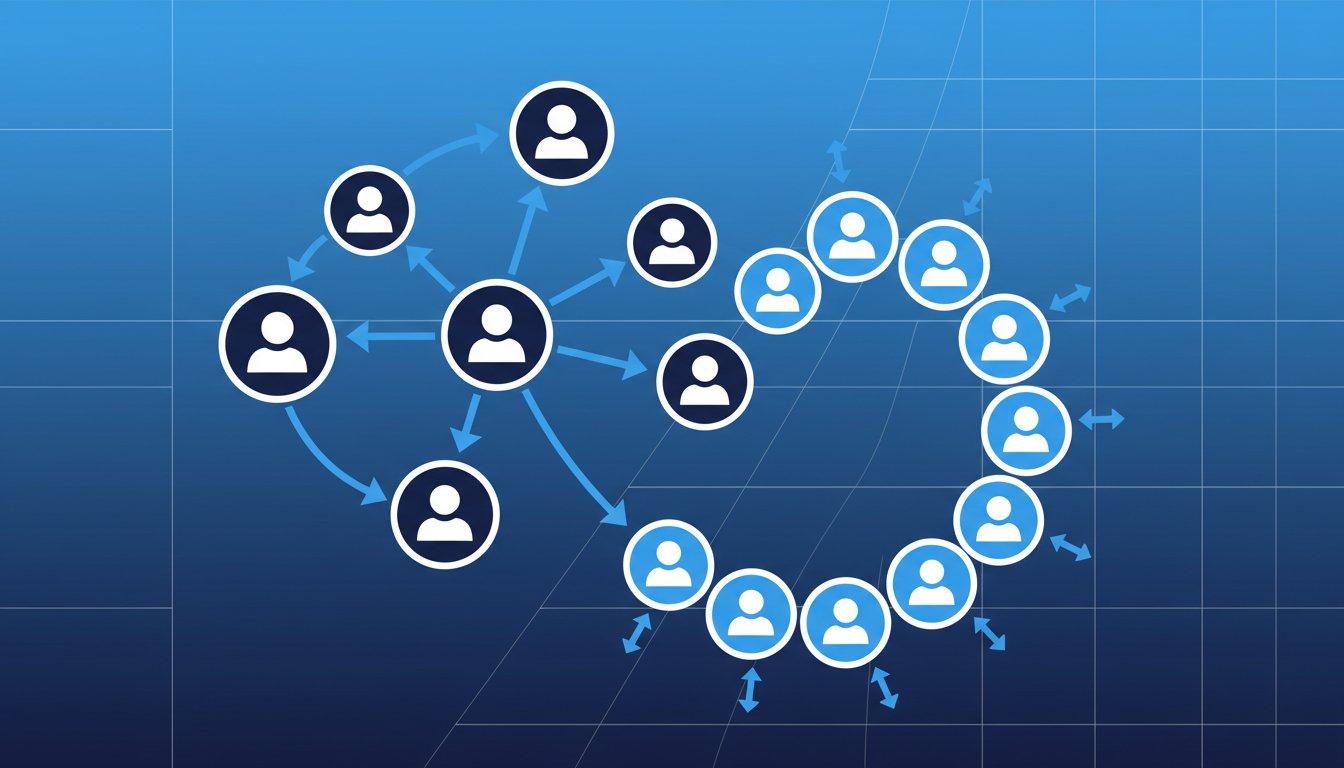
A referral sweepstakes turns every participant into a promoter. Instead of relying solely on your own channels to drive entries, you give participants a personal incentive to recruit their friends — creating a viral loop where each new entrant brings more entrants. Done well, referral mechanics can reduce your cost per email to near zero because your audience does the distribution work for you.
This guide covers referral sweepstakes structures, incentive designs, and tracking systems that create sustainable viral growth.
How Referral Sweepstakes Work
The core mechanic: each participant receives a unique referral link. When someone enters the sweepstakes through that link, the referrer earns bonus entries. The more friends they refer, the better their odds of winning.
Referral Sweepstakes Flow
Participant enters the sweepstakes
Standard entry via email form. Upon entry, they receive a unique referral link and a shareable message.
Participant shares their referral link
Via email, social media, text, or any channel. The referral link tracks who referred whom.
Friend clicks the link and enters
The friend enters the sweepstakes through the referral link. Their entry is attributed to the referrer.
Referrer earns bonus entries
For each successful referral (friend who actually enters), the referrer receives additional entries into the drawing.
Cycle repeats
The new entrant also receives their own referral link, creating a chain reaction. Each generation recruits the next.
The viral coefficient
If each entrant refers an average of 1.1 or more new entrants, your campaign grows exponentially without additional spend. Track your viral coefficient (referrals per entrant) in real time and optimize sharing mechanics if it drops below 1.0. Even a coefficient of 0.5 means 50% of your growth is free.
Referral Incentive Structures
The incentive determines sharing behavior. Too small and nobody shares. Too large and you attract spammers. The right structure rewards genuine referrals while discouraging gaming.
| Structure | How it works | Pros | Cons |
|---|---|---|---|
| Bonus entries | Each referral = X extra entries | Simple, scalable, low cost | Only attractive if grand prize is compelling |
| Tiered rewards | 1 referral = 2 entries, 5 = 10, 10 = 25 | Rewards power referrers, creates milestones | More complex to communicate |
| Double-sided | Referrer + friend both get bonus entries | Friend has incentive to use the link (not just enter directly) | Higher total entries dilutes individual odds |
| Milestone prizes | At 5 referrals, unlock a guaranteed small prize | Concrete motivation beyond lottery odds | Fixed cost per milestone achiever |
| Leaderboard | Top referrer wins a separate prize | Gamification drives competitive behavior | Can attract aggressive tactics and gaming |
Referral entries and equal odds
Bonus entries for referrals are legally permissible because the referring action itself is free — it's not consideration. However, your official rules must disclose how referral entries work, the maximum bonus entries per person, and that all entry methods (including direct entry without referrals) are available. The AMOE must provide a path to enter without referring anyone.
Sharing Mechanics That Drive Referrals
The referral link alone isn't enough. You need to make sharing frictionless and give participants ready-made messages they can personalize.
Sharing Experience Checklist
- Unique referral link displayed prominently after entry (not buried in a confirmation email)
- One-click share buttons for email, SMS, WhatsApp, Facebook, X, and copy-to-clipboard
- Pre-written share messages that the participant can edit before sending
- Real-time referral counter showing how many friends have entered through their link
- Progress bar toward milestone rewards (if using tiered/milestone structure)
- Mobile-optimized sharing — 70%+ of referral shares happen on mobile
- Reminder email 48 hours after entry: "You have X referrals — share again to improve your odds"
 Revup
Revup
Revup's referral engine handles unique links, real-time tracking, bonus entries, and anti-fraud protection — all built into your sweepstakes.
Anti-Gaming Measures
Referral sweepstakes attract gaming — fake email signups, self-referrals, and bot submissions. Without safeguards, your email list fills with junk and your sweepstakes loses credibility.
| Threat | How it happens | Prevention |
|---|---|---|
| Fake email referrals | Referrer creates dummy emails to earn entries | Email verification required before referral credits |
| Self-referrals | Referrer enters through their own link | Block same IP/device/email matches |
| Bot submissions | Automated entries through referral links | CAPTCHA or honeypot fields on entry form |
| Purchased referrals | Referrer pays strangers to use their link | Monitor for unusual referral velocity, cap entries per day |
| Social spam | Mass posting referral links in unrelated groups | Report mechanism, terms of service violation clause |
Cap maximum bonus entries
Set a maximum number of referral bonus entries per person (e.g., 50 or 100). This prevents a single power referrer from dominating the odds and discourages gaming. State the cap clearly in your official rules. Uncapped referral entries create both fairness concerns and abuse vectors.
Referral Sweepstakes for Different Goals
| Goal | Best referral structure | Prize strategy |
|---|---|---|
| Email list growth | Double-sided bonus entries (referrer + friend) | Grand prize draws entries; milestone prizes maintain sharing |
| Product launch | Pre-launch waitlist with referral leaderboard | Early access for top referrers; product prize for grand draw |
| App downloads | Referral entries credited only when friend installs app | In-app rewards for referrers; grand prize for all entrants |
| Event attendance | Refer friends to register; bonus for each attendee | VIP upgrade for top referrers; experience prize for draw |
| Brand awareness | Social sharing-focused (reshare = referral credit) | Content visibility is the reward; grand prize for engagement |
Measuring Referral Campaign Performance
Track these metrics to understand whether your referral mechanics are working:
| Metric | What it tells you | Benchmark |
|---|---|---|
| Viral coefficient | Avg referrals per entrant — above 1.0 = exponential growth | 0.3–0.5 is good; 1.0+ is exceptional |
| Referral conversion rate | % of referred visitors who actually enter | 20–40% for well-targeted referrals |
| Share rate | % of entrants who share their referral link at least once | 30–50% — if lower, improve sharing UX |
| Cost per email | Total campaign cost ÷ total valid entries | Should decrease as viral loop kicks in |
| Referral quality | % of referred emails that open your first marketing email | Comparable to organic signups = good quality |
| Top referrer concentration | % of total referrals from top 10% of referrers | If too concentrated, broaden incentives |
Revup
Track every referral in real time with Revup — unique links, conversion attribution, fraud detection, and automated bonus entries.
Frequently Asked Questions
Are referral sweepstakes legal?
Yes. Referral entries are a bonus for a free action (sharing a link), not consideration. Your official rules must disclose the referral mechanic, bonus entry amounts, entry caps, and include a standard AMOE for people who enter directly. The referral itself is not a purchase — it's earned media.
How many bonus entries per referral is right?
1–3 bonus entries per successful referral is standard. Too few (less than 1) doesn't motivate sharing. Too many (10+) makes direct entrants feel their odds are hopeless. If you use milestone tiers, increase the value at each milestone (1 entry at referral 1, 3 entries at referral 5, 5 entries at referral 10).
How do I prevent people from gaming the referral system?
Three layers: (1) require email verification before crediting referral entries, (2) block same-IP/same-device self-referrals, and (3) cap total bonus entries per person. Monitor referral velocity — a person generating 50 referrals in an hour is almost certainly gaming the system.
Can I combine referral mechanics with a purchase sweepstakes?
Yes. The referral component is free (sharing a link), so it doesn't affect your AMOE obligations from the purchase component. A customer who buys gets purchase entries; any participant who refers gets referral entries; and anyone can enter for free via the AMOE. Three parallel entry paths, all compliant.
For retention-focused promotions, see Loyalty Program Sweepstakes, or explore the full Seasonal Promotion Calendar for campaign timing ideas.