
Purchase sweepstakes — promotions where buying a product earns entries into a prize drawing — are the bridge between marketing and sales. They drive measurable purchase lift, reward existing customers, and create direct attribution between promotional spend and revenue. CPG brands, retailers, and ecommerce companies use them to boost unit sales during key periods.
But purchase sweepstakes are also the most legally complex promotion format. The entire structure depends on maintaining a legally valid free entry method alongside the purchase-linked entry. Get the AMOE wrong, and your promotion is an illegal lottery.
This guide covers the mechanics, compliance requirements, and best practices for running purchase sweepstakes that drive sales without creating legal exposure.
How Purchase Sweepstakes Work
Purchase Sweepstakes Entry Flow
Customer makes a qualifying purchase
Buy a participating product at a participating retailer during the promotion period. The purchase must match the requirements in your official rules (specific SKUs, minimum spend, specific retailers).
Customer submits proof of purchase
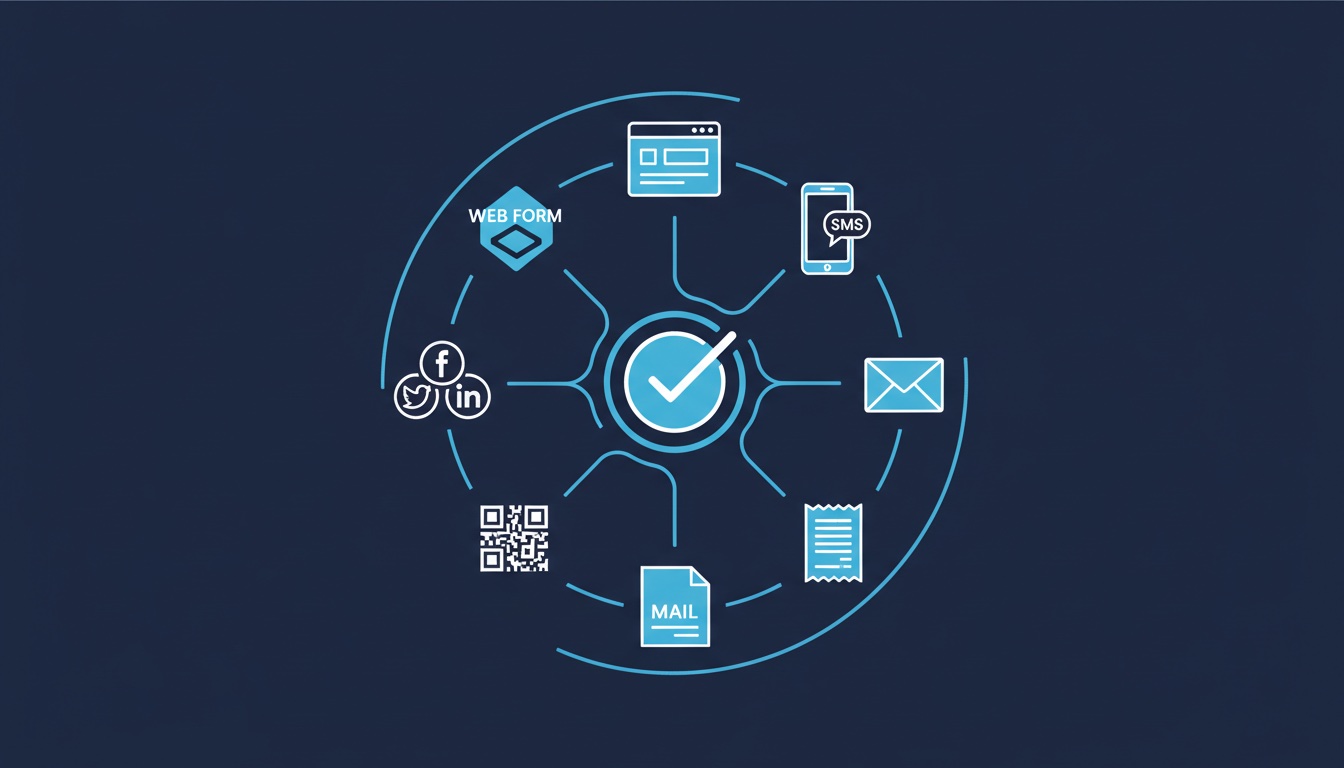
Upload a photo of the receipt, enter a product code, scan a QR code, or submit through a retailer loyalty integration. The system validates the purchase against the rules.
Entry is recorded
Valid purchase submissions earn entries into the sweepstakes drawing. Multiple purchases may earn multiple entries (if your rules allow and your AMOE matches).
AMOE entries run in parallel
Non-purchasers can enter for free via mail-in, web form, or other AMOE. Free entries must have the same odds of winning as purchase entries.
Drawing conducted, winner selected
At the end of the promotion period, a random drawing selects winners from all entries — both purchase and AMOE entries combined in the same pool.
The AMOE is what makes this legal
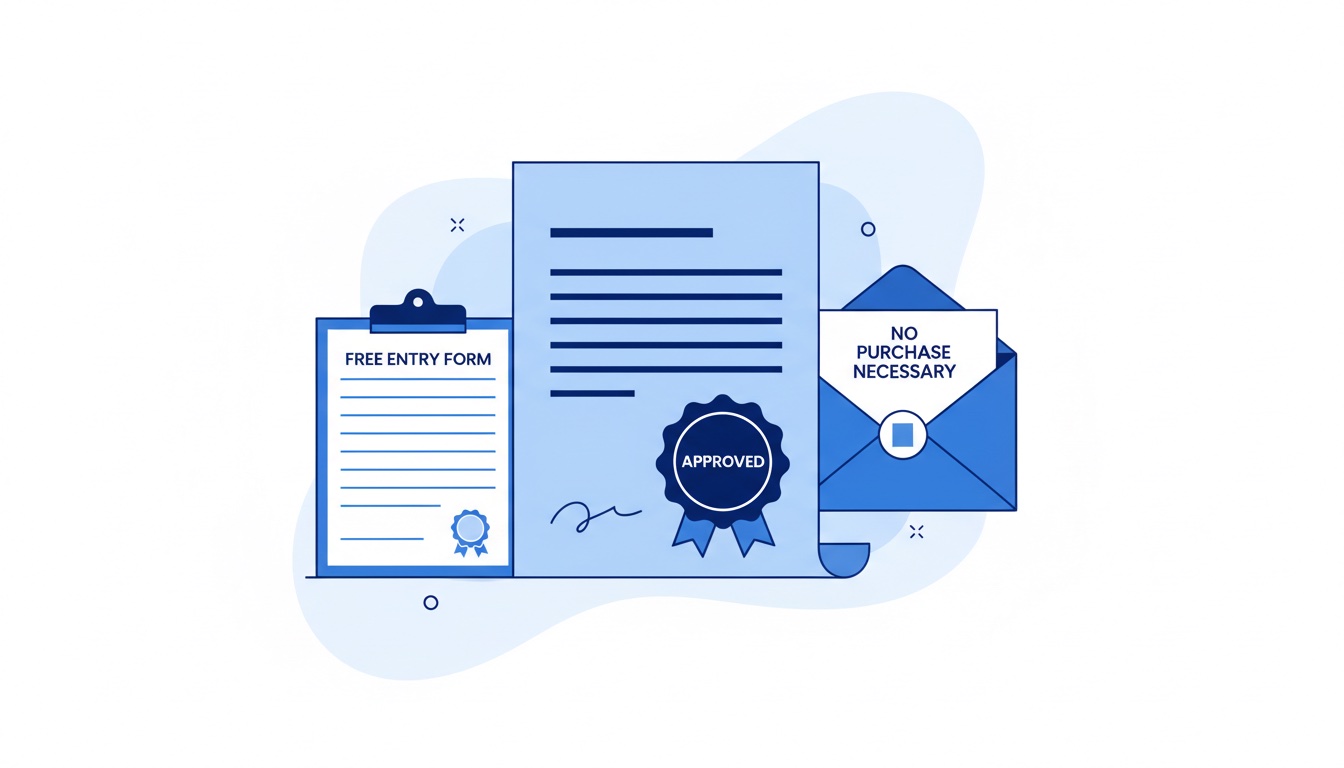
A purchase sweepstakes without a free alternative method of entry is an illegal lottery — prize, chance, and consideration are all present. The AMOE removes consideration for non-purchasers and must provide equal odds of winning. This is not optional and not a technicality. It's the legal foundation of the entire promotion.
Receipt Validation Methods
The quality of your purchase verification directly impacts both campaign integrity and participant experience. There are several approaches:
| Method | Accuracy | User Friction | Cost | Best For |
|---|---|---|---|---|
| Photo receipt upload (OCR) | High — AI reads receipt data | Low — snap a photo | Moderate | CPG, retail, multi-retailer promos |
| Product code entry | Very high — unique codes | Low — enter code from pack | Higher (printing) | Packaged goods, beverages |
| QR code scan | Very high — digital validation | Very low — scan and go | Moderate | In-store displays, packaging |
| Retailer loyalty integration | Very high — POS data | Very low — automatic | High (integration) | Single-retailer partnerships |
| UPC / barcode upload | Moderate — validates product | Low — photo of barcode | Low | Product-specific promos |
Receipt Upload Best Practices
- Accept common formats: JPEG, PNG, PDF. Allow photos taken with phone cameras (not just scans).
- Validate key fields: Retailer name, date (within promotion period), qualifying product line item, total amount (if minimum spend required).
- Handle edge cases: Partial receipts, digital receipts, handwritten receipts (farmers markets, small retailers), and international formats.
- Fraud detection: Check for duplicate receipt submissions, image manipulation, and receipt farming patterns.
- Fast processing: Participants expect near-instant validation. Aim for under 60 seconds for automated validation, with a manual review queue for flagged submissions.
 Revup
Revup
Revup's purchase sweepstakes module includes built-in receipt validation with OCR, fraud detection, and automatic entry processing.
AMOE Design for Purchase Sweepstakes
The AMOE for a purchase sweepstakes must be genuinely accessible and provide equal odds. This is where most purchase promotions fail compliance review.
Valid AMOE Options
- Mail-in entry: Handwrite your name, address, and contact information on a 3x5 card and mail to [P.O. Box]. One entry per stamped envelope. This is the most traditional AMOE and universally accepted by regulators.
- Online form: A web form that collects the same information as the purchase entry but requires no purchase, account, or payment. The form must be as easy to find and complete as the purchase entry path.
- Text-to-enter: Text a keyword to a toll-free number. Standard messaging rates are generally not treated as consideration.
The equal-odds trap
If purchasers earn 5 entries per receipt and AMOE entrants get 1 entry per submission, you've created a pay-to-win advantage. Regulators treat this as consideration. Either give AMOE entrants the same number of entries as purchasers, or limit purchase entries to 1 per transaction. The simplest approach: one entry per person per day, regardless of entry method.
AMOE Disclosure Requirements
The AMOE must be disclosed:
- In the official rules (with complete instructions)
- On the entry page (visible without scrolling)
- On all advertising and promotional materials
- On product packaging (if the promotion is advertised on-pack)
Hiding the AMOE in the fine print of your rules while prominently featuring "buy to enter" is treated by regulators as effectively not having an AMOE.
Legal Compliance Specific to Purchase Sweepstakes
Purchase sweepstakes must comply with all standard sweepstakes laws, plus additional requirements that arise from the purchase-entry connection.
Purchase Sweepstakes Compliance Checklist
- AMOE provides genuinely equal odds of winning (no purchase advantage)
- AMOE is prominently disclosed on all materials — not buried in rules
- Qualifying purchases defined clearly (products, retailers, dates, amounts)
- No purchase necessary statement on all touchpoints including packaging
- Receipt/proof of purchase requirements clearly stated
- Entry limits per person per day/per promotion clearly defined
- Purchase entries and AMOE entries pooled in same drawing
- State registration filed if total prize value exceeds thresholds
- Retailer relationships don't create co-sponsorship obligations
- Data collection complies with privacy laws (receipts contain personal info)
Campaign Structure Options
| Structure | How It Works | Best For | Complexity |
|---|---|---|---|
| Single drawing | All entries collected, one drawing at end | Short promotions (1-4 weeks) | Low |
| Weekly drawings | New drawing each week, entries reset | Sustained engagement (1-3 months) | Moderate |
| Instant win + grand prize | Instant win for small prizes, drawing for grand prize | Maximum engagement + purchase lift | High |
| Tiered entries | More purchases = more entries (with matching AMOE) | Heavy purchaser reward | High (AMOE complexity) |
| Collect & win | Collect game pieces from purchases, complete a set to win | Extended engagement, repeat purchase | Very high |
Measuring Purchase Sweepstakes Performance
Purchase sweepstakes have a unique advantage over other promotion types: direct purchase attribution. Key metrics:
- Purchase lift: Unit sales during the promotion vs. baseline period. The primary success metric.
- Cost per incremental unit: Total promotion cost ÷ incremental units sold. Compares favorably to trade spend when well-executed.
- Entry rate: % of purchasers who submit their receipt. Indicates friction in the entry process.
- AMOE ratio: Purchase entries vs. AMOE entries. A healthy ratio is 70-85% purchase / 15-30% AMOE.
- Repeat purchase rate: % of entrants who make additional qualifying purchases during the promotion.
- Email opt-in rate: % of entrants who consent to future marketing. Valuable for post-promotion remarketing.
For a complete measurement framework, see how to measure sweepstakes ROI.
Frequently Asked Questions
Can I give purchasers bonus entries?
Only if your AMOE provides the same bonus entry opportunity. If purchasers can earn up to 5 entries, AMOE entrants must also be able to earn up to 5 entries (e.g., by sending 5 separate mail-in entries). The simplest approach is one entry per person per day regardless of method.
Do I need to validate every receipt?
Yes. Accepting unvalidated receipt submissions undermines campaign integrity and inflates your entry pool with potentially fraudulent entries. Automated OCR handles most validation; flag ambiguous submissions for manual review.
What about digital receipts and email confirmations?
Accept them. Many consumers no longer receive paper receipts, especially for ecommerce purchases. Your system should accept digital receipt screenshots, email order confirmations, and retailer app purchase histories. Define acceptable proof-of-purchase formats in your rules.
Can I restrict to specific retailers?
Yes. Your official rules should specify which retailers qualify. This is common for co-branded promotions or when your product is only available at certain chains. Just ensure the AMOE doesn't require shopping at those retailers.
What if someone submits a fake receipt?
Your rules should include a fraud clause reserving the right to disqualify entries obtained through fraud. OCR systems with fraud detection can flag duplicates, manipulated images, and receipts from outside the promotion period. For high-value promotions, consider manual review of all winning entries.
For the complete legal framework, start with how to run a sweepstakes legally or read the full How to Run a Sweepstakes guide.