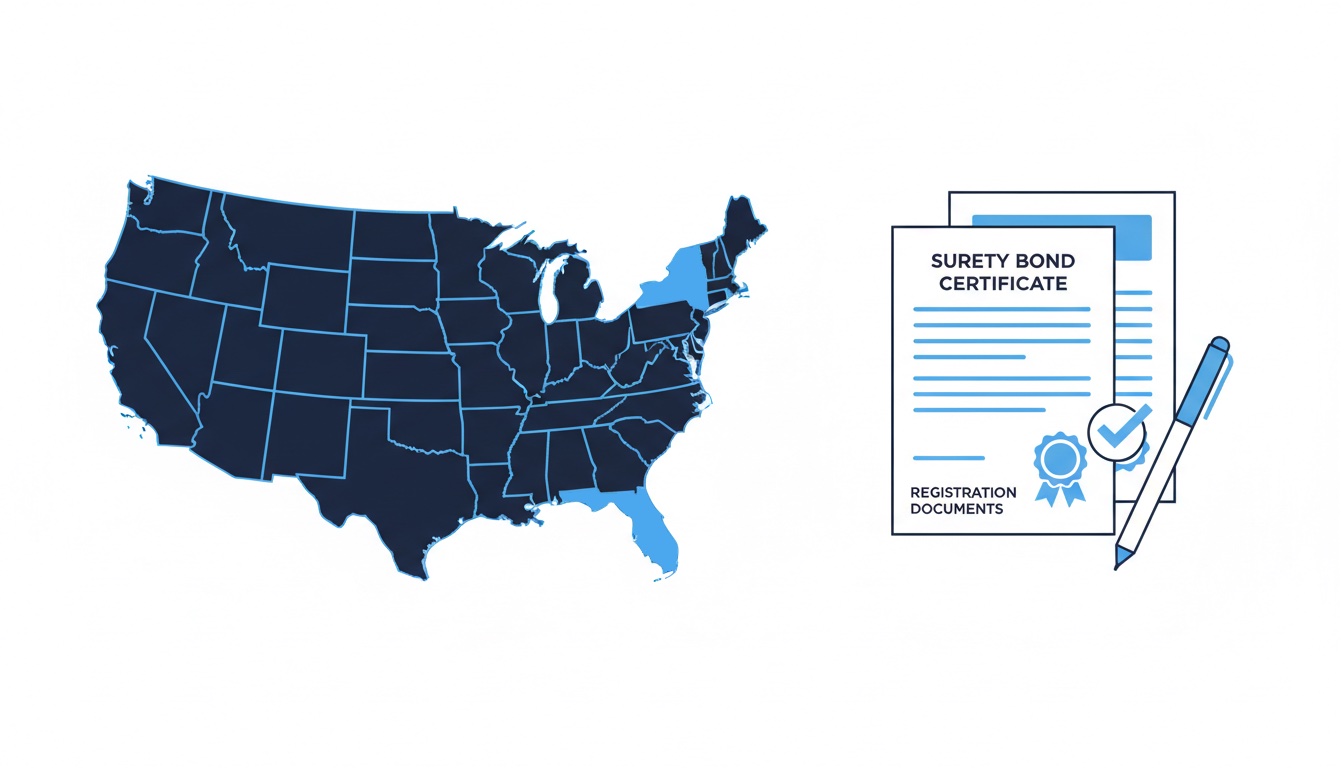

When brands ask about sweepstakes compliance, they often focus on state laws — New York registration, Florida bonding, Rhode Island's low retail-promotion threshold. But federal law, primarily through the Federal Trade Commission (FTC), establishes the baseline requirements that apply to every sweepstakes or prize promotion in the country, regardless of state.
The FTC's authority over sweepstakes comes from Section 5 of the FTC Act, which prohibits unfair or deceptive acts or practices in commerce. Sweepstakes that mislead consumers about their odds of winning, the value of prizes, or the conditions of entry are deceptive. The FTC has used this authority to pursue enforcement actions against mailers, telemarketers, and digital marketers running non-compliant prize promotions — and has extracted multi-million dollar settlements from companies that got it wrong.
This guide covers the federal requirements every brand running a sweepstakes must satisfy: the key statutes, required disclosures, prohibited practices, and how the FTC's enforcement patterns should shape your compliance approach.
The Legal Framework: What Federal Laws Apply?
Several federal statutes govern sweepstakes and prize promotions:
| Statute | What It Covers | Risk for Non-Compliance |
|---|---|---|
| FTC Act § 5 | Prohibits deceptive and unfair practices — the broadest authority | Civil penalties, consent decrees, injunctions |
| Postal Lottery Statute (18 U.S.C. §§ 1301-1307) | Prohibits private lotteries conducted through the mail | Criminal prosecution (federal), civil enforcement |
| Telemarketing Sales Rule (TSR) | Governs sweepstakes promoted via telephone or text | Civil penalties up to $50,000 per violation |
| CAN-SPAM Act | Applies when sweepstakes are promoted via commercial email | Civil penalties up to $51,744 per violation |
| COPPA | Applies when sweepstakes collect data from children under 13 | Civil penalties; enhanced if minors are targeted |
Core FTC Disclosure Requirements
The FTC's primary tool for sweepstakes regulation is the disclosure requirement. Under the FTC Act, material information about a prize promotion must be clearly and conspicuously disclosed. "Material" means information a reasonable consumer would want to know before entering. "Clear and conspicuous" means it must actually be read and understood — not buried in footnotes, rendered in illegible type, or obscured by design choices.
For sweepstakes, the FTC considers these items material:
Required FTC Disclosures
- No purchase necessary to enter or win
- A purchase will not improve your odds of winning
- Odds of winning (or that odds depend on number of entries received)
- Approximate retail value of each prize
- Number of prizes available
- Entry deadline and promotion end date
- Geographic restrictions on eligibility
- How and when winners will be selected and notified
- Any conditions attached to prize acceptance
- Sponsor's complete legal name and address
Clear and conspicuous is not optional language
The FTC interprets 'clear and conspicuous' strictly. A disclosure that a consumer is unlikely to see or read does not satisfy the requirement. This means: disclosures must be in proximity to the claim they modify, in a font size readable without magnification, not in a color that blends into the background, and presented before the consumer acts on the information (enters, purchases, clicks). Disclosures buried at the bottom of a long rules document are generally insufficient for advertising materials.
The Postal Lottery Statute: The Primary Federal Prohibition
The most significant federal law for sweepstakes operators is the Postal Lottery Statute (18 U.S.C. §§ 1301–1307). This law makes it a federal crime to conduct a private lottery through the U.S. mail. Because sweepstakes promotions almost always involve mailing materials — entry forms, winner notifications, advertising, product packaging — this statute directly governs how promotions must be structured.
The three-element test (prize + chance + consideration = lottery) is the operative framework. A sweepstakes that requires purchase without a free entry alternative is a lottery. Conducting that lottery by mail — including promotional advertising sent by mail — is a federal criminal offense, not just a civil compliance issue.
Mail includes email marketing
While the Postal Lottery Statute technically refers to the U.S. Postal Service, the FTC and DOJ have applied lottery prohibitions broadly to digital communications. Running an illegal lottery and promoting it via email is at minimum an FTC Act violation, and potentially a wire fraud issue. The channel doesn't provide legal cover if the underlying promotion structure is a lottery.
FTC Enforcement: Prize Promotion and Sweepstakes Actions
The FTC has a long history of pursuing deceptive prize promotions. Key enforcement themes include:
Deceptive Mailers
The FTC's most aggressive sweepstakes enforcement has been against direct mail promotions that create false impressions — implying a consumer has won a prize when they've merely been selected as an entrant, using language like "You have been selected" without disclosing the prize is conditional on a purchase. The FTC has won hundreds of millions of dollars in settlements against mailers using these tactics. For how to protect your own promotions from fraud and abuse, see our guide to sweepstakes fraud prevention.
Deceptive Odds Disclosures
Promotions that imply better odds than actually exist violate § 5. Saying "You could win a car!" without disclosing that one car is available among 10 million entrants is deceptive by omission. The FTC requires that odds disclosures be honest and specific enough to give consumers an accurate picture.
Prize Conditions Hidden in Fine Print
If a prize comes with significant conditions — a vacation prize that requires a timeshare presentation, a gift card that can only be used under specific restrictions — those conditions are material to consumers' decisions. Hiding them in unreadable footnotes is an unfair and deceptive practice.
Telemarketing and Prize Promotions
The Telemarketing Sales Rule specifically prohibits telemarketers from misrepresenting the prize, misrepresenting the odds, requiring a purchase or payment to claim a prize, or failing to disclose the total cost to claim a prize before the consumer pays. Violations carry civil penalties up to $50,000 per violation — per call.
The FTC's "Four P's" Framework for Sweepstakes
The FTC has informally articulated a framework for evaluating sweepstakes legality that practitioners call the "Four P's":
The FTC's Four P's Framework
Prominence
Required disclosures must be prominently displayed — not buried in footnotes or fine print. The no-purchase-necessary statement, odds information, and prize details must appear where consumers will actually see them, in legible type, before they decide to enter.
Presentation
Disclosures must be presented in a format consumers can understand. Technical legal language that obscures the actual meaning ('consideration' instead of 'purchase') may not be sufficient. The FTC evaluates whether a reasonable consumer would actually understand the disclosure.
Placement
Disclosures must be placed in close proximity to the claims they modify. A no-purchase-necessary statement buried on page 4 of a rules document does not modify the purchase-linked entry presented prominently in the advertising.
Proximity
The timing of disclosures matters. Material information must be disclosed before consumers commit to an action — before they enter, before they purchase, before they share personal information. After-the-fact disclosures don't count.
Social Media and Digital Sweepstakes: FTC Influencer Guidance
The FTC's updated guidelines on endorsements and testimonials apply when influencers or brand ambassadors promote sweepstakes. If an influencer promotes your sweepstakes and has a material connection to your brand (paid partnership, affiliate relationship, free product), that connection must be disclosed — this is especially important on Instagram and TikTok, where influencer-driven sweepstakes are most common. The FTC has specifically stated that sweepstakes entries provided in exchange for social media posts constitute compensation requiring disclosure.
What this means practically:
- Influencers posting about your sweepstakes in exchange for a bonus entry must disclose the relationship (#ad, #sponsored, or equivalent)
- Brand employees promoting a sweepstakes on personal social media must disclose their employment
- User-generated content campaigns that promise sweepstakes entries for shares or reposts are fine — but the sweepstakes must itself be structured legally (no purchase required, odds disclosed, etc.)
 Revup
Revup
Revup builds FTC-compliant disclosure language directly into your sweepstakes entry pages and official rules — including required odds statements, prize values, and no-purchase-necessary disclosures.
Federal vs. State Compliance: How They Interact
Federal requirements set a floor — you must meet them regardless of what state law says. State requirements (like New York and Florida registration) are additional obligations that sit on top of the federal baseline. Complying with federal law does not exempt you from state requirements; complying with state law does not satisfy your federal obligations.
The practical compliance stack:
Sweepstakes Federal Compliance Stack
- Structure promotion as sweepstakes (remove consideration element) — satisfies Postal Lottery Statute
- Provide free alternative method of entry (AMOE) — satisfies no-purchase-necessary requirement
- Include all FTC-required disclosures in advertising and official rules
- Publish official rules before promotion opens — accessible at a permanent URL
- Disclose odds of winning (exact or 'depends on number of entries received')
- List prize ARV for each prize tier
- Issue 1099s for prizes valued at $2,000+ — IRS requirement (separate from FTC)
- Withhold 24% backup withholding for prizes over $5,000 unless winner provides W-9
- Comply with state registration requirements (NY, FL, RI) where applicable
- Comply with platform-specific rules for social media channels used in the promotion
Download: FTC Compliance Checklist for Sweepstakes
A complete checklist of federal disclosure requirements, Postal Lottery Statute compliance steps, and FTC enforcement risk factors — formatted for brand legal and marketing teams.
No spam. Unsubscribe anytime.
Frequently Asked Questions
Does the FTC review individual sweepstakes before they launch?
No. The FTC does not pre-approve or pre-screen sweepstakes. Compliance is the brand's responsibility. The FTC acts reactively — investigating after consumer complaints, responding to referrals from state AGs, or monitoring advertising for obvious violations. The absence of pre-approval means you cannot rely on silence as an endorsement of your promotion structure.
What's the difference between FTC enforcement and state enforcement?
The FTC pursues federal civil enforcement actions — typically seeking injunctions, consumer redress, and disgorgement of ill-gotten gains. State attorneys general enforce state consumer protection laws, which often track FTC standards but may include criminal referrals and state-specific penalties. Both can pursue the same conduct simultaneously, and often do.
Does the FTC regulate contests the same way as sweepstakes?
Yes, to the extent they involve material disclosures about prizes and odds. The prohibition on deceptive acts applies equally to contests. The specific requirements differ (contests don't need an AMOE), but the general disclosure obligations — honest prize representation, disclosed judging criteria, no misleading statements about the value or probability of winning — apply to both.
For a complete view of your compliance obligations, read the Complete Guide to Sweepstakes, Contest & Instant Win Laws, our guide to state registration and bonding requirements, the official rules template that incorporates all required disclosures, and the interactive sweepstakes law map for state-by-state requirements.