
Every brand running a promotion — a giveaway, a photo contest, a scratch-to-win — is operating under one of three legal frameworks: sweepstakes, contest, or lottery. These aren't just marketing terms. They're legal categories with specific definitions, different compliance obligations, and very different consequences for getting it wrong.
A private lottery is illegal in all 50 states. If your promotion accidentally qualifies as one, you're not just out of compliance — you're potentially facing criminal charges, cease-and-desist orders, and FTC enforcement. Yet thousands of brands cross this line every year without realizing it.
This guide breaks down the legal distinctions clearly, explains the three-element test that determines which category your promotion falls into, and helps you choose the right structure from the start.
The Short Answer: What's the Difference?
The legal difference between a sweepstakes, contest, and lottery comes down to three elements: prize, chance, and consideration. Every promotion that offers a prize involves some combination of these three elements. The combination determines what it is — legally.
| Sweepstakes | Contest | Lottery | |
|---|---|---|---|
| Winner selection | Random drawing | Skill-based judging | Random drawing |
| Entry requirement | Free (AMOE required) | Free or paid | Must purchase ticket |
| Legal for brands? | Yes | Yes | No — state monopoly |
| Federal oversight | FTC, postal statutes | FTC | State gaming authorities |
| State registration | NY, FL, RI may require | Generally not required | N/A — illegal privately |
| Prize tax reporting | Required at $2,000+ | Required at $2,000+ | Required (state-run) |
What Is a Sweepstakes?
A sweepstakes is a promotion in which winners are selected by chance — a random drawing, a spin-to-win, a random number generator — and no purchase or payment is required to enter. Sweepstakes are the most common legal promotion format used by brands today, from Fortune 500 loyalty programs to Instagram giveaways.
The defining feature of a sweepstakes is that it has prize and chance, but no consideration. Because participants don't pay to enter, the "lottery" element is broken — and the promotion is legal.
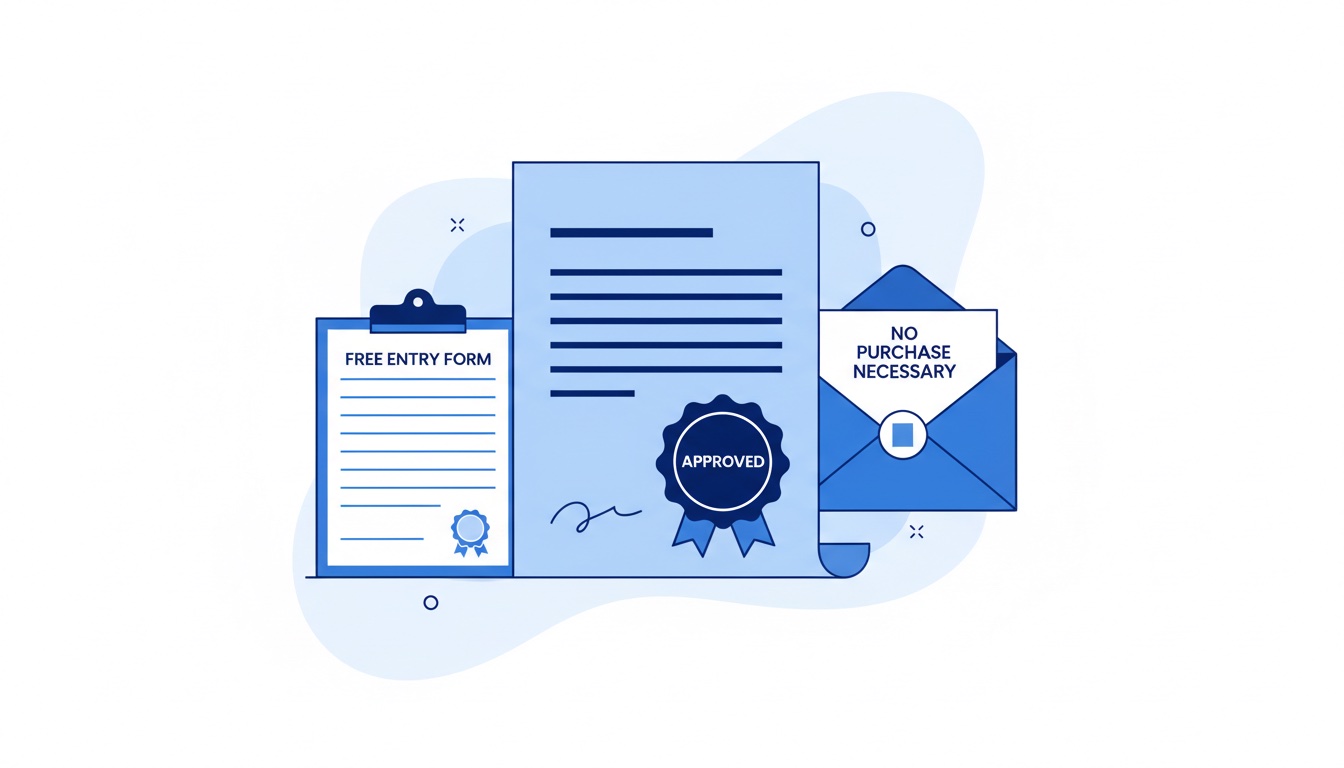
Brands must provide a free alternative method of entry (AMOE) alongside any purchase-linked entry. If someone has to buy a product to enter a sweepstakes, that's consideration — and the promotion becomes an illegal lottery. The AMOE (mail-in entry, web entry with no purchase) removes the consideration element.
The critical rule: No Purchase Necessary
Any sweepstakes that requires a purchase to enter — without an equally accessible free entry method — is an illegal lottery under federal and state law. Always include a free alternative method of entry (AMOE) and state it clearly in your official rules and promotional materials.
Common sweepstakes formats include:
- Random-draw sweepstakes (entry pool drawn at end of promotion)
- Instant-win games (scratch cards, spin-to-win wheels, match-to-win)
- Loyalty point sweepstakes (points earned from purchases, free alternative points available)
- Social media giveaways (follow/like/share to enter, with a free entry option)
- Purchase-receipt sweepstakes (submit receipts, with a mail-in free entry available)
What Is a Contest?
A contest is a promotion in which winners are selected based on skill or merit, not random chance. Because the winner is determined by judging — not a random draw — the "chance" element is absent. This means a contest can lawfully charge an entry fee, require a purchase, or impose other conditions that would disqualify a sweepstakes.
The key legal requirement for contests is that the outcome must be genuinely determined by skill. If a "contest" claims to be judging skill but actually selects winners randomly — or if the judging criteria are so vague that chance effectively governs the outcome — regulators may reclassify it as a sweepstakes or lottery.
Common contest formats include:
- Photo contests (best image wins, judged by panel)
- Essay or writing competitions
- Video submission contests
- Recipe contests
- Design or art competitions
- Trivia with a correct answer (knowledge-based, not random)
Skill contests still need FTC disclosures
Even though contests don't require a free entry method, they're still subject to FTC rules on material disclosures. You must clearly disclose judging criteria, who the judges are, prize details, and any relationship between the brand and judges. Vague judging criteria (like 'most creative') can expose you to challenges.
What Is a Lottery — and Why Can't Brands Run One?
A lottery is a promotion that has all three elements: prize, chance, and consideration. Someone pays for a chance to win a prize. That combination — in the hands of a private party — is illegal in all 50 states and under federal law.
Lotteries are a state monopoly. Only state governments (and a small number of federally authorized tribal operations) are permitted to run lotteries. Federal law specifically prohibits using the mail to conduct private lotteries (18 U.S.C. §§ 1301–1307), and state laws add additional layers of prohibition.
This isn't theoretical — brands have faced prosecution
Private lottery enforcement is real. The FTC has taken action against promotions that required a purchase to enter without a qualifying free entry method. State attorneys general — particularly in New York, Florida, and California — actively pursue illegal lottery operators. 'We didn't know' is not a defense.
The practical trap brands fall into: they run a purchase-linked drawing and forget (or skip) the AMOE. Their promotion offers a prize, selects winners randomly, and requires a purchase. All three elements are present. That's a lottery — not a sweepstakes.
The Three-Element Test
Every promotion legal team and regulator applies the same three-element test to classify a promotion. Understanding it is the foundation of compliance.
The Three-Element Legal Test
Prize
Is there something of value being awarded to a winner? This includes cash, gift cards, products, travel, experiences, discounts, and even free services. If yes, the first element is present.
Chance
Is the winner selected through a random mechanism — a drawing, a random number generator, an instant-win reveal — rather than purely through demonstrated skill or merit? If yes, the second element is present.
Consideration
Does entering require payment, a purchase, or significant effort that has monetary value? If participants must pay money, buy a product, or perform a task with substantial commercial value, consideration is present. If you have all three elements, you have an illegal lottery.
Removing any one of the three elements changes the legal category:
- Prize + Chance − Consideration = Sweepstakes (legal, most common)
- Prize + Consideration − Chance = Contest (legal when judging is genuine)
- Prize + Chance + Consideration = Lottery (illegal for private parties)
What Counts as "Consideration"?
This is where brands most often trip up. "Consideration" in a sweepstakes context doesn't just mean charging money. Courts and regulators have interpreted consideration broadly.
Clear consideration (always disqualifying for a sweepstakes):
- Requiring a purchase to enter
- Paying an entry fee
- Requiring a paid subscription
Borderline consideration (often challenged):
- Requiring lengthy survey completion (if surveys have commercial value)
- Requiring extensive creative submission (video production, significant time)
- Attendance at a paid event as a condition of entry
Generally not consideration (safe for sweepstakes):
- Providing your email address
- Following a brand on social media
- Sharing a post (without requiring purchase)
- Brief survey or quiz completion
- Submitting a receipt (when a free AMOE is also available)
 Revup
Revup
Revup automatically generates compliant official rules for your sweepstakes — including proper AMOE language, eligibility requirements, and required disclosures.
Which Should You Run: Sweepstakes or Contest?
Most brands should default to sweepstakes. They're simpler to administer, easier to automate, and the legal framework is well-established. A sweepstakes with a strong prize drives high entry volume and social sharing without the friction of a skill-based submission.
Choose a sweepstakes when:
- Your goal is maximum reach and entry volume
- You want broad demographic participation (skill barriers reduce participation)
- You're running an email acquisition, loyalty, or brand-awareness campaign
- Your team doesn't have bandwidth to judge submissions
- You want to tie entries to purchases (using AMOE compliance)
For benchmarks on what entry volume and engagement rates to expect, see our sweepstakes marketing ROI benchmarks.
Choose a contest when:
- You want user-generated content (photos, videos, recipes) for marketing use
- Your brand benefits from the association with creativity or expertise
- You want to deepen engagement beyond a single click-to-enter
- You can commit to genuine, documented judging
- The entry fee or purchase requirement is important to your campaign economics
Compliance Applies to Both
Whether you run a sweepstakes or a contest, federal and state law still applies. Key obligations for both:
Universal Compliance Checklist
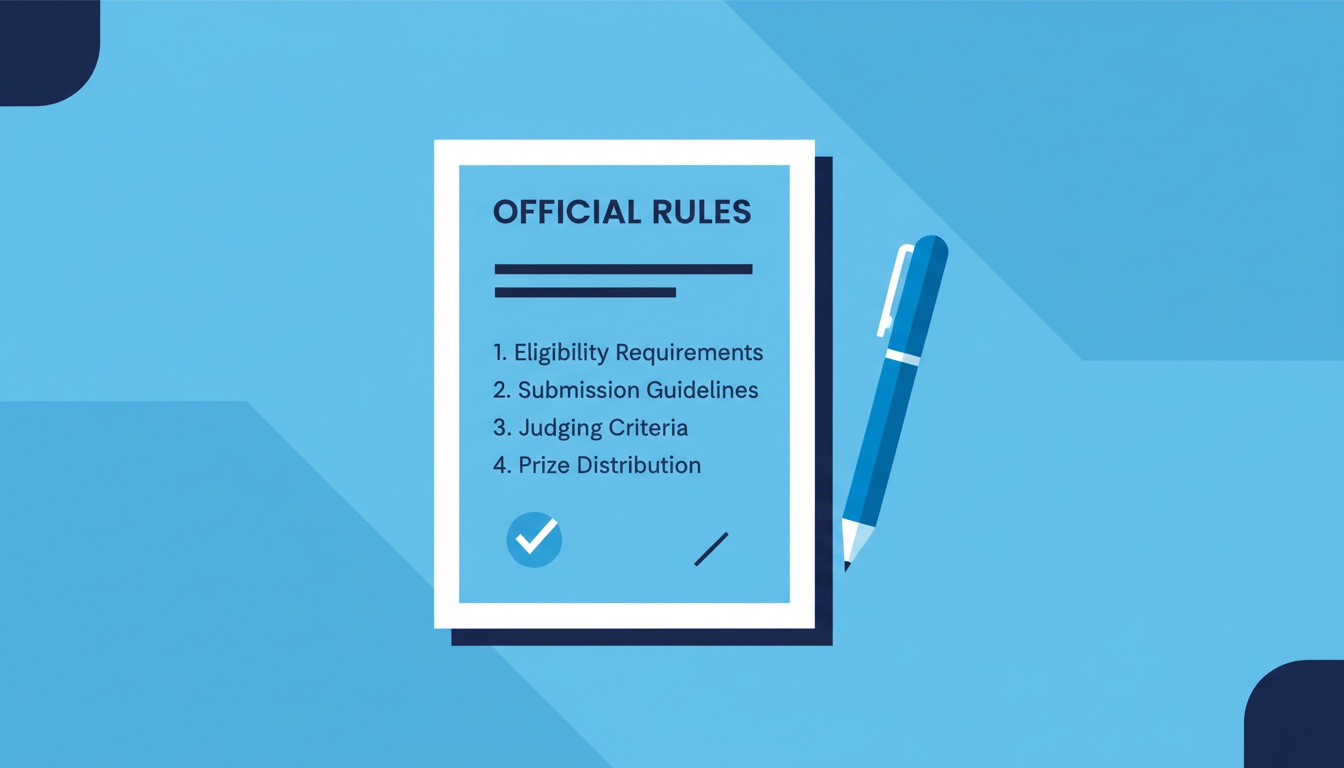
- Official rules published and accessible before the promotion opens
- Prize value, odds of winning, and winner selection method disclosed
- Eligibility requirements clearly stated (age, geography, employee exclusions)
- No purchase necessary statement displayed prominently (sweepstakes)
- Judging criteria and judge identities disclosed (contests)
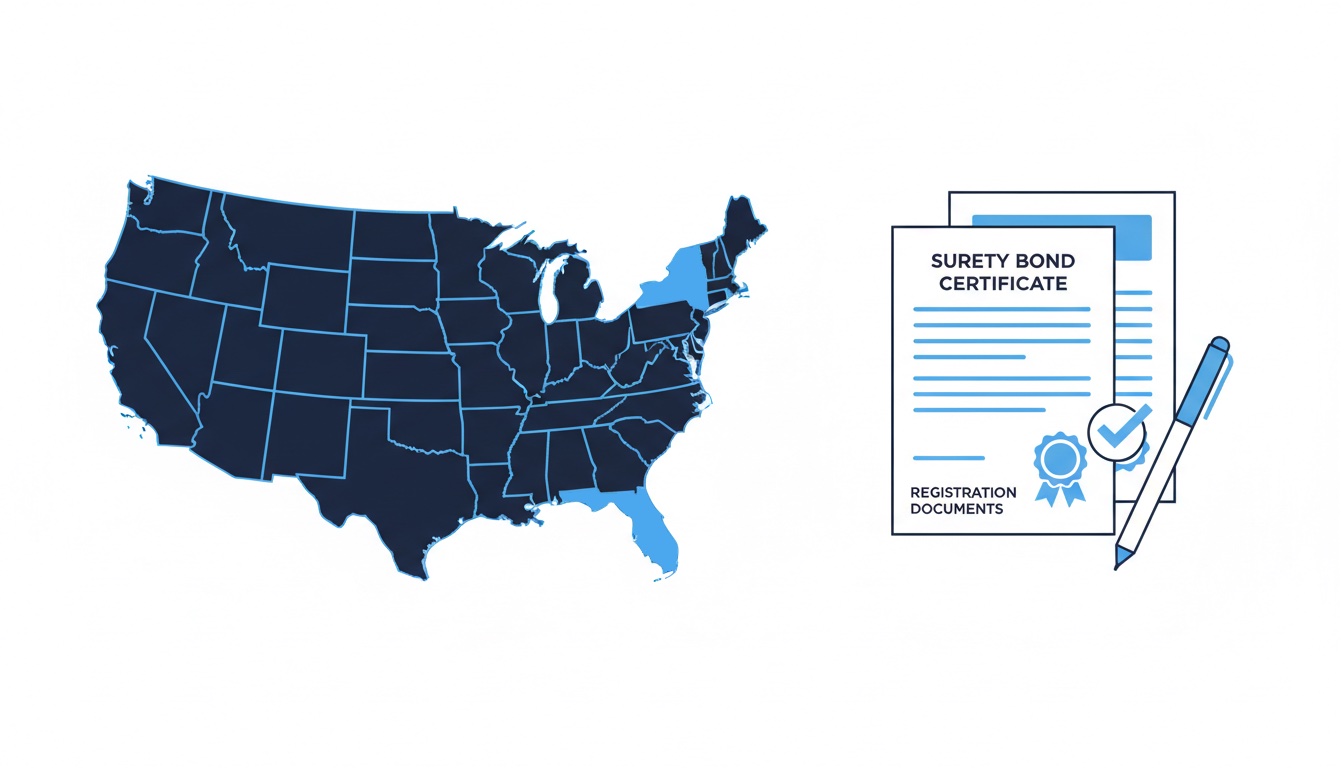
- State registration filed where required (NY, FL, RI for sweepstakes)
- Winner notification process documented and followed
- 1099 tax forms issued for prizes valued at $2,000 or more
For sweepstakes with prize pools above certain thresholds, New York and Florida require advance registration and bonding, and Rhode Island adds a separate filing rule for qualifying retail/in-store promotions. See our guide to state registration and bonding requirements for full details.
Frequently Asked Questions
Is an Instagram giveaway a sweepstakes or a contest?
Almost always a sweepstakes. If the winner is selected randomly from people who followed, liked, or commented, it's a random drawing — that's a sweepstakes. If the winner is judged on the "best" comment or photo, it might be a contest — but you need documented judging criteria to support that classification. Instagram giveaways also have platform-specific legal requirements you must follow.
Can a "sweepstakes" require a purchase if it's optional?
Only if you provide an equally accessible free alternative method of entry. The purchase and the free entry must have equal odds of winning. If purchasers get more entries than free entrants, you've created a pay-to-win advantage that many regulators treat as consideration. Keep entry chances equal across both methods.
What's the difference between a raffle and a sweepstakes?
A raffle requires participants to pay for numbered tickets — that's consideration. A raffle is legally a lottery, which is why only licensed nonprofits and charities can run raffles (under specific state charity gaming laws). For-profit brands cannot run raffles. If you want a random-draw promotion, run a sweepstakes with a free entry method instead.
Does "free to enter" mean no consideration?
Usually, but not always. Courts have found consideration in promotions where the "free" entry requires significant effort with commercial value — lengthy surveys, expensive equipment to participate, or mandatory attendance at a paid event. A simple form fill, follow, or mail-in entry is universally accepted as consideration-free.
Do I need a lawyer to run a sweepstakes?
For large sweepstakes (prize values over $5,000, or national campaigns), legal review of your official rules is strongly recommended. For straightforward campaigns, using compliant templates and a platform like Revup — which generates rules based on your specific promotion parameters — significantly reduces your exposure.
Ready to dig deeper? Read our complete guide on the legal framework for sweepstakes, contests, and instant win promotions, review the interactive sweepstakes law map for state-specific registration rules, or start with the most common compliance question: what "no purchase necessary" actually requires.