Sports teams, entertainment venues, and event brands have a unique advantage when it comes to sweepstakes and contests: the audience is already emotionally invested. Fans show up wearing jerseys, paint their faces, and plan entire weekends around game day. That emotional connection is the foundation for promotions that drive measurable business results — ticket sales, merchandise revenue, sponsorship value, and long-term fan loyalty.
But the gap between "let's give away some tickets on Instagram" and a structured promotional campaign that fills seats, grows your database, and delivers sponsor ROI is significant. The NBA runs free game ticket sweepstakes with 31 prizes per period, awarding 2-4 tickets per prize — not because they can't afford to give away more, but because a well-structured program sustains engagement across an entire season. The NFL and Super Bowl ecosystem generates dozens of brand sweepstakes offering trip packages to the game, each one calibrated to the sponsor's audience and the league's compliance framework.
This guide covers the full range of promotional strategies for sports teams, entertainment venues, concert promoters, and event brands — from simple ticket giveaways to complex multi-sponsor activations. Whether you run a minor league team, manage a concert venue, or coordinate promotions for a professional franchise, these are the campaign types, compliance considerations, and operational workflows that work.
Ticket Giveaway Campaigns
Ticket giveaways are the most natural entry point for sports and entertainment promotions. Tickets are the core product, fans already want them, and the fulfillment logistics are straightforward — you're giving away something you already distribute.
Single-Game Ticket Sweepstakes
The simplest format: enter for a chance to win tickets to an upcoming game or event. These work best when tied to a specific, high-demand matchup or performance — a rivalry game, a playoff race, a sold-out concert, or a headliner event.
- Prize structure: 2-4 tickets per winner. Pairs are the minimum for a positive experience (nobody wants to go alone). Four-packs work well for family-oriented sports and events.
- Entry method: Email/form entry on the team or venue website. Social media entries (follow + comment) for awareness campaigns. QR code scan at partner retail locations for co-branded reach.
- Timing: Launch 2-3 weeks before the event. Close entries 48-72 hours before game day to allow winner notification and fulfillment.
- Volume: The NBA model of 31 prizes per promotional period is instructive — multiple winners per campaign sustains the perception that winning is achievable, which drives higher entry rates than a single grand prize.
Season Ticket Drawings
Season ticket giveaways are higher-stakes promotions that generate significant entry volume and media attention. They work as both acquisition tools (attracting new fans into your database) and retention tools (rewarding existing ticket holders with upgrade opportunities).
- Full season package: Grand prize of a pair of season tickets. High perceived value, strong PR potential, attracts serious fans rather than casual entrants.
- Partial plan upgrade: Win an upgrade from a partial plan to a full season or from upper deck to premium seating. Targets existing customers and incentivizes upsell conversations.
- Mini-plan giveaway: 5-10 game packages as prizes. Lower total prize value, easier compliance, and you can award more winners — which drives more engagement.
VIP Ticket Upgrades
Upgrade sweepstakes target people who already have tickets or are already in your database. The entry mechanic is often tied to an existing purchase or membership — "enter when you buy any ticket to win a suite upgrade" or "season ticket holders are automatically entered."
- Suite or box upgrade: Standard ticket holders win a suite experience for their group
- Front row / courtside / field-level: The aspirational prize that every fan imagines
- Premium hospitality: Club access, all-inclusive food and beverage, VIP parking
Upgrade sweepstakes convert existing buyers
Ticket upgrade promotions are especially effective because the entrant has already committed to attending. You are enhancing an experience they have already purchased, which means the promotion drives goodwill and upsell potential rather than just acquisition. These campaigns also have lower compliance cost because the prize value (the upgrade differential) is typically under state registration thresholds.
Game-Day and Event Promotions
In-venue promotions capture fans when engagement is at its peak — they're physically present, emotionally invested, and surrounded by the brand experience. Game-day activations convert that energy into database entries, sponsor impressions, and social media content.
Halftime and Between-Period Contests
The classic game-day promotion: a contest or giveaway conducted during a break in the action. These range from simple random drawings (name called from the crowd) to on-field/on-court skill challenges.
- Random drawing from attendees: All ticket holders are automatically entered or text a keyword to enter during the game. Winner announced on the scoreboard. Prize: merchandise, gift cards, or ticket packages.
- Skill challenge: Selected fan attempts a half-court shot, field goal kick, or similar stunt for a prize. These are contests (skill-based), not sweepstakes, so purchase consideration rules differ — but you still need official rules and a defined winner selection process.
- Trivia or prediction games: In-app or text-based trivia during breaks. Fans answer questions for points or prize entries. Drives app downloads and keeps engagement high during stoppages.
QR Code Entry at the Venue
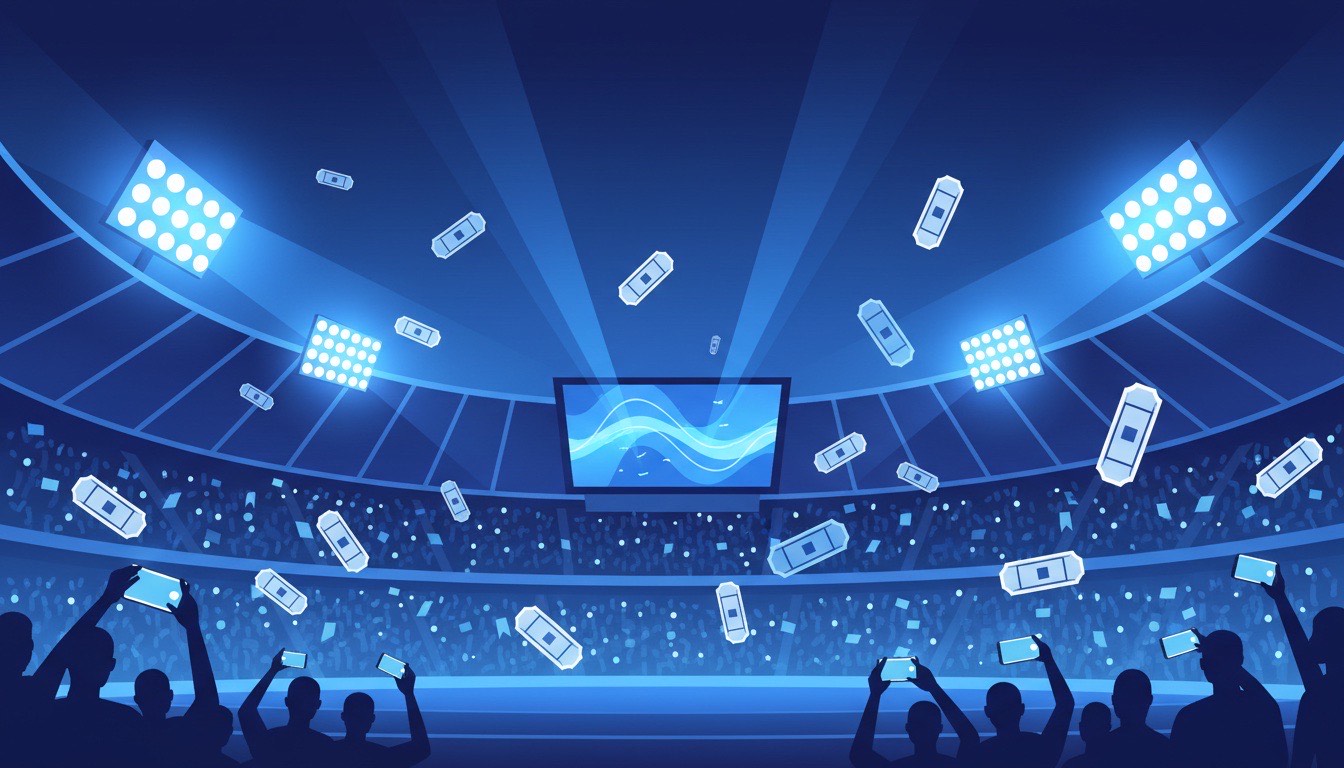
QR codes displayed on concourse signage, seat-back cards, scoreboards, and digital displays let fans enter promotions without leaving their seat. The QR code links to a mobile-optimized entry form — scan, fill, submit.
- Concourse signage: Place QR codes at high-traffic locations (entry gates, concession areas, restrooms). Sponsor branding on the signage offsets promotion costs.
- Scoreboard display: Flash a QR code during a timeout or break. Creates a shared moment where thousands of fans scan simultaneously.
- Seat-back or cup holder cards: Physical cards with QR codes at every seat. Highest conversion rate because the call to action is persistent for the entire event.
Game-Day Digital Activation Flow
Pre-game setup
Configure entry form, test QR codes, confirm prize inventory, brief in-venue staff on promotion details and winner selection timing.
Gate entry trigger
Fans receive a push notification (app users) or see signage directing them to enter as they arrive at the venue.
In-game engagement
QR codes displayed during breaks. Scoreboard prompts drive entry spikes. Text-to-enter keyword announced by PA system.
Winner selection
Random drawing conducted during a defined break. Winner verified against eligibility criteria. Name announced on scoreboard or via app notification.
Post-game follow-up
All entrants receive a thank-you email with a next-game offer. Non-winners get a consolation discount or future entry opportunity.
Promotional Nights and Themed Giveaways
Promotional nights drive attendance on dates that would otherwise underperform. The formula: a themed experience or giveaway item that creates a reason to attend beyond the game itself.
- Bobblehead / collectible nights: First 10,000 fans receive a limited-edition item. Creates urgency, drives early arrival, and generates social media content as fans photograph their collectibles.
- Theme nights: Star Wars night, 90s night, dog-friendly night, pride night. Themed experiences attract specific audience segments and create organic social content.
- Jersey or apparel giveaways: Replica jerseys, hats, or scarves distributed to all attendees or awarded via sweepstakes. Wearable items extend brand visibility beyond the venue.
- Fireworks / concert add-ons: Post-game entertainment that extends the experience and justifies premium pricing on otherwise low-demand dates.
Promotional nights outperform standard games
Minor league teams attribute a significant portion of their total season attendance to promotional nights. The item or theme is the draw — fans will attend a mid-week game they would otherwise skip if there is a compelling giveaway or themed experience. Plan your promotional calendar before the season starts and align it with your weakest dates.
Fan Photo and Video Contests
User-generated content contests turn fans into content creators. The output — photos and videos of real fans engaging with your brand — is more authentic and more shareable than anything your marketing team produces in-house.
Best Fan Moment
Ask fans to submit their best game-day moment — a reaction shot, a celebratory photo, a candid clip from the stands. Judge entries on creativity, emotion, and relevance. Winners receive tickets, merchandise, or VIP experiences.
- Entry method: Submit via hashtag on social media (easiest) or upload through a dedicated contest page (better data capture)
- Judging criteria: Define clear, objective criteria — creativity (40%), emotional impact (30%), relevance to the brand (30%). Published criteria make this a legitimate contest rather than an arbitrary selection.
- Content rights: Include content licensing language in your official rules. Specify that entries grant the team/venue the right to reuse submitted content for marketing purposes.
Game-Day Selfie Contest
Simple, high-volume format. Fans take a selfie at the venue (ideally at a branded photo location) and post with a campaign hashtag. Works for both social media and in-app entry.
- Set up a branded selfie station with good lighting and your team/venue branding visible
- Display the hashtag and entry instructions prominently at the station
- Award prizes for both random drawing (sweepstakes) and best photo (contest) to maximize participation
Tailgate Photo Competition
For sports with strong tailgating culture — football, soccer, baseball, NASCAR — a tailgate competition extends the promotion beyond the venue walls. Fans submit photos of their tailgate setup, food, decorations, or group.
- Categories: Best setup, best food, most creative, largest group. Multiple categories mean multiple winners, which sustains engagement.
- Prizes: Season parking passes, premium tailgate spots, grilling equipment, branded tailgate gear
- Timing: Run throughout the season with periodic winners, building a community of participants
 Revup
Revup
Revup handles entry collection, random winner selection, and official rules generation for fan engagement campaigns — so your promotions team can focus on the fan experience.
VIP Experience Sweepstakes
VIP experiences are the highest-perceived-value prizes in sports and entertainment — and they often cost the organization less than their retail equivalent because you control the inventory. A meet-and-greet, sideline pass, or behind-the-scenes tour costs you staff time and coordination, but the fan perceives it as priceless.
Meet-and-Greet Experiences
- Player/performer meet-and-greet: 15-30 minutes with a player, artist, or performer before or after the event. Include a photo opportunity and signed item. ARV: $500-$5,000 depending on the talent.
- Coach/front office access: Lunch with the coach, sit in on a press conference, tour the team offices. Especially compelling for superfans and corporate partners.
- Broadcast booth experience: Watch the game from the broadcast booth, meet the commentary team, wear a headset during play. Unique and highly shareable on social media.
Sideline and Behind-the-Scenes Access
- Pre-game field/court access: Watch warm-ups from the sideline, stand on the field, shoot baskets during pre-game. Time-limited (30-60 minutes) and controlled, but the photos and memories are permanent.
- Locker room tour: Post-game or off-day facility tour. Works best with a guide (former player, team historian, operations staff) who adds context.
- Production and operations tour: For entertainment venues — see the sound check, tour the lighting rig, meet the production crew. Appeals to a different segment than the standard fan experience.
Full Trip Packages
The premium tier: a complete trip package to an away game, bowl game, championship event, or destination concert. These are the headline prizes that generate PR, social media buzz, and email list growth.
- Included elements: Airfare for two, 2-3 nights hotel, event tickets (premium seating), ground transportation, spending money
- ARV range: $3,000-$15,000 depending on destination and event tier
- Compliance note: Trip packages above $5,000 in total ARV will likely trigger state registration requirements in New York and Florida. Build registration timelines into your promotional calendar.
Seasonal and Playoff Promotions
Sports have a built-in promotional calendar that no other industry can replicate. The season structure — preseason, regular season, playoffs, championship, offseason — provides natural campaign windows with built-in urgency.
Preseason and Season Launch
- Season ticket holder appreciation: Exclusive sweepstakes for existing season ticket holders. Rewards loyalty and reduces churn before renewal deadlines.
- First game giveaway: High-energy promotion tied to the season opener. Bobblehead or collectible for all attendees plus a grand prize sweepstakes (season tickets, VIP experience).
- Schedule release promotion: Run a sweepstakes tied to the schedule announcement. "Predict the opening night opponent" or "Pick your must-attend game" as an entry mechanic.
Regular Season Sustain Campaigns
- Weekly or monthly drawings: Ongoing sweepstakes where entries accumulate across the season. Keeps fans engaged during the long middle stretch. The NBA's 31-prizes-per-period model demonstrates this approach.
- Milestone promotions: Trigger a sweepstakes when the team hits a milestone — 10th win, 50th home run, 100th goal. Creates a shared celebration and a timely reason to enter.
- Mid-week attendance drivers: Targeted promotions for traditionally low-attendance dates (Tuesday, Wednesday, Thursday games). Extra entries or exclusive prizes for mid-week attendees.
Playoff and Championship
- Playoff ticket sweepstakes: Demand spikes during the postseason. A ticket giveaway generates massive entry volume and database growth at the moment of peak fan interest.
- Championship trip package: The ultimate fan prize. Multiple NFL/Super Bowl brand sweepstakes offer trip packages every year — flights, hotel, tickets, and VIP access. These generate national media coverage.
- Bracket and prediction contests: Skill-based contests where fans predict outcomes. Works for any sport with elimination formats. Prizes for the most accurate bracket or prediction.
Offseason Engagement
- Draft day promotions: Sweepstakes tied to draft picks, free agent signings, or roster announcements. Keeps the fan database active during the gap between seasons.
- Early renewal incentives: Season ticket holders who renew early are entered into an exclusive sweepstakes for premium experiences, travel packages, or merchandise bundles.
- Summer / offseason events: Open practices, fan festivals, charity events. Pair these with sweepstakes for regular-season tickets to maintain year-round engagement.
| Season Phase | Primary Goal | Best Promotion Type | Typical Prize |
|---|---|---|---|
| Preseason | Database growth | Email entry sweepstakes | Season tickets, opener VIP package |
| Season opener | Attendance + energy | Gate giveaway + grand prize drawing | Collectible item + VIP upgrade |
| Mid-season | Sustained engagement | Weekly drawings, milestone triggers | Ticket packages, merchandise bundles |
| Playoffs | Revenue + brand heat | Trip package sweepstakes | Championship travel + VIP access |
| Offseason | Retention + renewals | Exclusive holder sweepstakes | Premium experiences, early access |
Sponsor-Activated Promotions
Sponsorship activation through sweepstakes and contests creates measurable value for brand partners — something that static signage and logo placement cannot provide. For the team or venue, sponsor-activated promotions offset promotional costs and deepen partner relationships.
Co-Branded Sweepstakes
The team or venue and a sponsor jointly present a sweepstakes. Both brands appear in promotional materials, entry forms, and winner communications. The sponsor funds the prize; the team provides the promotional platform (venue signage, email list, social channels, app).
- Example: "[Sponsor] and [Team] present the Ultimate Game Day Experience" — entry via the team app, prize funded by the sponsor, winner announced at the game
- Data sharing: Define in the sponsorship agreement who owns the entrant data. Typically both parties receive the entry data (with appropriate consent disclosures in the official rules).
- Compliance ownership: Clarify which party is responsible for official rules, state registration, and winner fulfillment. Ambiguity here creates legal risk for both sides.
Sponsor-Funded Promotional Nights
A sponsor underwrites a promotional night in exchange for branding and activation rights. The sponsor funds the giveaway items (branded merchandise, product samples, or experience prizes) and receives signage, PA mentions, digital display time, and social media exposure.
- Product sampling tie-ins: Food, beverage, or consumer product sponsors provide samples at entry gates. Combined with a sweepstakes entry (scan the product code to enter), this creates a measurable activation.
- Branded game-day experience: The "[Sponsor] Lounge" or "[Sponsor] Fan Zone" — a dedicated space with branded activities, photo opportunities, and sweepstakes entry stations.
Retailer and App-Based Partner Promotions
Minor league teams and entertainment venues increasingly partner with retail and app-based sponsors for entry mechanics. Fans scan a QR code at a retail checkout, make a qualifying purchase through an app, or visit a sponsor location to earn sweepstakes entries.
- Scan at checkout: QR code or barcode on product packaging. Scan at the register to earn sweepstakes entries for game tickets. Drives retail sell-through and provides measurable ROI for the sponsor.
- App-based entry: Download the sponsor's app and complete an action (create an account, make a purchase, check in at a location) to earn entries. Drives measurable app installs and engagement.
- Loyalty program integration: Fans earn entries based on loyalty program activity — purchases, check-ins, social engagement. The sweepstakes becomes a loyalty program incentive layer.
Sponsor promotions need clear legal ownership
When a sponsor funds a sweepstakes prize but the team or venue runs the promotion, the official rules must clearly identify the 'Sponsor' (the legal entity responsible for the promotion). Both parties should be named, and the rules should specify which entity is responsible for winner selection, prize fulfillment, and tax reporting. Get this wrong and both parties share liability.
How to Structure a Sports Promotion
The operational workflow for a sports or entertainment promotion follows a consistent pattern regardless of the specific campaign type. Here is the process from concept to post-campaign analysis.
Sports Promotion Campaign Workflow
Define the objective
What business outcome does this promotion serve? Ticket sales for a specific date? Database growth? Sponsor activation deliverable? The objective determines prize type, entry method, and success metrics.
Select promotion type
Sweepstakes (random winner) or contest (judged). Sweepstakes are simpler to run and generate higher entry volume. Contests produce better content and deeper engagement.
Set prize and budget
Prize must align with the audience and the objective. Calculate total ARV for compliance planning. Determine if sponsor funding offsets the prize cost.
Draft official rules and compliance
Write complete official rules covering all required elements. Determine state registration requirements based on total prize ARV. File registrations if required (NY, FL, RI thresholds). Allow 4-6 weeks for registration processing.
Build entry mechanics
Configure entry form, QR codes, text-to-enter keyword, or social media entry method. Set up the AMOE if running a sweepstakes. Test all entry paths on mobile devices.
Launch and promote
Activate across all channels: venue signage, email, social media, team app, sponsor channels, PA announcements. Coordinate timing with the game or event schedule.
Select winner and fulfill
Conduct documented random drawing or judging process. Verify winner eligibility. Notify winner and obtain required affidavits and releases. Fulfill prize and capture winner content for marketing.
Measure and report
Report on entries, conversions, database growth, sponsor impressions, and cost per entry. Use data to refine the next promotion. Deliver sponsor recap with measurable results.
Promotion Types by Sports and Entertainment Goal
Different business objectives call for different promotion types. This matrix maps the most common goals to the promotion format, prize type, and entry method that best serves each one.
| Business Goal | Best Promotion Type | Recommended Prize | Entry Method |
|---|---|---|---|
| Fill seats on weak dates | Sweepstakes + promo night | Ticket upgrade, themed giveaway item | Email form, QR code at gate |
| Grow email database | Online sweepstakes | Season ticket package, trip prize | Website/app entry form |
| Increase social following | Social media giveaway | VIP experience, signed merchandise | Follow + comment + hashtag |
| Sponsor activation / ROI | Co-branded sweepstakes | Sponsor-funded experience prize | In-venue QR code, app-based entry |
| User-generated content | Photo/video contest | Tickets + fan recognition | Hashtag submission, upload form |
| Season ticket renewals | Exclusive holder sweepstakes | Premium upgrade, away-game trip | Auto-entry for renewers |
| App downloads / engagement | App-based instant win | Merchandise, concession credits | In-app action triggers entry |
| Post-season engagement | Prediction / bracket contest | Championship trip package | Contest form, bracket builder |
Revup
Revup's promotion platform handles entry collection, winner selection, official rules, and compliance for sports and entertainment brands — whether you're running a single giveaway or a season-long campaign.
In-Venue Digital Activation
Digital activation at the venue is where sports and entertainment promotions diverge most from standard brand sweepstakes. You have a captive audience of thousands, concentrated in one physical location, for 2-4 hours. The technology you deploy determines how effectively you convert that attention into entries, data, and engagement.
QR Code Deployment
QR codes are the lowest-friction entry method for in-venue promotions. Fans scan with their phone camera — no app download required, no keyword to remember, no URL to type.
- Placement strategy: Every QR code should be visible from the fan's seated position or standing in a natural pause point (concession line, restroom queue). Codes placed on surfaces fans walk past without stopping convert poorly.
- Size and contrast: Minimum 4 inches square for signage. High contrast (dark code on light background). Test scanning distance before printing.
- Unique codes per location: Use distinct QR codes for different zones (section 100, concourse, suite level). This gives you location-based entry data for sponsor reporting and future placement optimization.
Team Website and App Integration
Embedding sweepstakes entry forms directly on the team website and within the team app captures fans who engage digitally but may not be at the venue.
- Website embed: Place the entry form on a dedicated promotion page linked from the homepage, ticketing pages, and blog/news sections. The form should be mobile-responsive — over 70% of sports website traffic is mobile.
- App integration: Push notifications trigger when a fan opens the app on game day. Deep link to the entry form within the app. Capture device and location data (with consent) for richer entrant profiles.
- Cross-channel consistency: The entry experience should be identical regardless of whether the fan enters via QR code, website, or app. Same form fields, same confirmation, same rules.
Text-to-Enter
Text-to-enter (SMS keyword) campaigns work well when announced over the PA system or displayed on the scoreboard. The fan texts a keyword to a short code and receives a link to the entry form or is entered directly.
- Keyword strategy: Keep it short and memorable. "TEXT FAN to 12345" is better than "TEXT GAMEXPERIENCE to 12345." The PA announcer has 10 seconds — make it easy.
- Compliance: TCPA rules apply to text-to-enter promotions. Include opt-in consent language and honor opt-out requests immediately. Your official rules must disclose that message and data rates may apply.
- Follow-up: The initial text response should include the entry confirmation and a link to the official rules. Subsequent texts (winner notification, future promotions) require separate opt-in consent.
Test your digital activation before game day
Venue Wi-Fi and cellular networks are stressed during events. Test every QR code, entry form, and text-to-enter flow under realistic network conditions before the promotion goes live. A broken entry experience on game day is worse than no promotion at all — it creates frustration rather than engagement. Have a backup plan (paper entry forms, alternative URL) for connectivity failures.
Compliance for Sports Promotions
Sports and entertainment promotions operate under the same federal and state sweepstakes laws as any consumer promotion — plus additional layers of league rules, venue regulations, and sponsor contractual obligations. The compliance burden is real but manageable if you build it into your workflow from the start.
Federal and State Sweepstakes Law
The fundamentals apply regardless of industry:
- No purchase necessary: If the winner is selected randomly, you must provide a free alternative method of entry. Requiring a ticket purchase to enter without an AMOE creates an illegal lottery. See our complete sweepstakes legality guide.
- Official rules: Every promotion must have complete official rules that disclose eligibility, prize details, entry methods, winner selection process, and all required legal language.
- State registration: Promotions with total prize values exceeding state-specific thresholds must be registered in New York and Florida, and in Rhode Island when the promotion has a qualifying retail/in-store component. Trip packages and season ticket prizes often exceed the New York and Florida thresholds.
- Tax reporting: Prizes valued at $2,000 or more require IRS Form 1099-MISC (threshold raised from $600 to $2,000 by the One Big Beautiful Bill Act, effective January 1, 2026). Season tickets and VIP trip packages almost always exceed this threshold.
League and Governing Body Rules
Professional sports leagues have their own promotional guidelines that supplement (and sometimes restrict) what teams can offer:
- Approved sponsor categories: Most leagues restrict which product categories can be associated with team promotions. Gambling, tobacco, and certain alcohol brands may be prohibited or require special approval.
- Intellectual property usage: League logos, team marks, player likenesses, and game footage are subject to licensing restrictions. Your sweepstakes materials must comply with IP usage guidelines.
- Player participation: Using active players in promotions (meet-and-greets, endorsements, social media) may require league approval and compliance with collective bargaining agreement terms.
- Gambling proximity: With the expansion of legal sports betting, leagues are increasingly cautious about promotions that could be perceived as gambling-adjacent. Prediction contests and bracket challenges may require review.
Sponsor Contractual Obligations
- Exclusivity clauses: If Sponsor A has an exclusive beverage deal, you cannot run a promotion that features a competing beverage brand — even if the competing brand is funding the prize.
- Approval workflows: Sponsor-activated promotions typically require sponsor review and approval of all creative materials, official rules, and winner communications. Build this into your timeline.
- Data ownership and sharing: Define who owns entrant data before launching. Sponsors want lead data; fans expect their information to stay with the team. Your privacy policy and official rules must accurately reflect data practices.
Sports Promotion Compliance Checklist
- Official rules drafted with all required elements and disclosures
- No purchase necessary statement prominently displayed on all entry points
- Free AMOE available and clearly communicated for all sweepstakes
- State registration filed in NY, FL, RI if total prize ARV exceeds thresholds
- League promotional guidelines reviewed and complied with
- Sponsor exclusivity and approval requirements satisfied
- Player/talent usage approved per league CBA and team contracts
- TCPA compliance for any text-to-enter or SMS-based entry methods
- Privacy policy updated to reflect data collection and sharing practices
- Tax reporting process established for prizes valued at $2,000+
- Content licensing language included in official rules for UGC contests
- Venue Wi-Fi and cellular tested for digital activation reliability
Launch Checklist
Use this timeline to ensure every element is in place before your sports or entertainment promotion goes live.
6-8 Weeks Before Launch
- Define promotion objective, type (sweepstakes or contest), and prize
- Calculate total prize ARV and determine state registration requirements
- Draft official rules and submit for legal review
- File state registrations if required (processing takes 4-6 weeks)
- Secure sponsor approval if applicable
- Confirm league/governing body compliance for promotion type and prizes
3-4 Weeks Before Launch
- Build entry forms, landing pages, and QR code assets
- Configure promotion platform with entry methods, eligibility rules, and winner selection criteria
- Design and order in-venue signage, seat cards, and digital display creative
- Brief in-venue operations, marketing, and sponsor activation teams
- Set up email sequences (confirmation, reminder, winner notification, post-campaign follow-up)
1-2 Weeks Before Launch
- Test all entry paths end-to-end on mobile devices
- Test QR codes in-venue under realistic network conditions
- Confirm prize inventory and fulfillment logistics
- Schedule social media promotional posts and email blasts
- Prepare PA announcer scripts and scoreboard graphics
Launch Day
- Verify all QR codes, entry forms, and text-to-enter systems are live
- Monitor entry volume in real-time and troubleshoot any issues
- Execute in-venue activation (signage, PA announcements, scoreboard prompts)
- Conduct winner selection at the designated time
- Capture winner moment for social media and sponsor reporting
Post-Campaign
- Send post-event email to all entrants with next-game offer
- Complete winner fulfillment (prize delivery, tax documentation)
- Compile results report (entries, conversions, impressions, cost per entry)
- Deliver sponsor recap with measurable activation metrics
- Archive official rules, entry data, and winner documentation for recordkeeping
Measuring Fan Engagement ROI
Sports and entertainment promotions must deliver measurable business outcomes — not just "engagement." Here are the metrics that matter and how to track them.
Primary Metrics
| Metric | What It Measures | How to Track | Benchmark Range |
|---|---|---|---|
| Total entries | Promotion reach and appeal | Entry form submissions | 500-50,000+ per campaign |
| New database contacts | List growth from promotion | New vs. existing entrants | 30-60% of total entries are new |
| Cost per entry (CPE) | Promotion efficiency | Total cost / total entries | $0.50-$5.00 per entry |
| Ticket revenue lift | Direct sales impact | Compare game revenue vs. non-promo baseline | 10-30% lift on promo nights |
| Sponsor impression value | Activation ROI for partners | Impressions x CPM rate | Varies by sponsor agreement |
| Social media engagement | Brand amplification | Likes, shares, hashtag usage, UGC volume | 3-5x normal post engagement |
Secondary Metrics
- App downloads / active users: Track whether app-based promotions drive measurable increases in app installs and daily active users.
- Email engagement: Open rates and click-through rates on promotional emails vs. standard communications. Promotions typically lift open rates by 20-40%.
- Merchandise revenue: Did the promotion drive incremental merchandise sales? Track promo-code redemptions, in-venue merchandise revenue on promotional nights, and post-promotion purchase behavior.
- Season ticket conversion: The highest-value metric. Track how many promotional entrants convert to partial or full season ticket plans within 12 months.
- Sponsor renewal rate: The ultimate sponsor activation metric. If the promotion delivers measurable results, the sponsor renews and expands. If it doesn't, they don't.
Build measurement into the promotion from the start
Do not wait until the promotion is over to figure out how you will measure success. Define your KPIs during the planning phase, instrument your entry forms and landing pages with tracking, establish baselines for comparison, and set up your reporting dashboard before launch. Post-campaign measurement that relies on retroactive data assembly always produces incomplete results.
For a deeper dive into promotion measurement frameworks, see our sweepstakes ROI measurement guide.
Frequently Asked Questions
Can we require a ticket purchase to enter a game-day sweepstakes?
No — if the winner is selected randomly, you must provide a free alternative method of entry (AMOE). Requiring a ticket purchase without a free alternative creates an illegal lottery. You can offer bonus entries for ticket purchasers, but the AMOE must be available and reasonably accessible. A mail-in entry or online form are common AMOE options for in-venue promotions. For a complete explanation, see our sweepstakes legality guide.
Do we need official rules for a simple halftime giveaway?
Yes. Every promotion that awards a prize based on chance or skill requires official rules. There is no exemption for small prizes, in-venue promotions, or informal giveaways. The rules can be brief for a simple promotion, but they must cover eligibility, prize details, winner selection method, and the required "no purchase necessary" and void-where-prohibited disclosures.
How do we handle alcohol sponsor sweepstakes?
Alcohol-sponsored promotions require age verification (21+) for all entrants, compliance with TTB (Alcohol and Tobacco Tax and Trade Bureau) regulations, and adherence to each state's alcohol promotion laws. The sweepstakes itself cannot require the purchase of alcohol as an entry condition. See our alcohol prize sweepstakes rules guide for detailed requirements.
Can we use player likenesses in our sweepstakes promotional materials?
This depends on your league, the player's contract, and the collective bargaining agreement (CBA). In most professional leagues, teams have limited rights to use active player likenesses for team-related promotions. Using player images in sponsor-branded materials or for non-team commercial purposes typically requires separate approval. Consult your league's promotional guidelines and the player's representation before proceeding.
What is the best entry method for in-venue promotions?
QR codes consistently deliver the highest conversion rates for in-venue promotions because they require no app download, no keyword memorization, and minimal effort — scan and enter. Text-to-enter is a strong secondary option, especially when announced over the PA system. App-based entry is best for teams with high app penetration. Offer multiple entry methods to maximize reach.
How do we handle state registration for sports sweepstakes with travel prizes?
Trip packages often exceed state registration thresholds — New York requires registration for prizes over $5,000, Florida over $5,000, and Rhode Island only if a qualifying retail/in-store promotion exceeds $500. Calculate the total ARV of all prizes (not just the trip) and file registrations in applicable states before launching. Processing typically takes 4-6 weeks, so build this into your promotional calendar.
Can we run a prediction or bracket contest tied to game outcomes?
Yes, if structured properly. Prediction and bracket contests are skill-based (contestants use knowledge and judgment), which means they are contests rather than sweepstakes. This distinction is important because contests can require a fee to enter without triggering lottery law concerns. However, with the proliferation of legal sports betting, be careful to structure the contest so it is clearly distinguished from gambling. Consult your league's guidelines — some leagues restrict prediction-style promotions.
How many promotions should we run per season?
There is no single answer, but professional teams typically run 10-20 distinct promotional activations per season — a mix of game-day giveaways, online sweepstakes, sponsor-activated campaigns, and social media contests. The key is consistency: fans should expect promotional activity at every touchpoint, which builds habitual engagement with your channels. Start with one promotion per home stand and scale based on results and operational capacity.
Ready to launch your first fan engagement promotion? Start with our complete guide to running a sweepstakes legally, explore prize ideas by budget tier, or learn how to run a social media contest to complement your in-venue activations. For industry-specific guidance, see our sweepstakes by industry guide.