
Sweepstakes Ideas by Industry
Sweepstakes and contest playbooks for restaurants, ecommerce, CPG, hospitality, sports, and more. Industry-specific ideas and compliance tips.
Last updated: April 1, 2026
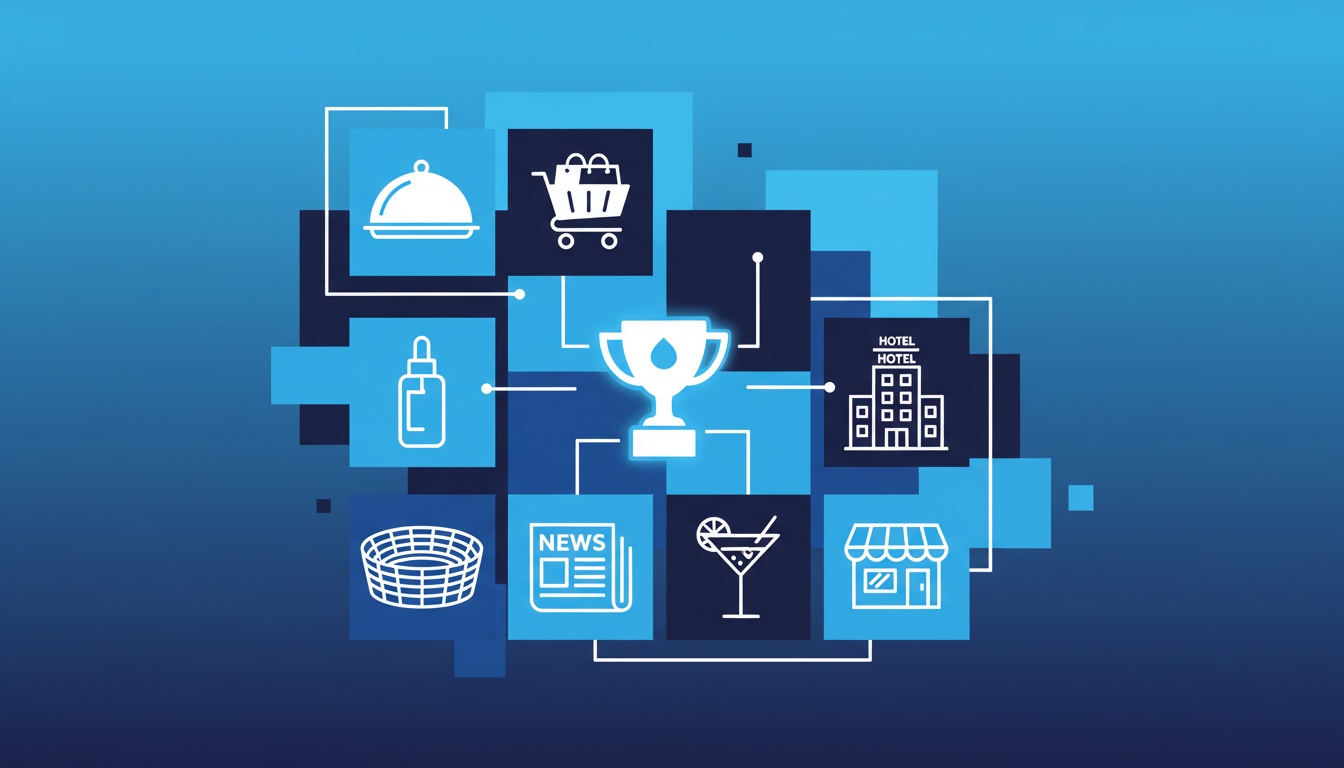
A sweepstakes that works for an ecommerce brand will fall flat at a restaurant. A promotion designed for a CPG company needs completely different mechanics than one built for a hotel chain. And an agency pitching sweepstakes services to clients needs a different strategic framework than any of them.
The fundamentals of running a sweepstakes are universal: define goals, choose a prize, write official rules, set up a free entry method, promote the campaign, and select a winner. But the strategy — which promotion type to use, what prizes resonate, which entry mechanics drive the most value, and which compliance considerations matter most — depends entirely on your industry.
This guide is the central hub for ten industry-specific promotion playbooks. Each section below summarizes the key strategies, best promotion formats, and unique considerations for a specific vertical, then links to a detailed standalone article. Whether you're a brand marketer planning your first campaign or an agency building a promotion practice, start here to find the playbook that matches your business.
This guide is not legal advice
This guide is for informational and educational purposes only. Sweepstakes law varies by state and industry, and certain verticals (alcohol, gambling-adjacent entertainment) have additional regulatory layers. Always consult a qualified attorney before launching a promotion. Revup provides compliance tools to help brands build compliant promotions, but does not replace professional legal counsel.
How to Use This Guide
This guide follows a hub-and-spoke structure. You're reading the hub — it gives you a high-level view of promotion strategy across all ten industries, with comparison tables that help you benchmark your approach against other verticals. Each industry section provides a 3-4 paragraph summary and links to the full playbook article (the spoke) where you'll find detailed campaign ideas, step-by-step execution guidance, and industry-specific compliance notes.
If you're a brand: Jump to your industry section for a quick overview, then follow the link to your full playbook for campaign ideas and execution details.
If you're an agency: Read the full guide to understand how promotion strategy differs across verticals. The Agency section covers how to package and price sweepstakes as a managed service. The Industry Comparison Matrix is a useful reference when pitching to clients in different sectors.
If you're new to sweepstakes: Start with our Complete Sweepstakes Guide for the universal fundamentals, then return here for industry-specific strategy.
Industry Comparison Matrix
Before diving into individual industries, here's a side-by-side view of how promotion strategy differs across all ten verticals covered in this guide. Use this table to quickly compare approaches, identify which promotion types work best in your sector, and understand the compliance considerations unique to your industry. Refer back to this matrix as a quick-reference tool when planning campaigns or when evaluating cross-industry partnerships for co-branded promotions.
| Industry | Best Promotion Type | Best Entry Mechanic | Typical Prize | Key Compliance Note | Best Channel |
|---|---|---|---|---|---|
| Restaurants | Photo contest / hashtag campaign | Social post + form link | Dining experiences, gift cards | Local-only promotions simplify state compliance | Instagram, TikTok |
| Ecommerce | Product launch giveaway / referral contest | Online form with email capture | Product bundles, store credit | Multi-state shipping triggers registration review | Email, Instagram, website |
| CPG | Purchase sweepstakes / instant win | Receipt upload + online AMOE | Cash, branded merchandise, experiences | Purchase-linked entry requires AMOE with equal odds | In-store POS, mobile, social |
| Beauty & Skincare | Influencer giveaway / UGC campaign | Social post + landing page form | Product bundles, VIP experiences | Influencer partnerships require FTC disclosure | Instagram, TikTok, YouTube |
| Hotels & Hospitality | Stay giveaway / VIP experience sweepstakes | Online form via loyalty program | Free stays, room upgrades, travel packages | Travel prize fulfillment has blackout and availability terms | Email, website, loyalty app |
| Media & Publishers | Subscriber giveaway / reader engagement contest | Email opt-in or subscription form | Tech products, exclusive access, cash | Subscription-as-entry may constitute consideration | Email, website, newsletter |
| Sports & Entertainment | Ticket giveaway / prediction contest | Social engagement + online form | Tickets, VIP packages, signed merchandise | Prediction contests must avoid gambling classification | Social media, mobile app, in-venue |
| Agencies | White-label sweepstakes (managed service) | Client-branded entry forms | Varies by client vertical | Agency as administrator vs. sponsor affects liability | Multi-channel (client-dependent) |
| Beverages | Purchase sweepstakes / instant win | Code-under-cap + online AMOE | Festival tickets, branded gear, cash | Alcohol promotions require 21+ age gate and TTB compliance | In-store POS, social, mobile |
| Retail (In-Store) | QR code sweepstakes / checkout promotion | QR scan to mobile form | Gift cards, product bundles, experiences | In-store signage must include NPN and rules link | In-store POS, mobile, email |
Peak Promotion Seasons by Industry
Timing a promotion to align with your industry's peak engagement periods can significantly increase entry volume and campaign performance. The table below maps each industry to its strongest promotion windows and the seasonal hooks that work best.
| Industry | Peak Season 1 | Peak Season 2 | Best Seasonal Hook |
|---|---|---|---|
| Restaurants | Summer (outdoor dining, events) | Holiday season (Nov-Dec) | New menu launches, local food festivals |
| Ecommerce | Black Friday / Cyber Monday | Product launch windows | Holiday gift guides, back-to-school |
| CPG | New Year (health/wellness) | Summer (outdoor, travel) | Back-to-school, holiday baking/cooking |
| Beauty & Skincare | Holiday gifting (Nov-Dec) | Spring/summer (new looks) | Mother's Day, award season, festival season |
| Hotels & Hospitality | Spring (booking season) | Fall (shoulder season fill) | Summer travel, winter getaways, Valentine's Day |
| Media & Publishers | January (New Year resolutions) | September (back-to-business) | Year-end roundups, awards seasons |
| Sports & Entertainment | Season openers | Playoffs / championship events | Draft day, all-star events, rivalry games |
| Agencies | Q4 (client budget planning) | Q1 (new year campaigns) | Client fiscal year resets, industry conferences |
| Beverages | Summer (peak consumption) | Holiday season (entertaining) | Super Bowl, music festival season, BBQ season |
| Retail (In-Store) | Black Friday / holiday | Back-to-school (July-Aug) | Store openings, seasonal clearance events |
Restaurants
Restaurant promotions are driven by one overriding goal: getting more people through the door. Unlike ecommerce brands that can reach customers anywhere, restaurants operate within a geographic radius — which means promotion strategy needs to be intensely local. The good news is that local-only promotions simplify compliance significantly. If your sweepstakes is limited to a single city or state, you avoid the multi-state registration requirements that burden national campaigns.
The most effective restaurant promotion formats are photo contests (customers post photos of their meals with a branded hashtag), loyalty-linked giveaways (enter by signing up for or using the loyalty program), and seasonal promotions tied to holidays, menu launches, or local events. Photo contests on Instagram and TikTok are particularly powerful because they generate authentic user-created content that doubles as free advertising — every entry is a post showcasing your food to the entrant's followers.
Prize strategy for restaurants should lean into what you already have: dining experiences. A "dinner for two every month for a year" prize costs the restaurant a fraction of its retail value but carries high perceived value for customers. Gift card prizes work for broader reach campaigns. Avoid cash prizes — they attract sweepstakes hobbyists who have no intention of visiting your restaurant. Multi-tier prize structures work exceptionally well for restaurants: a grand prize experience (private dining event), mid-tier prizes (gift cards in the $50-$100 range), and instant win prizes (free appetizers or desserts) that drive immediate visits.
For multi-location restaurant groups, consider running location-specific promotions that target each restaurant's local market. A promotion limited to a single city is simpler to manage and avoids triggering state registration requirements that apply to national campaigns. If you do run a national promotion across all locations, build in the 30-day advance filing timeline for New York and the 7-day requirement for Florida.
The biggest compliance consideration for restaurants is ensuring that any social media-based promotion still has official rules and a compliant entry method. A "tag a friend to win" post without official rules is the single most common compliance failure in restaurant marketing. Every Instagram or TikTok giveaway needs a link to official rules, a "no purchase necessary" statement, and — if you're requiring any social action to enter — a compliant AMOE that provides equal odds without requiring the social action.
Full playbook: Restaurant Sweepstakes Ideas: Campaigns That Drive Foot Traffic
Ecommerce
Ecommerce brands have a structural advantage when it comes to sweepstakes: they already own the digital infrastructure. Your website is the entry point. Your email list is the distribution channel. Your product catalog is the prize pool. This makes ecommerce one of the most natural verticals for promotion marketing — and one where sweepstakes can deliver outsized returns on email list growth, product launch momentum, and customer acquisition cost reduction.
The highest-performing ecommerce promotion formats are product launch giveaways (give away the new product before or at launch to generate buzz and email signups), referral contests (entrants earn bonus entries by referring friends, creating viral distribution loops), and list-building sweepstakes (simple "enter to win" promotions optimized purely for email capture). Referral mechanics are especially powerful for ecommerce because they leverage existing customers to acquire new ones at near-zero marginal cost.
Prize selection should prioritize your own products. A curated product bundle as the grand prize reinforces your brand and attracts entrants who are genuinely interested in what you sell — not just people chasing cash. Store credit prizes work well as secondary tier prizes in multi-prize structures, and they guarantee the winner shops with you. For high-value launches, consider partnering with a complementary brand for a co-branded prize package, which gives both brands access to each other's audiences.
Timing matters for ecommerce promotions. Product launch giveaways should start 1-2 weeks before launch to build anticipation and capture the email list you'll market to on launch day. Holiday promotions (Black Friday, holiday gift guides) should launch early enough to capture subscribers before the buying window. Post-purchase sweepstakes ("you've been entered to win") work year-round and require no additional promotion spend because the purchase transaction is the distribution channel.
The key compliance consideration for ecommerce sweepstakes is geographic scope. If you ship nationally, your promotion is national — which means state registration requirements in New York and Florida can apply for prizes over the relevant thresholds, and Rhode Island can apply when a qualifying retail/in-store promotion exceeds its threshold. Build registration timelines into your campaign planning or use the "void where prohibited" exclusion strategically. Additionally, if your sweepstakes includes a referral mechanic with bonus entries, ensure the referral entries and direct entries carry equal odds — giving referrers disproportionate odds can raise consideration questions.
Full playbook: Ecommerce Contest Ideas: Giveaways That Grow Revenue
 Revup
Revup
Revup powers ecommerce sweepstakes with built-in referral mechanics, email capture, and Shopify integration.
Consumer Packaged Goods (CPG)
CPG brands face a unique challenge: they sell through retail partners, which means they often don't have a direct relationship with the end consumer. Sweepstakes and promotions are one of the most effective tools CPG brands have for building that direct connection — capturing first-party data (email, phone, purchase behavior) that would otherwise live exclusively with the retailer.
The dominant promotion format in CPG is the purchase sweepstakes — buy the product, upload your receipt (or enter a code from the package), and you're entered to win. Purchase sweepstakes drive incremental sales lift while simultaneously building a first-party data asset. Instant win games are also extremely effective for CPG because they create immediate gratification that drives repeat purchases ("buy another, play again"). The combination of a purchase sweepstakes with an instant win overlay is a proven CPG promotion architecture.
The critical compliance requirement for CPG purchase promotions is the alternative method of entry (AMOE). Under no purchase necessary law, you must offer a free entry path that provides equal odds of winning. For CPG, this typically means a mail-in entry or an online form that doesn't require a receipt. The AMOE must be prominently disclosed on packaging, in-store signage, and all promotional materials — not buried in fine print. Courts have consistently held that a hidden or inaccessible AMOE does not satisfy the legal requirement.
Prize strategy for CPG varies by brand scale. National CPG brands typically offer cash grand prizes ($10,000-$50,000) alongside branded merchandise and experience prizes. Regional or emerging CPG brands get better ROI from product-centric prizes: a year's supply of the product, curated product bundles, or exclusive merchandise. The key is matching prize appeal to your target consumer while keeping the total prize value aligned with your state registration and bonding obligations.
Distribution strategy for CPG promotions must account for the disconnect between where the product is sold (retail shelves) and where the promotion is managed (digital). On-pack messaging, in-store displays, and shelf talkers drive awareness at the point of purchase. Social media and email extend reach beyond the store. The most successful CPG promotions integrate both — in-store touchpoints drive to a mobile entry experience, and digital channels drive to retail for purchase. This dual-channel approach maximizes both entry volume and sales lift.
Full playbook: CPG Sweepstakes Examples: Purchase Promotions That Build First-Party Data
Purchase sweepstakes require prominent AMOE disclosure
If your promotion links entry to a purchase (receipt upload, code-under-cap, loyalty card scan), the AMOE must be clearly disclosed on all promotional materials — packaging, in-store signage, digital ads, and the entry page itself. Burying the free entry option in fine print or requiring customers to navigate multiple pages to find it does not satisfy the legal standard. Make the AMOE as easy to find and complete as the purchase entry path.
Beauty & Skincare
Beauty and skincare brands operate in one of the most promotion-friendly verticals in consumer marketing. The product category is inherently visual, the audience is highly engaged on social media, and the content ecosystem (tutorials, reviews, unboxings, before-and-after shots) creates natural entry points for contest mechanics. If you're a beauty brand not running promotions, you're leaving one of your strongest growth levers on the table.
The most effective beauty promotion formats leverage the visual and social nature of the category. Influencer collaboration giveaways — where a brand partners with a creator to give away a product bundle to the creator's audience — are the highest-performing format for follower growth and awareness. UGC campaigns (submit your makeup look, skincare routine, or before-and-after photos) generate authentic content that feeds your marketing pipeline while driving engagement. Product sample sweepstakes let you seed new products with potential customers, turning the promotion into a trial-driving machine. And quiz-based promotions ("find your perfect shade and enter to win") combine personalization with data capture.
Compliance considerations for beauty brands center on influencer disclosure. Any promotion that involves a creator — whether they're being paid cash, receiving free product, or participating in an affiliate arrangement — requires FTC-compliant disclosure of the material connection. The FTC's Endorsement Guides apply to every creator post, Story, Reel, or TikTok that promotes your giveaway. Disclosure must be clear and conspicuous — #ad in a visible position, not buried in a block of hashtags. On TikTok, the branded content toggle must be enabled. On Instagram, the paid partnership label should be used.
Prize strategy for beauty is straightforward: give away what you sell. Product bundles are the most cost-effective prize because they cost the brand wholesale price but carry retail-value appeal. For higher-impact campaigns, VIP experience prizes (backstage at a beauty event, a consultation with a celebrity makeup artist, a year's supply of your products) create excitement that product-only prizes can't match.
Distribution for beauty promotions should be weighted toward the platforms where the audience already consumes beauty content: Instagram (Reels and Stories), TikTok (tutorials and reviews), and YouTube (longer-form content and unboxings). Cross-platform campaigns that span all three maximize reach but require platform-specific compliance for each channel. A centralized landing page with the entry form and official rules serves as the compliance hub — all platform posts drive traffic to this single entry point.
Full playbook: Beauty Brand Giveaway Ideas: Promotions That Build Community
Hotels & Hospitality
Hotels and hospitality brands sit on one of the most compelling prize categories in all of promotion marketing: the experience. A free weekend stay, a resort package, a VIP dining experience — these prizes generate genuine excitement and aspirational appeal that cash and product prizes struggle to match. For hospitality brands, the prize is the product, and the product is inherently desirable.
The most effective hospitality promotion formats are stay giveaways (win a free night or weekend at the property), loyalty member promotions (exclusive sweepstakes for loyalty program members that drive signups and engagement), seasonal travel contests (aligned with peak booking periods or new destination launches), and VIP experience sweepstakes (spa packages, chef's table dinners, suite upgrades). Loyalty-linked promotions are particularly valuable because they serve double duty: the promotion drives loyalty signups, and the loyalty database becomes the distribution channel for future promotions.
The unique compliance consideration for hospitality sweepstakes is prize fulfillment terms. Travel prizes come with blackout dates, availability restrictions, expiration windows, and booking requirements that must be clearly specified in the official rules. A prize described as "a free weekend stay" without specifying valid dates, room type, location, and booking process will generate disputes and potential legal challenges. Every travel prize should include: valid date range, blackout dates, room category, inclusions (meals, parking, resort fees), transportation terms (is airfare included?), and guest limitations.
Distribution strategy for hospitality promotions should lean heavily on email and loyalty channels, which already reach your highest-value audience. Social media amplification works well for awareness-stage campaigns — a stunning property photo paired with "enter to win a stay" is one of the most engaging social post formats. For multi-property brands, location-specific promotions targeted to relevant geographic markets consistently outperform generic national campaigns.
One underutilized hospitality promotion format is the partner co-branded sweepstakes. Hotels can partner with airlines, rental car companies, attraction operators, or local restaurants to create comprehensive travel package prizes. These co-branded promotions expand reach (both brands promote to their respective audiences), increase prize value without increasing cost proportionally (each partner contributes their own product/service), and create a more compelling prize story. The official rules must clearly identify all sponsors, their respective contributions, and the allocation of legal responsibilities.
Full playbook: Hotel & Hospitality Sweepstakes: Experience-Based Promotions That Drive Bookings
Revup
Revup handles sweepstakes for every industry — entry forms, official rules, winner selection, and compliance tools built in.
Media & Publishers
For media companies and publishers, the primary currency is attention — and the primary growth metric is subscribers. Sweepstakes and contests are among the most cost-effective subscriber acquisition tools available to publishers, consistently delivering lower cost-per-subscriber than paid advertising while building a more engaged audience. The entry form is the subscription form. The prize is the incentive. The email list is the asset.
The most effective media promotion formats are subscriber giveaways (enter by subscribing to the newsletter or publication), reader engagement contests (submit a photo, essay, or creative response to an editorial prompt), content submission challenges (user-generated content that can be featured in the publication), and exclusive access promotions (win early access to content, events, or products that the publication covers). Each format converts readers into subscribers while generating content or engagement that serves the editorial mission.
The compliance consideration unique to media promotions is whether requiring a subscription constitutes consideration. If a free subscription is the entry method, there's a strong argument that no consideration is involved — the subscriber isn't paying anything. But if the sweepstakes requires a paid subscription to enter, it almost certainly constitutes consideration and requires a compliant AMOE. Even for free subscription entry, best practice is to offer a standalone entry form as an alternative to remove any ambiguity. The no purchase necessary standard should guide every decision.
Prize strategy for publishers should reflect the audience's interests, not the publisher's brand. A tech publication should give away tech products. A food publication should give away kitchen equipment or dining experiences. A business publication should give away conference tickets or professional development opportunities. The prize acts as an audience filter — the more relevant it is to your ideal reader, the higher the quality of subscribers you'll acquire.
One increasingly effective format for publishers is the editorial content contest — readers submit photos, essays, stories, or creative responses tied to the publication's editorial theme. These contests generate a pipeline of user-created content, deepen reader engagement, and create opportunities for editorial features ("reader spotlight" series). Because these are typically judged on merit rather than selected randomly, they can be structured as contests (skill-based) rather than sweepstakes, which eliminates the NPN requirement — though the judging must be genuine and documented.
Full playbook: Media & Publisher Contest Ideas: Promotions That Grow Subscribers
Sports & Entertainment
Sports and entertainment brands have a built-in advantage for promotions: passionate, engaged audiences. Fans are already emotionally invested. They already follow accounts, wear merchandise, and attend events. Sweepstakes and contests channel that existing energy into measurable marketing outcomes — email capture, app downloads, sponsor activations, and ticket sales. The audience doesn't need to be convinced to engage; they need to be given the right opportunity.
The highest-performing sports promotion formats are ticket giveaways (the universal sports prize), game-day promotions (real-time engagement during live events), prediction contests (pick the score, predict the MVP, bracket challenges), fan engagement campaigns (submit your fan photo, share your game-day ritual), and VIP experience sweepstakes (meet-and-greets, sideline passes, locker room tours). Game-day and prediction formats are uniquely powerful because they create time-bound urgency that drives immediate action — exactly what you want from a promotion.
The critical compliance consideration for sports promotions is the line between contests and gambling. Prediction contests, bracket challenges, and any format where the outcome depends on the result of a sporting event must be carefully structured to avoid classification as gambling or an illegal lottery. The safest approach: if the promotion involves predicting outcomes, structure it as a skill-based contest with clear judging criteria, or as a sweepstakes where the prediction is an engagement mechanic but the winner is selected randomly from all valid entries. Never charge an entry fee for a prediction-based promotion.
Sponsor activations represent a major opportunity in sports promotions. Brands that sponsor teams, leagues, or venues can use sweepstakes to activate those sponsorships — turning passive logo placement into active fan engagement. A "presented by [Sponsor]" sweepstakes that gives away tickets, VIP access, or signed merchandise generates measurable ROI for sponsorship spend while building the sponsor's direct relationship with the fan base.
In-venue promotions add a physical dimension to sports marketing. QR codes on jumbotrons, printed on tickets, or displayed at concession stands can drive real-time entry during games. Half-time giveaways, seat-number drawings, and text-to-win promotions create in-the-moment excitement that digital-only campaigns can't replicate. These in-venue mechanics should feed into the same entry system as your digital channels — one unified promotion with multiple entry points, governed by a single set of official rules.
Full playbook: Sports & Entertainment Promotions: Fan Engagement That Delivers Results
Agencies
For marketing agencies, sweepstakes and contests represent a high-margin, recurring service offering that deepens client relationships and creates revenue that doesn't depend on media spend. Clients increasingly want promotion capabilities — giveaways, contests, instant win games — but lack the in-house expertise to handle compliance, execution, and fulfillment. Agencies that can offer sweepstakes as a managed service fill a real gap and differentiate themselves from competitors who only offer creative and media.
The agency sweepstakes model works in three tiers. Tier 1: Strategy and creative — the agency designs the promotion concept, prize strategy, and creative assets, then hands execution to the client or a third-party administrator. Tier 2: Full-service execution — the agency handles strategy, creative, platform setup, entry management, and winner selection, using a platform like Revup as the infrastructure layer. Tier 3: Compliance-inclusive managed service — the agency adds official rules drafting (via legal partners), state registration, and tax reporting to the full-service package. Higher tiers command higher margins and create stronger client retention.
The key legal consideration for agencies is the distinction between administrator and sponsor. The sponsor is the entity offering the prize and bearing legal liability. The administrator manages the mechanics. If the agency is the administrator but the client is the sponsor, the official rules must clearly identify both parties and their respective roles. If the agency takes on the sponsor role (offering prizes on its own behalf for a client campaign), it assumes the legal obligations — including state registration, tax reporting, and liability. Most agencies should operate as administrators, not sponsors.
Pricing for agency sweepstakes services typically follows a project fee model (flat fee per promotion) or a retainer model (monthly fee for an ongoing promotion program). Project fees range from the low thousands for simple giveaways to tens of thousands for national, multi-channel campaigns with compliance management. The platform cost (e.g., Revup subscription) is typically passed through to the client or bundled into the project fee.
Client onboarding for agency sweepstakes services should follow a structured intake process: campaign brief (goals, audience, budget, timeline), compliance assessment (prize value, geographic scope, state registration needs, industry-specific requirements), and scope definition (which phases the agency manages vs. the client). A standardized intake template saves time and ensures nothing falls through the cracks — especially compliance requirements that have hard deadlines, like New York's 30-day advance filing.
Full playbook: Agency Sweepstakes Guide: How to Offer Promotions as a Managed Service
Beverages
Beverage brands — both alcoholic and non-alcoholic — are among the most prolific users of sweepstakes and promotions in consumer marketing. The category lends itself naturally to purchase-linked promotions (code-under-cap, receipt upload), instant win games (high repeat purchase frequency means high repeat play frequency), and social campaigns (beverage consumption is inherently social and visual). But beverage promotions come with a compliance layer that most other industries don't face: alcohol regulation.
For non-alcoholic beverage brands, the promotion playbook closely mirrors CPG: purchase sweepstakes with code-under-cap or receipt upload entry, instant win games that drive repeat purchases, and social campaigns that leverage the brand's lifestyle positioning. The entry mechanic should match the distribution channel — if the product is sold in convenience stores, a mobile-first code entry works best. If it's sold through grocery, receipt upload captures the purchase data you need.
For alcoholic beverage brands, the compliance requirements multiply significantly. Every promotion must include a 21+ age gate at the point of entry — not just a disclaimer in the rules, but an active verification step. The Alcohol and Tobacco Tax and Trade Bureau (TTB) regulates alcohol promotions at the federal level, and state-by-state alcohol laws add another layer. Some states prohibit alcohol as a sweepstakes prize entirely. Others restrict how alcohol can be promoted, shipped, or fulfilled. If your promotion offers alcohol as a prize, you need compliance review that covers standard sweepstakes law plus TTB regulations plus state alcohol laws — three overlapping regulatory frameworks.
Prize strategy for beverage brands typically includes festival and event tickets (music festivals, sporting events, food and drink experiences), branded merchandise (especially for lifestyle-positioned brands), and product-centric prizes (year's supply, limited editions, brewery/distillery tours). Cash prizes work for large national campaigns but don't reinforce brand identity the way experiential prizes do.
Full playbook: Beverage Brand Sweepstakes: Alcohol Compliance, Age Gates, and Campaign Strategy
Alcohol promotion compliance is multi-layered
Running an alcohol-related sweepstakes requires compliance with standard sweepstakes law, FTC requirements, TTB advertising regulations, and state-by-state alcohol laws — simultaneously. Age verification must be implemented as an active entry gate, not just a disclosure. Several states prohibit alcohol as a sweepstakes prize entirely. Budget additional legal review time for any promotion involving alcohol products or prizes.
Retail In-Store
Retail in-store promotions bridge the gap between physical and digital marketing. The customer is already in the store — your goal is to convert that foot traffic into a digital relationship (email address, app download, loyalty signup) while driving immediate purchase behavior. Sweepstakes provide the incentive, and the smartphone in the customer's pocket provides the entry mechanism.
The most effective in-store promotion formats are QR code sweepstakes (scan a code at the shelf, register, or checkout to enter), checkout promotions (enter at the point of sale via receipt code or cashier prompt), scavenger hunts (find and scan QR codes throughout the store for entries), and digital-physical hybrid campaigns (in-store signage drives to an online entry form that captures email and purchase data). QR code entry has become the dominant in-store mechanic because it's frictionless — the customer scans, lands on a mobile-optimized form, enters in under 30 seconds, and you've captured their data.
The unique compliance consideration for retail promotions is in-store signage and disclosures. Every physical touchpoint — shelf displays, register signs, receipt messages, window decals — must include the "no purchase necessary" statement and provide a way to access the official rules (typically a URL or QR code). The AMOE must be accessible without making a purchase, which means the entry form cannot require a receipt or transaction code as the only entry path. An online form accessible via URL (printed on signage) is the standard retail AMOE.
Multi-location retail brands should consider whether to run national or store-level promotions. National campaigns are simpler to manage but trigger multi-state compliance requirements. Store-level or regional promotions can be tailored to local markets, generate store-specific excitement, and may avoid state registration thresholds. The tradeoff is management complexity — running 50 store-level promotions is operationally harder than one national campaign, even if the compliance per-promotion is simpler.
For seasonal retail promotions (back-to-school, holiday, summer), start in-store signage and training at least two weeks before launch. Staff at checkout and on the floor should be able to explain the promotion in one sentence: "Scan this QR code to enter our sweepstakes — no purchase required." Employee awareness is a distribution channel in itself for in-store campaigns. Every customer interaction is a potential entry point.
Full playbook: Retail In-Store Contest Ideas: QR Codes, Checkout Promotions, and Hybrid Campaigns
Revup
Revup supports QR code entry, receipt upload, referral mechanics, and every entry method your industry needs — from one platform.
Universal Promotion Checklist
Regardless of your industry, every sweepstakes and contest must meet the same foundational requirements. Use this checklist before launching any promotion — then layer on the industry-specific considerations from your vertical's playbook above.
Pre-Launch Checklist (All Industries)
- Campaign goal defined with specific, measurable success criteria
- Promotion type selected: sweepstakes (random), contest (skill-based), or instant win
- Prize strategy finalized with approximate retail value (ARV) calculated
- Official rules drafted covering all required clauses — eligibility, entry methods, prizes, odds, winner selection, notification, and legal terms
- Free alternative method of entry (AMOE) set up with equal odds of winning
- "No purchase necessary" statement displayed on all promotional materials and entry points
- State registration filed where required: New York (30 days, $5K+), Florida (7 days, $5K+), Rhode Island (before launch, $500+, retail/in-store only)
- Surety bond obtained where required by state law
- Platform-specific disclosures added for each social media channel used
- FTC disclosure requirements met for any influencer or paid promotion
- Age and eligibility verification implemented at point of entry
- Entry forms tested across devices (desktop, mobile, tablet)
- Winner selection method documented with audit trail
- Tax reporting process planned: W-9 collection for prizes over $2,000, 1099-MISC filing by January 31
- Post-promotion state filings and winner list requirements identified
- Measurement framework in place with baseline metrics before launch
For a detailed walkthrough of each item, see our Complete Sweepstakes Guide and Sweepstakes Laws: The Complete Legal Guide.
Choosing the Right Promotion Type for Your Goal
Different business goals call for different promotion types. The table below maps common marketing objectives to the promotion format that best achieves them — regardless of industry. Use it alongside your industry playbook to select the right campaign structure.
| Goal | Best Promotion Type | Why It Works | Best Industries |
|---|---|---|---|
| Email list growth | Standard sweepstakes (random drawing) | Low-friction entry form captures email as the primary data point | Ecommerce, media, hospitality |
| Social media follower growth | Social media giveaway | Follow/engage mechanics grow audience; entry form captures email as backup | Beauty, restaurants, sports |
| Purchase lift / sales | Purchase sweepstakes with AMOE | Purchase-linked entry drives incremental sales; AMOE keeps it legal | CPG, beverages, retail |
| Repeat engagement | Instant win game | Immediate gratification drives repeat visits and repeat purchases | CPG, beverages, ecommerce |
| User-generated content | Photo/video contest (skill-based) | Submission requirement generates authentic content for marketing pipeline | Beauty, restaurants, sports |
| App downloads | In-app exclusive sweepstakes | Entry requires app download; once installed, retention mechanics take over | Hospitality, retail, sports |
| First-party data capture | Multi-field entry form sweepstakes | Extended form fields capture demographics, preferences, purchase intent | CPG, agencies, beverages |
| Brand awareness / viral reach | Referral contest with bonus entries | Referral mechanics create exponential distribution through existing audience | Ecommerce, beauty, media |
| Loyalty program growth | Loyalty-exclusive sweepstakes | Entry requires loyalty signup; prize reinforces program value | Hospitality, retail, restaurants |
| Sponsor activation | Co-branded sweepstakes | Joint promotion activates sponsorship and shares audiences between brands | Sports, beverages, entertainment |
Most successful campaigns combine a primary goal with one secondary goal. For example, an ecommerce brand might run a product launch giveaway (primary goal: email list growth) with referral bonus entries (secondary goal: viral reach). A hotel chain might run a loyalty-exclusive sweepstakes (primary: loyalty signups) with a social sharing component (secondary: awareness). Design your promotion around the primary goal and let the secondary goal inform your entry mechanics and distribution strategy.
Don't optimize for too many goals at once
The most common mistake in promotion planning is trying to accomplish too many objectives with a single campaign. A sweepstakes optimized for email capture, social growth, purchase lift, app downloads, and brand awareness simultaneously will underperform a campaign focused on one primary goal. Choose one primary objective, design the entire promotion around it, and let secondary benefits emerge naturally from the mechanics.
For detailed guidance on structuring any promotion type, see our Complete Sweepstakes Guide. For entry method selection, see Sweepstakes Entry Methods Explained. For prize strategy, see Sweepstakes Prize Ideas.
Frequently Asked Questions
Do sweepstakes rules differ by industry?
The legal fundamentals are the same across all industries: a sweepstakes must offer a prize awarded by chance with no purchase required to enter. You need official rules, a compliant AMOE, and proper disclosures regardless of your vertical. What differs is strategy — which promotion types perform best, which entry mechanics drive the most value, and which additional compliance layers apply. For example, alcohol brands must comply with TTB regulations and age verification laws on top of standard sweepstakes law. Sports promotions must avoid gambling classification. CPG purchase promotions must have robust AMOE implementations. The industry playbooks above cover these vertical-specific considerations in detail.
Which industry gets the best ROI from sweepstakes?
Industries with high repeat purchase frequency (CPG, beverages, ecommerce) and industries with high-value experiential prizes (hospitality, sports) tend to see the strongest sweepstakes ROI. CPG and beverage brands benefit from purchase-linked promotions that drive measurable sales lift. Hospitality brands benefit from experience prizes that cost a fraction of retail value. Ecommerce brands benefit from email capture that directly feeds their conversion funnel. That said, every industry in this guide can generate strong ROI from promotions — the key is matching the promotion type to your specific business goal. See How to Measure Sweepstakes ROI for the measurement framework.
Can I run a sweepstakes without a platform like Revup?
Technically yes — you can build entry forms, manage entries in a spreadsheet, and handle winner selection manually. But this approach doesn't scale, creates compliance risk (no audit trail, no automated AMOE, no documentation), and consumes significant internal resources. For a single, small-scale giveaway, manual management may work. For any recurring promotion program, multi-channel campaign, or promotion with prizes over $5,000 (triggering state registration), a dedicated platform pays for itself in time saved and risk reduced.
How do I handle compliance for promotions that span multiple industries?
Co-branded promotions between brands in different industries (e.g., a beverage brand partnering with a sports team) must satisfy the compliance requirements of both verticals. If one brand is in a regulated industry (alcohol, gambling-adjacent), those additional compliance layers apply to the entire promotion. The official rules should identify both sponsors, specify their respective roles and liabilities, and address every compliance requirement from both sides. Work with legal counsel experienced in both industries before launching a cross-vertical promotion.
What's the minimum budget to run an industry-specific sweepstakes?
A simple social media giveaway with a product prize can be launched for under $500 in total cost (prize + platform). A national purchase sweepstakes with state registration, surety bonds, and multi-channel promotion typically requires $10,000-$50,000+ depending on prize value and scope. The budget range varies more by campaign complexity and geographic scope than by industry. Restaurants and local retailers can run effective local promotions for a few hundred dollars. National CPG, hospitality, and beverage brands typically invest significantly more because their campaigns cover more states and channels. Start with our Complete Sweepstakes Guide for budgeting frameworks.
Should agencies use Revup for client sweepstakes or build custom solutions?
Building custom sweepstakes infrastructure from scratch is almost never worth the development and maintenance cost for agencies. A purpose-built platform handles entry collection, winner selection, AMOE management, and compliance documentation out of the box — freeing the agency to focus on strategy, creative, and client management. Most agencies add their margin on top of the platform cost and include it in their project fee or retainer. This creates a scalable, repeatable service model that doesn't depend on custom development for every client campaign.
How do I pick prizes that attract real customers instead of sweepstakes hobbyists?
The single most effective filter is prize relevance. Generic prizes (cash, gift cards, electronics) attract everyone, including professional sweepstakes entrants who have no interest in your brand. Industry-specific prizes attract people who genuinely want what you offer. A restaurant should give away dining experiences, not iPads. A beauty brand should give away product bundles, not Amazon gift cards. A hotel should give away stays, not cash. The more your prize is tied to your actual product or service, the higher the quality of your entrant pool. See Sweepstakes Prize Ideas for detailed prize strategy by campaign type.
Are there industries where sweepstakes don't work?
Sweepstakes can work in virtually any B2C industry. They're less common in B2B, though B2B brands (SaaS, professional services, enterprise) do run them successfully — typically as conference giveaways, webinar registration incentives, or lead generation campaigns with relevant prizes (free product subscriptions, industry event tickets). The industries where sweepstakes are hardest to execute are those with heavy additional regulation — alcohol, cannabis (where legal), pharmaceuticals, and financial services. These industries can still run promotions, but the compliance burden is higher and requires specialized legal guidance.
How long should an industry-specific sweepstakes run?
Most sweepstakes perform best with a 2-4 week promotion period, regardless of industry. Shorter durations (1-2 weeks) create urgency that drives faster entry rates but limit total reach. Longer durations (6-8 weeks) maximize total entries but often see mid-campaign fatigue. The exception is purchase-linked promotions (common in CPG, beverages, and retail) which often run 8-12 weeks to align with retail buying cycles and give customers enough time to encounter the product in-store. Instant win games can run longer because the immediate gratification mechanic sustains engagement. For seasonal promotions, align the duration with the event window — a holiday campaign shouldn't extend past the holiday.
Can I run the same sweepstakes campaign across multiple industries if I'm a multi-brand company?
You can, but it's usually more effective to run separate campaigns tailored to each brand's audience. A conglomerate that owns both a beverage brand and a beauty brand will get better results from two industry-specific promotions than from one generic campaign. If you do run a unified promotion, the official rules must cover the compliance requirements of every industry involved — including any additional layers like alcohol age-gating or influencer disclosure. The prize should be broadly appealing or structured as a winner's-choice option.
Key Takeaways
- One-size-fits-all promotion strategy doesn't work. A restaurant, a CPG brand, and a hotel chain need fundamentally different promotion types, entry mechanics, prize strategies, and distribution channels. Start with your industry playbook, not a generic template.
- The legal foundation is universal. Every sweepstakes — in every industry — needs official rules, a free entry method (AMOE), "no purchase necessary" disclosures, and proper state registration where applicable. Industry doesn't change the legal requirements; it adds to them.
- Prize relevance beats prize value. An industry-relevant prize attracts potential customers. A generic cash prize attracts sweepstakes hobbyists. Give away what you sell or what your ideal customer wants.
- Some industries have extra compliance layers. Alcohol brands need TTB compliance and age gates. Sports promotions must avoid gambling classification. CPG purchase promotions need robust AMOE implementations. Know the additional requirements for your vertical before you build.
- Agencies should productize sweepstakes as a service. The expertise gap is real — most brands don't have in-house promotion compliance and execution capability. Agencies that can offer sweepstakes as a managed, repeatable service create sticky client relationships and high-margin revenue.
- Match the promotion type to the business goal. Use the Choosing the Right Promotion Type table to align your campaign structure with your specific objective — then refine with industry-specific tactics from the relevant playbook.
Getting Started: Your Next Steps
Read your industry playbook
Jump to the section above for your vertical and follow the link to the full standalone article. It covers specific campaign ideas, step-by-step execution, and industry-specific compliance notes.
Review the universal fundamentals
If you're new to sweepstakes, read the Complete Sweepstakes Guide for the end-to-end lifecycle: planning, compliance, entry methods, prize strategy, promotion, winner selection, and ROI measurement.
Check your compliance requirements
Review the Sweepstakes Laws guide and the state registration requirements. If your industry has additional compliance layers (alcohol, sports), budget extra legal review time.
Choose your promotion type and build
Use the goal-to-promotion-type table above to select your campaign structure. Set up your entry forms, official rules, AMOE, and promotional assets.
Launch and measure
Execute your promotion plan, monitor entry flow, and measure against the success criteria you defined in step one. Document everything for your next campaign.
Launch promotions tailored to your industry
Start your free trial and see how Revup makes promotion marketing effortless.
In this guide
Restaurant Sweepstakes Ideas
Photo contests, hashtag campaigns, loyalty giveaways, and seasonal promotions that drive foot traffic.
ReadEcommerce Contest Ideas
Product launch giveaways, UGC campaigns, referral contests, and list-building promotions for online stores.
ReadCPG Sweepstakes Examples
Purchase-linked promotions, instant win games, and first-party data strategies for consumer packaged goods brands.
ReadBeauty Brand Giveaway Ideas
Influencer collaboration giveaways, UGC campaigns, product sample sweepstakes, and quiz-based promotions.
ReadHotel & Hospitality Sweepstakes
Stay giveaways, loyalty member promotions, seasonal travel contests, and VIP experience sweepstakes.
ReadMedia & Publisher Contest Ideas
Subscriber growth campaigns, newsletter giveaways, reader engagement contests, and content submission challenges.
ReadSports & Entertainment Promotions
Ticket giveaways, game-day promotions, fan engagement campaigns, and VIP experience sweepstakes.
ReadAgency Sweepstakes Guide
How marketing agencies offer sweepstakes as a managed service — positioning, pricing, and execution workflows.
ReadBeverage Brand Sweepstakes
Alcohol and non-alcohol promotion compliance, age verification, and beverage-specific campaign strategies.
ReadRetail In-Store Contest Ideas
QR code entry campaigns, checkout promotions, scavenger hunts, and digital-physical hybrid promotions.
Read