Every sweepstakes official rules document ends with some version of the same phrase: "Void where prohibited or restricted by law." It appears so routinely that most brands include it without fully understanding what it means — or which states it's actually doing work in.
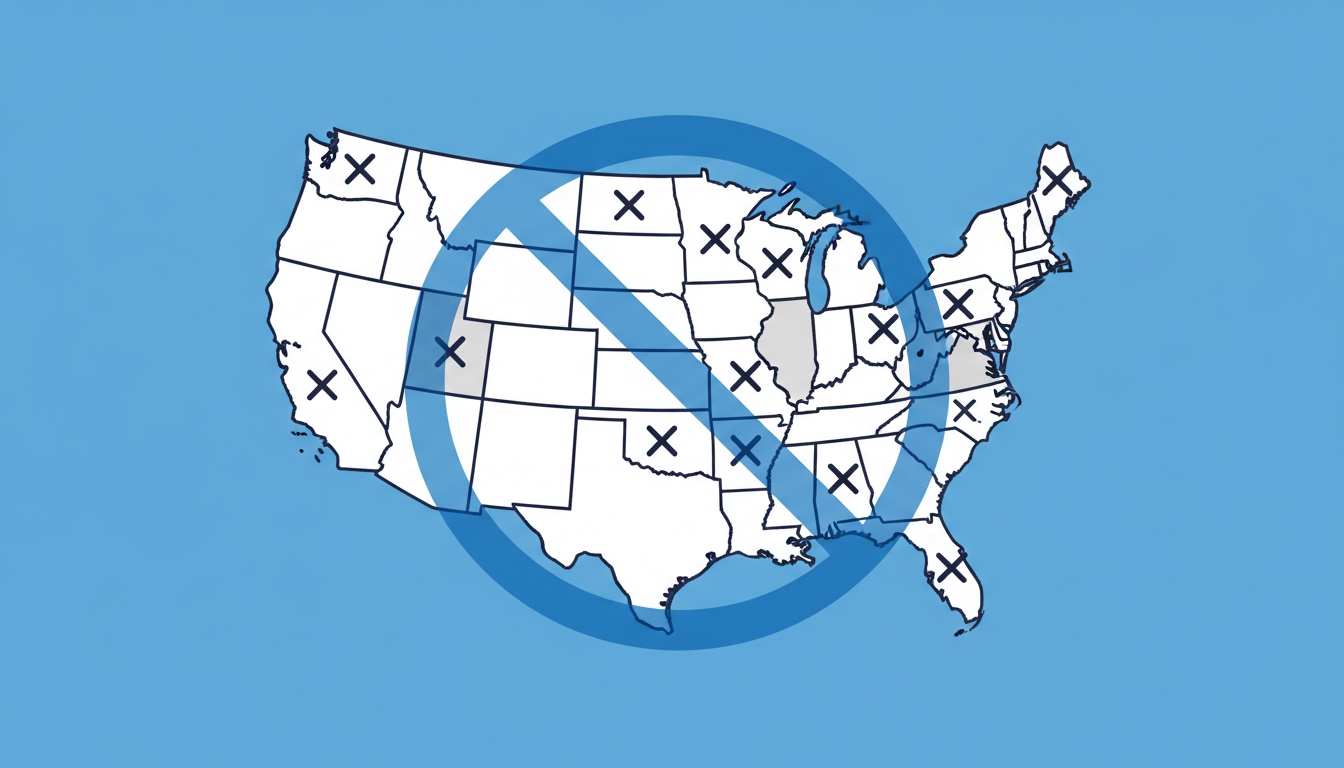
"Void where prohibited" is not legal boilerplate you include and forget. It's a substantive legal disclaimer that acknowledges the patchwork of state and local laws that restrict, limit, or outright prohibit certain types of prize promotions. When your sweepstakes is "void" in a jurisdiction, it means residents of that jurisdiction are ineligible, and you cannot legally award prizes there. Getting this wrong — either ignoring restrictions or misapplying the clause — creates real liability.
What "Void Where Prohibited" Actually Means
"Void" means legally unenforceable or non-existent in the affected jurisdiction. If your sweepstakes is void in a given state, then the promotion simply doesn't exist there as a legal matter — residents can't enter, can't win, and can't enforce prize claims. The sponsor isn't breaking the law by running the promotion elsewhere; they're just declaring that the promotion doesn't operate in the restricted location.
"Where prohibited" refers to specific jurisdictions where the law either:
- Directly bans the type of promotion you're running
- Imposes requirements you haven't met (registration, bonding, disclosures)
- Restricts the specific prize type (alcohol, firearms, tobacco, gambling-related prizes)
- Limits who can enter based on the promotion's structure (age, occupation)
VWP is a declaration, not a shield
Including 'void where prohibited' does not make a promotion legal everywhere else. It's a disclaimer that limits your exposure in restricted jurisdictions, not a blanket authorization. If your promotion is structured as an illegal lottery, the VWP clause doesn't protect you in states where lotteries are prohibited — because that's every state. The promotion structure itself must be legal; VWP handles edge-case local restrictions.
Why Some Jurisdictions Prohibit or Restrict Sweepstakes
Sweepstakes restrictions exist for several distinct legal reasons, and understanding the type of restriction helps you know whether VWP addresses it or whether you need affirmative action (like exclusion or alternative rules):
Lottery Law Overlap
Even well-structured sweepstakes occasionally brush up against state lottery statutes. A few states have interpreted certain promotion structures — particularly those with purchase-linked entries and nominal free alternatives — as lottery-adjacent even when they technically satisfy the three-element test. These states may require additional compliance steps or simply restrict certain promotion formats.
Unregistered Promotions
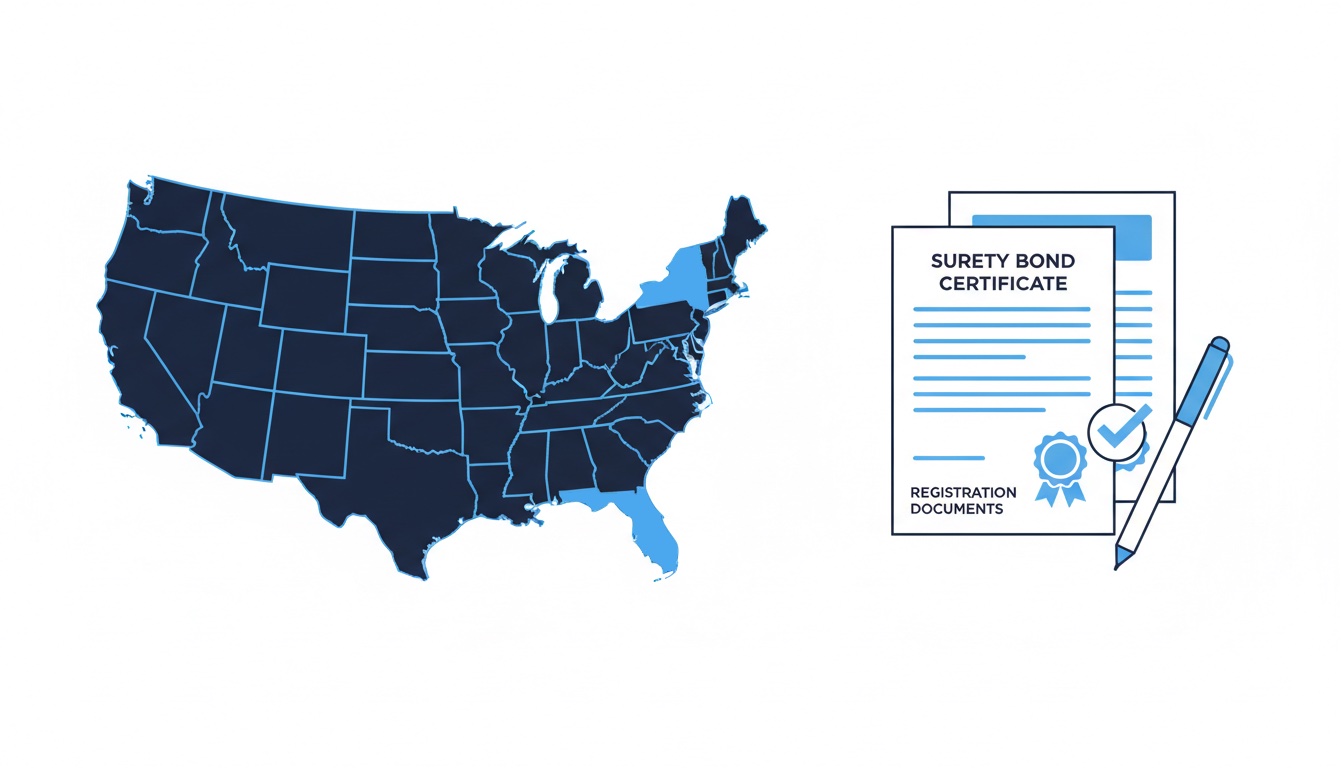
New York and Florida require advance registration for qualifying sweepstakes, and Rhode Island does too for qualifying retail/in-store promotions. Until you've registered where required, your promotion is effectively "prohibited" in those jurisdictions (because you haven't met the state's conditions for operating). The VWP clause handles this implicitly — but the better practice is to register rather than exclude large states.
Prize-Type Restrictions
Many states restrict specific prize categories:
- Alcohol prizes: Heavily restricted state-by-state; some states prohibit using alcohol as a prize entirely
- Firearms and weapons: Several states restrict prize promotions involving guns, ammunition, or related items
- Tobacco products: Promotions involving tobacco prizes face restrictions related to marketing regulations
- Gambling-related prizes: Casino credits, poker chips, and similar prizes face restrictions in non-gaming states
- Real estate: Some states restrict real estate prize promotions due to licensing requirements
Age-Specific Restrictions
The age of majority varies by state. Most states set it at 18, but Alabama and Nebraska require age 19, and Mississippi requires 21 for some purposes. Promotions involving alcohol-related prizes or online gambling elements may require higher age thresholds in specific states.
Download: State Law Summary PDF
A state-by-state reference guide covering sweepstakes restrictions, prize-type prohibitions, registration requirements, and age thresholds across all 50 states.
No spam. Unsubscribe anytime.
States With Notable Sweepstakes Restrictions
While all 50 states have laws that could potentially restrict some element of some promotion, these states are most commonly flagged in VWP analysis:
| State | Key Restriction | Impact |
|---|---|---|
| New York | Registration required for $5,000+ ARV; bonding required | Must register or exclude |
| Florida | Registration required for $5,000+ ARV; bonding required | Must register or exclude |
| Rhode Island | Registration required for $500+ ARV (retail/in-store only) | Must register or exclude (online-only exempt) |
| Utah | Broad anti-lottery statutes; some sweepstakes formats restricted | Review structure carefully |
| Arizona | Charity gaming restrictions; private sweepstakes generally OK | Low impact for standard promos |
| Louisiana | Alcohol prize restrictions; gaming-adjacent promotions restricted | Prize-type specific |
| Puerto Rico | Spanish-language disclosure requirements; additional rules | Territory-specific |
| Québec (Canada) | Skill-testing question required; bilingual rules required | Applicable if open to Canada |
Utah and anti-lottery statutes
Utah's constitution broadly prohibits lotteries and has been interpreted by some practitioners to cover certain sweepstakes formats more aggressively than other states. While most standard sweepstakes with proper AMOEs operate legally in Utah, brands occasionally encounter Utah-specific compliance questions for promotions with unusual entry structures. If your promotion has complex entry mechanics, Utah is worth a specific legal review.
How to Use the VWP Clause Correctly
The VWP clause in your official rules should work in combination with three other practices:
Correct VWP Implementation
Use the full standard language
Your official rules should include: 'Void where prohibited or restricted by law. All federal, state, and local laws and regulations apply.' Both parts matter — 'restricted' captures states that allow sweepstakes but impose conditions; 'all laws apply' reminds entrants that local laws govern their participation.
Explicitly list exclusions where needed
For prize-type restrictions (alcohol, firearms), don't just rely on VWP — explicitly state the restriction in the eligibility or prize section: 'Alcohol-related prizes are void in states where such prizes are prohibited, including [list states].' This is more defensible than a blanket VWP.
Handle registration states proactively
Don't use VWP as a substitute for registration in NY, FL, and RI. Either register or explicitly exclude those states from eligibility. VWP alone does not protect you from enforcement action in states where you haven't met registration requirements but are still accepting entries from residents.
Match advertising to rules
If your official rules include a VWP clause, your advertising materials must not imply eligibility in jurisdictions where the promotion is void. A TV ad running in Utah that implies Utah residents can enter, when your rules say void in Utah, creates a disclosure inconsistency the FTC can pursue.
"Void Where Prohibited" in Digital Promotions
For digital sweepstakes — social media giveaways, email campaigns, web-based entry — the VWP clause creates a practical challenge: IP geolocation is imperfect, and you can't guarantee residents of excluded states won't attempt to enter.
Best practices for digital VWP compliance:
- Geolocation blocking: For high-stakes exclusions (unregistered states), consider blocking entry form access by IP geolocation. Not foolproof, but demonstrates good-faith effort.
- Entry form acknowledgment: Require entrants to confirm their state of residence and check a box confirming eligibility. Ineligible entrants who provide false information shift liability to themselves.
- Winner verification: Verify winner's state of residence before awarding prizes. If a winner is from an excluded state, disqualify and select an alternate — your rules should explicitly permit this.
- Terms of service: Your entry terms should state that the entrant represents their state of residence and eligibility, and that you'll verify eligibility before prize award.
 Revup
Revup
Revup entry pages include eligibility verification and state exclusion logic — automatically filtering entries from ineligible jurisdictions based on your promotion settings.
VWP and International Promotions
If your sweepstakes is open to non-U.S. residents (or if your social media audience is global), VWP takes on additional significance. Most countries have their own sweepstakes and prize promotion laws, and many prohibit certain types of promotions entirely. Absent a specific compliance analysis for each country, limiting eligibility to the 50 U.S. states plus D.C. is the safest approach.
If you extend eligibility to Canada, be aware: the Canadian province of Québec requires bilingual rules (French and English), a skill-testing question for sweepstakes winners, and has its own registration requirements. The VWP clause alone is insufficient — you need affirmative compliance steps for Québec.
Standard VWP Language for Your Official Rules
This language should appear in every sweepstakes official rules document:
This Sweepstakes is void where prohibited or restricted by law. All federal, state, provincial, and local laws and regulations apply. It is solely the entrant's responsibility to know the laws of their jurisdiction with respect to participation in this Sweepstakes. Entrants who enter from jurisdictions where this Sweepstakes or the award of a prize is prohibited or restricted do so in violation of the Official Rules and will be disqualified.
For state-specific variations (alcohol prizes, age restrictions), add supplemental language directly in the prize and eligibility sections rather than relying solely on the general VWP clause.
See our complete official rules template for VWP language in context, and the interactive state law map for a visual reference of restrictions across all 50 states. For the complete legal framework, read the Complete Guide to Sweepstakes, Contest & Instant Win Laws.