Selecting a winner is the easy part. What happens next — notification, verification, documentation, and prize delivery — is where most sweepstakes stumble. A poorly managed fulfillment process can turn a successful campaign into a legal headache, a PR problem, or both.
This guide covers the complete post-selection process: how to notify winners, what to verify, how to handle tax documentation, when to select alternates, and how to communicate throughout. Every step has legal implications, so treat fulfillment with the same rigor you applied to your official rules.
The Winner Fulfillment Timeline
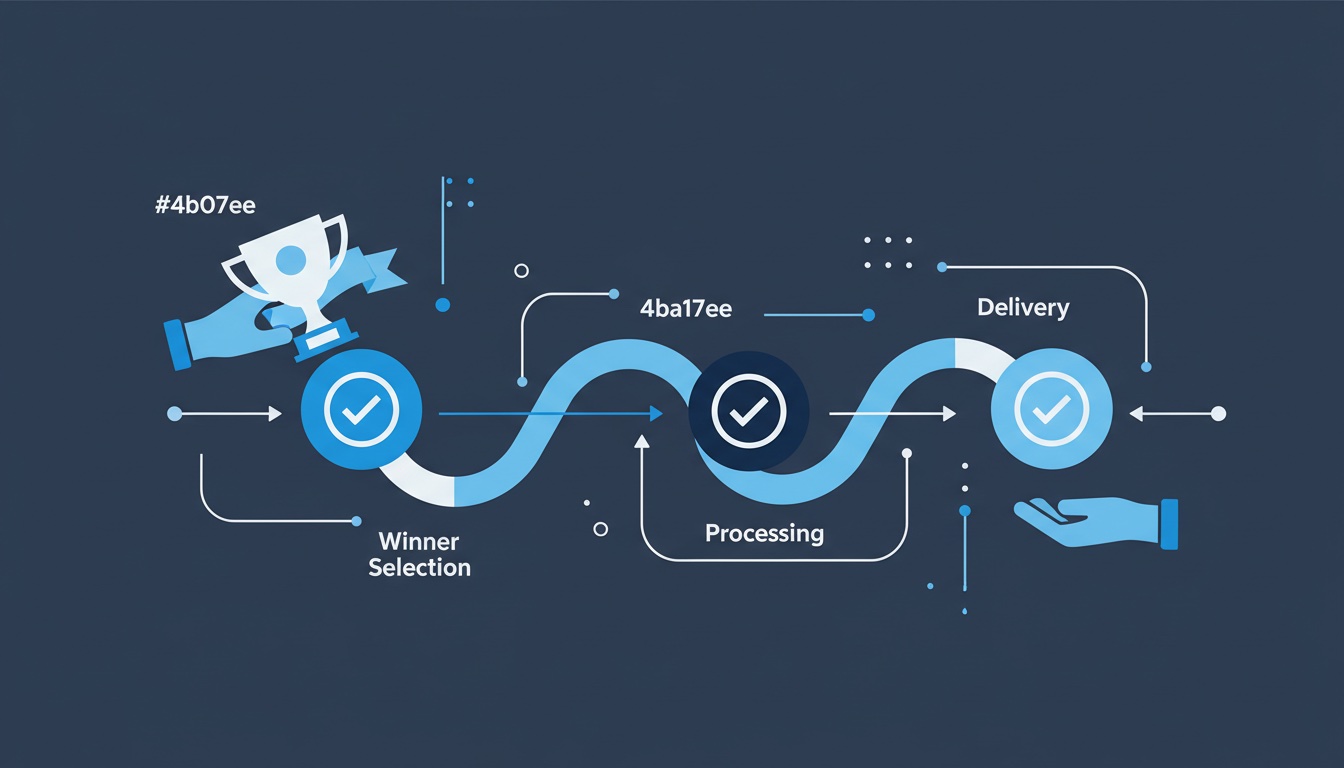
Fulfillment has a natural sequence, and each step depends on the one before it. Here's the standard timeline:
Winner Fulfillment Process
Winner draw (Day 0)
Select winner(s) using a verifiable random method. Document the selection process, including the random number generator used, the timestamp, and the total entry pool size. This documentation protects you if the selection is ever challenged.
Winner notification (Days 1-3)
Contact the winner via the method specified in your official rules (usually email). Include congratulations, prize description, response deadline, and next steps. Send via a tracked method so you can prove delivery.
Eligibility verification (Days 3-10)
Collect a signed affidavit of eligibility, liability release, and (where applicable) publicity release. Verify the winner meets all eligibility requirements from your official rules — age, residency, non-employee status.
Tax documentation (Days 10-20)
For prizes valued at $2,000 or more, collect the winner's Social Security number and prepare IRS Form 1099-MISC. For prizes under $2,000 (after the 2026 threshold change), no 1099 is required.
Prize fulfillment (Days 20-45)
Ship the prize, transfer funds, or arrange the experience. Use tracked shipping for physical prizes. Get signed confirmation of receipt. For cash prizes, use a payment method with a paper trail.
Post-fulfillment communication (Day 45+)
Thank the winner. Request a testimonial or photo (if you have publicity rights). Close the campaign file with complete documentation.
Build your fulfillment process before the campaign launches
Don't wait until winner selection to figure out your fulfillment process. Draft your notification emails, prepare your affidavit template, identify your shipping logistics, and confirm your tax reporting process before the promotion goes live. Your official rules should reflect the fulfillment process you've already planned — not the other way around.
Winner Notification Best Practices
Your official rules specify how winners will be notified — typically by email within a defined number of business days after the drawing. Follow your rules exactly. Deviating from the notification method or timeline described in your rules creates legal exposure.
Winner Notification Email Checklist
- Subject line: Clear identification as a winner notification, not a promotional email
- Congratulations with the specific prize they won
- Response deadline — typically 5-7 business days as specified in official rules
- Clear statement of what happens if they don't respond (alternate winner selected)
- Next steps: what documents they need to complete (affidavit, release forms)
- Contact information for questions — a real person or dedicated email address
- Link to the official rules for reference
- DO NOT ask for payment or banking information in the initial notification email
Send the notification from a recognizable email address (not noreply@) and use a subject line that clearly identifies the message as a legitimate winner notification. Many winners will initially assume the email is spam. Consider including details only the real winner would know — their entry date or the specific promotion name — to establish legitimacy.
Never request payment from a winner
A legitimate sweepstakes never requires the winner to pay anything to receive their prize. If your fulfillment process involves any cost to the winner (shipping, taxes), disclose this in your official rules before the promotion starts — and consider covering these costs as the sponsor. Asking for payment after the fact looks like a scam, even when it's legitimate.
Eligibility Verification
Before awarding the prize, verify that the winner meets every eligibility requirement stated in your official rules. This typically includes:
| Requirement | How to Verify | Common Issues |
|---|---|---|
| Age (usually 18+) | Affidavit of eligibility with date of birth | Minors entering with parent's email |
| Residency (U.S. or specific states) | Address on affidavit, ID if needed | PO boxes, military addresses, relocated winners |
| Non-employee status | Self-certification in affidavit | Employees of partner companies may be excluded too |
| One entry per person | Entry audit in platform | Duplicate entries under different emails |
| Compliance with official rules | Review entry against all rules | Late entries, altered entries, missing required fields |
| Correct entry method | Platform records | Entries through non-sanctioned channels |
The affidavit of eligibility is the standard document for verification. It's a sworn statement where the winner confirms they meet all eligibility requirements and releases the sponsor from liability. Most promotion attorneys have standard affidavit templates — use one that matches your official rules.
Set a firm response deadline for returning the completed affidavit. The standard is 5-7 business days from notification. If the winner doesn't respond within the deadline specified in your official rules, you move to the alternate winner. Don't extend deadlines — it creates legal ambiguity about whether the original rules were followed.
 Revup
Revup
Revup's winner draw system handles random selection with full documentation, and the Contacts CRM stores all entrant data needed for eligibility verification — so your fulfillment process starts with clean, organized winner information.
Tax Documentation and 1099 Requirements
Prize winnings are taxable income in the United States. The sponsor has specific tax reporting obligations depending on the prize value.
| Prize Value | 1099-MISC Required? | W-9 Required? | Notes |
|---|---|---|---|
| Under $600 (prizes awarded in 2025) | No | No | Old threshold — applies to 2025 prizes only |
| Under $2,000 (prizes awarded 2026+) | No | No | New threshold per One Big Beautiful Bill Act |
| $2,000 or more (2026+) | Yes | Yes — need SSN | File with IRS by Feb 28, send to winner by Jan 31 |
| Multiple prizes to same winner totaling $2,000+ | Yes | Yes | Aggregate prizes per calendar year per recipient |
A significant change took effect for prizes awarded after December 31, 2025: the 1099-MISC reporting threshold increased from $600 to $2,000 under the One Big Beautiful Bill Act, with automatic inflation adjustments beginning in 2027. This means sponsors no longer need to collect Social Security numbers or issue 1099-MISC forms for prizes valued under $2,000.
However, it's important to note that the prize is still taxable income to the winner regardless of whether a 1099 is issued. Winners are responsible for reporting prize income on their tax returns. Your notification materials should remind winners of their tax obligation and advise them to consult a tax professional — but never provide tax advice yourself.
Do not provide tax advice to winners
Your official rules and winner communications should clearly state that the winner is responsible for all taxes on the prize, and that any questions about tax implications should be directed to the winner's tax advisor. Providing specific tax advice — even well-intentioned — creates liability for the sponsor.
Prize Shipping and Delivery
Physical prizes need to arrive safely and on time. The fulfillment process varies significantly by prize type:
| Prize Type | Fulfillment Method | Documentation | Timeline |
|---|---|---|---|
| Physical products | Tracked shipping (FedEx, UPS, USPS) | Tracking number + delivery confirmation | 7-14 business days |
| Gift cards / store credit | Digital delivery via email | Email confirmation + code delivery receipt | 1-3 business days |
| Cash prizes | Check or electronic transfer | Cleared check or transfer confirmation | 7-21 business days |
| Experiences / trips | Booking confirmation + itinerary | Written confirmation with terms | Varies by experience |
| Digital prizes (software, subscriptions) | Access code or account setup | Activation confirmation | 1-5 business days |
| Vehicles or high-value items | Dealer or vendor coordination | Title transfer, registration docs | 30-60+ days |
Prize Shipping Checklist
- Use a shipping method with tracking and delivery confirmation for all physical prizes
- Require signature on delivery for prizes valued over $500
- Insure shipments for the full prize value
- Ship to the address provided in the affidavit — don't accept last-minute address changes without verification
- Keep shipping receipts and tracking information for your records
- For international prizes, research customs requirements and duties in advance
- Set winner expectations on delivery timeline — don't promise 'next week' if fulfillment takes 30 days
- Consider whether the sponsor or winner pays for shipping — this should be in your official rules
Alternate Winner Selection
Not every winner will respond, and not every winner will be eligible. Your official rules should specify the alternate winner process — how many alternates you'll select, by what method, and the timeline for each.
| Scenario | Action | Timeline |
|---|---|---|
| Winner doesn't respond to notification | Select alternate winner | After response deadline (5-7 business days) |
| Winner fails eligibility verification | Disqualify and select alternate | Upon discovering ineligibility |
| Winner declines the prize | Select alternate winner | Immediately upon written decline |
| Winner can't complete tax documentation | Select alternate winner | After documentation deadline |
| All alternates exhausted | Prize may go unawarded (per rules) | After all alternate attempts |
Industry data suggests that a meaningful percentage of winners don't claim their prizes — due to non-response, ineligibility, or inability to complete documentation. Always identify at least 2-3 alternate winners during your initial draw so you don't have to re-run the selection process. Your winner selection method should document alternates alongside the primary winner.
Winner Communication Templates
Consistent, professional communication throughout the fulfillment process protects your brand and reduces winner anxiety. Here are the key messages you need:
| Message | When to Send | Key Content |
|---|---|---|
| Winner notification | Days 1-3 post-draw | Congratulations, prize details, response deadline, next steps |
| Reminder (if no response) | 3 days before deadline | Friendly reminder of deadline, consequences of non-response |
| Verification received | Upon receiving affidavit | Confirmation of receipt, estimated prize delivery timeline |
| Prize shipped / delivered | Day of shipment | Tracking information, expected delivery date |
| Post-delivery follow-up | 3-5 days after delivery | Delivery confirmation request, testimonial ask (if applicable) |
| Tax documentation | January following win year | 1099-MISC if applicable, reminder of tax obligation |
Revup
Revup's Flows feature lets you set up automated email sequences triggered by campaign events — including post-winner notifications — so your fulfillment communications are consistent and timely without manual sends.
Managing Prize Value and Winner Expectations
One of the most common fulfillment challenges is prize value discrepancies. The winner expects exactly what was described in the promotional materials, and any deviation — even a minor one — creates conflict.
Preventing Prize Value Disputes
- Describe prizes in official rules with exact specifications — brand, model, color, size, quantity
- Include 'approximate retail value' (ARV) for every prize
- State that sponsor may substitute a prize of equal or greater value if the described prize is unavailable
- Specify what is and isn't included — if a trip prize doesn't include airfare, say so explicitly
- Use product photos in promotional materials that match the actual prize, not upgraded versions
- If the prize is an experience, define blackout dates, expiration, and booking requirements
- For gift cards, specify the issuer and whether there are usage restrictions
The substitution clause is particularly important. Supply chain issues, product discontinuations, and availability changes can make the originally described prize unavailable. A well-drafted substitution clause in your official rules gives you the flexibility to fulfill the prize value even if the specific item isn't available.
International Prize Fulfillment
If your promotion is open to international participants, prize fulfillment becomes significantly more complex. Customs, duties, taxes, and shipping logistics vary by country and can add substantial cost and time to the fulfillment process.
| Challenge | Implication | Solution |
|---|---|---|
| Customs duties | Winner may owe import taxes on physical prizes | Disclose in rules or cover costs as sponsor |
| Shipping costs | International shipping is 3-10x domestic | Budget for it or limit eligibility to domestic |
| Local tax laws | Tax obligations vary by country | Advise winner to consult local tax advisor |
| Prize restrictions | Some items can't be shipped internationally | Offer cash equivalent or digital alternative |
| Delivery timelines | International shipping takes 2-6 weeks | Set clear expectations in winner communication |
| Currency conversion | Cash prizes need conversion for non-USD winners | Specify currency in official rules |
Many sponsors avoid these complications by limiting eligibility to the United States (or a single country) and offering digital prizes (gift cards, software licenses, cash via PayPal) for any international components. If you're planning an international promotion, build the additional fulfillment costs into your campaign budget from the start. For guidance on geographic eligibility and compliance, see our sweepstakes law guide.
Documentation and Record-Keeping
Maintain complete records of every step in the fulfillment process. If a winner disputes the process, a regulatory body investigates, or a legal challenge arises, your documentation is your defense.
Fulfillment Records to Retain
- Complete entry database with timestamps, IP addresses, and source data
- Winner selection documentation — random method used, total entries, date/time of draw
- All winner communication — notification emails, reminders, responses
- Signed affidavit of eligibility and liability/publicity releases
- W-9 and 1099-MISC copies for prizes at or above the reporting threshold
- Shipping receipts, tracking numbers, and delivery confirmations
- Any correspondence regarding prize disputes or winner complaints
- Final campaign report including total entries, valid entries, winners, and alternates used
Retain these records for at least 4-7 years — this covers most statutes of limitations for contractual disputes and tax audits. Your promotion attorney can advise on the specific retention period appropriate for your jurisdiction and prize value.
Revup
Revup stores complete entry data, winner selection records, and participant communication history in one platform — creating the documentation trail you need for compliant fulfillment and long-term record-keeping.
Frequently Asked Questions
What happens if a winner never responds to the notification?
Follow the process specified in your official rules. Typically, you send the initial notification and one reminder, wait for the response deadline to pass (usually 5-7 business days), then select an alternate winner using the same random method. Document each step — the notification sent, the deadline passed, and the alternate selection. The unclaimed prize goes to the alternate; it does not go back to the sponsor unless all alternates are also exhausted.
Do I need to gross up prizes for taxes?
You're not legally required to — the winner is responsible for taxes on their prize. However, some sponsors choose to "gross up" high-value prizes, providing the winner with additional cash to cover the tax burden. This is a goodwill decision, not a legal requirement. If you gross up, the gross-up payment itself is also taxable, so the math is more complex than simply adding the tax percentage. Consult a tax professional for exact calculations.
Can a winner transfer their prize to someone else?
Only if your official rules allow it. Most sweepstakes rules state that prizes are non-transferable and must be accepted by the named winner. If you want to allow transfers, include specific transfer provisions in your rules. Note that the tax reporting obligation typically stays with the original winner, not the transferee, regardless of who ends up with the prize.
What if the winner lives in a state where I didn't register the promotion?
This is a legal question that depends on the specific state and prize value. Some states require advance registration for certain prize values. New York and Florida apply broadly, while Rhode Island's filing rule is limited to qualifying retail/in-store promotions. If the winner is in a state where registration was required but not completed, consult your promotion attorney immediately. This is one reason to complete state registrations before launching.
How long should I keep winner fulfillment records?
At minimum, 4-7 years. This covers statutes of limitations for contractual disputes (typically 4-6 years depending on state) and IRS audit periods (typically 3 years, but up to 6 in some cases). For high-value prizes ($25,000+), consider retaining records indefinitely. Storage is cheap; legal exposure from missing records is not.
For the complete framework from campaign planning through fulfillment, explore our sweepstakes marketing strategy guide or review the winner selection guide for the steps leading up to fulfillment.