
Sweepstakes Marketing Strategy Guide
Strategic guide to sweepstakes marketing — ROI benchmarks, budget planning, fraud prevention, and data collection strategies.
Last updated: April 2, 2026
Sweepstakes and contests are often among the most cost-efficient ways to grow an owned audience. Well-structured campaigns can capture leads below typical paid-media costs, grow email lists at scale, and create measurable downstream value through repeat reach, segmentation, and follow-up conversion.
But strategy is what separates a sweepstakes that generates vanity metrics from one that drives real business results. Prize selection, audience targeting, entry mechanics, fraud prevention, follow-up sequences, and measurement frameworks all affect whether your promotion builds a valuable customer pipeline or just burns through your marketing budget.
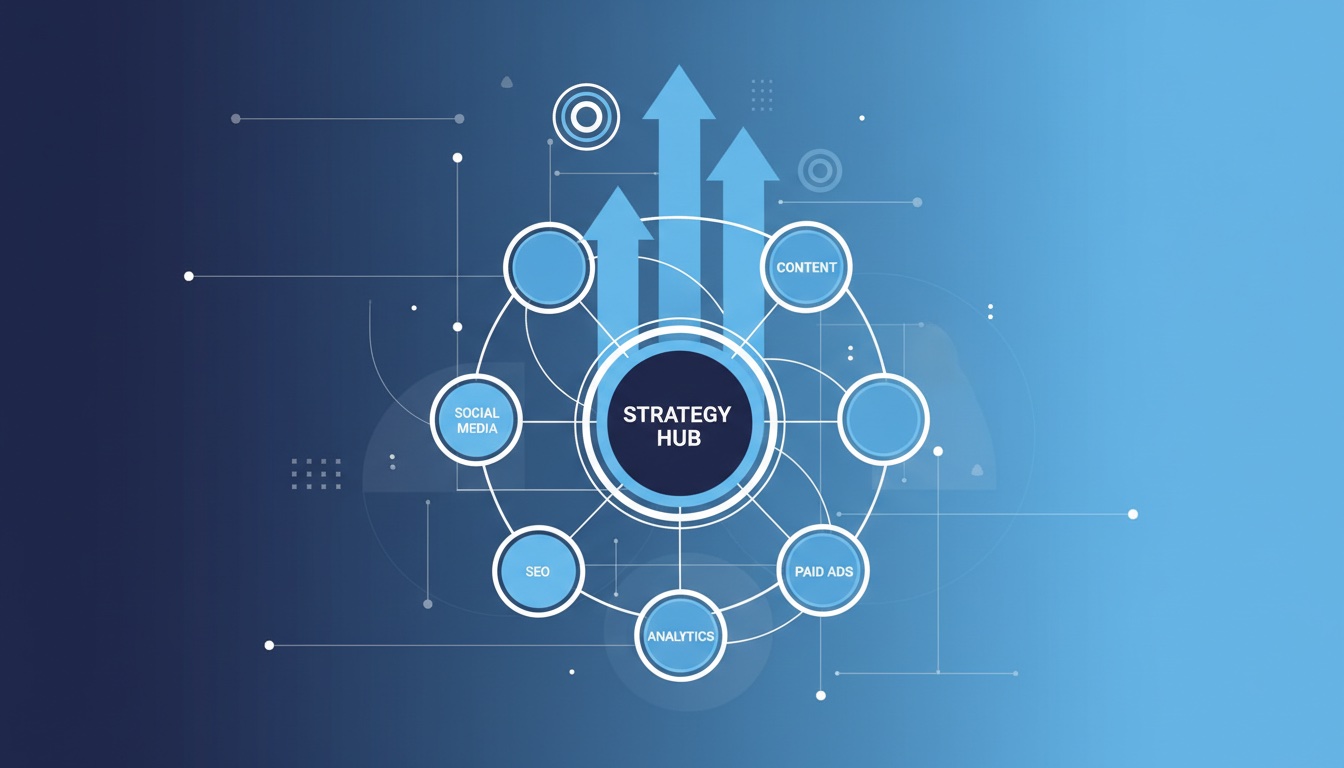
This guide is the strategic hub for sweepstakes and contest marketing. Each section below covers a critical dimension of promotional strategy, with links to detailed standalone articles that go deeper into each topic. Whether you're building your first sweepstakes or scaling an existing program, start here to ground your decisions in data, benchmarks, and proven frameworks.
How this guide connects to other resources
This Strategy & ROI guide focuses on the business case and strategic decisions behind promotional marketing. For execution — how to actually set up and run a sweepstakes — see our How-To Guide. For legal compliance, see our Sweepstakes Laws Guide. For industry-specific strategies, see Industry Playbooks. For seasonal timing, see the Seasonal Calendar.
ROI Benchmarks: What Good Looks Like
You can't set targets without benchmarks, and you can't defend a budget without data. The first step in any promotional strategy is understanding what performance looks like — and how sweepstakes compare to other marketing channels.
| Channel | Average Cost Per Lead | Conversion Rate | Data Ownership |
|---|---|---|---|
| Google Ads | $70.11 | 5-15% | Platform-dependent |
| Facebook Ads | $27.66 | 5-15% | Platform-dependent |
| Sweepstakes | $0.50-$3.00 | 25-40% | You own it (first-party) |
| Content marketing | $15-$50 | 5-15% | You own it |
| LinkedIn Ads | $75-$100+ | 5-10% | Platform-dependent |
Sweepstakes consistently deliver leads at 10-50x lower cost than paid search and 5-20x lower than paid social. The trade-off is lead intent — paid search captures active demand, while sweepstakes create demand through value exchange. The best marketing plans use both channels, with sweepstakes driving cost-efficient list building and paid ads driving high-intent conversions.
Our ROI Benchmarks article breaks these numbers down by promotion type, industry vertical, and campaign scale — with specific targets for entry rates, email acquisition costs, social engagement, and purchase lift.
Proven Campaign Patterns
Benchmarks tell you what's typical. Case studies show you what's possible. Across dozens of documented campaigns, several patterns consistently produce strong results:
| Campaign Pattern | Primary Result | Key Success Factor |
|---|---|---|
| Email acquisition sweepstakes | 60-75% of entrants are new subscribers | Brand-relevant prize + post-entry nurture sequence |
| Social growth contest | Faster follower growth and heavier comment volume | Social sharing mechanics + landing page capture |
| Purchase sweepstakes | 12-18% sales lift during promotion | Strong AMOE + post-purchase follow-up |
| UGC contest | Higher engagement and stronger social proof on landing pages | Clear creative prompt + content amplification plan |
| Referral campaign | Lowest CPL of any format | Tiered referral incentives + easy sharing |
| Multi-channel campaign | 3-5x total entries vs. single channel | Email + social + website + paid coordination |
Our Case Studies article details each pattern with real performance data, the specific tactics that drove results, and the common mistakes that separate strong campaigns from average ones.
Sweepstakes vs. Paid Advertising
The most common question in budget allocation is whether promotional dollars should go to paid ads or sweepstakes. The answer isn't either/or — it's understanding which channel does what:
- Paid ads capture existing demand from people actively searching for your solution. High intent, high cost, immediate results.
- Sweepstakes create new demand by reaching people who match your target profile but aren't actively searching. Lower intent, dramatically lower cost, requires nurturing.
The most effective strategy combines both: use paid ads to promote your sweepstakes. Sweepstakes landing pages convert at 25-40% — far higher than standard landing pages — so your paid ad spend goes further when it drives traffic to a promotion versus a standard lead form.
Our Sweepstakes vs. Paid Ads article provides a complete cost comparison, audience quality analysis, and a practical budget allocation framework for blending both channels.
 Revup
Revup
Revup's analytics dashboard tracks entries, conversions, and channel attribution in real time — giving you the data you need to compare promotional ROI against your other marketing channels.
First-Party Data Strategy
With third-party cookies deprecated across all major browsers, the brands that built their marketing on cookie-based targeting face a structural problem. Promotional marketing offers a solution: high-volume, consent-based first-party data collection.
Sweepstakes, quizzes, and surveys are the most effective mechanisms for capturing first-party data because they solve the value exchange problem — consumers willingly share information in exchange for a chance to win, a personalized recommendation, or an entertaining experience.
The strategic advantage is that first-party data compounds. Once a participant has opted in, you can keep reaching that audience without paying to reacquire it, enrich the profile over time, and use subsequent campaigns to sharpen segmentation instead of starting from zero.
Our First-Party Data article covers the complete data strategy: what to collect, how to collect it compliantly, how to activate it across your marketing stack, and how to build rich customer profiles through progressive profiling across multiple campaigns.
Fraud Prevention
A sweepstakes that attracts 50,000 entries loses its value if 30,000 of those entries are from bots, fake emails, and duplicate accounts. Fraud contamination inflates metrics, wastes email budget, and undermines winner fairness.
The solution is layered fraud prevention matched to your campaign's risk profile: IP limits to prevent automated submissions, CAPTCHA to block bots, VPN blocking to enforce geographic restrictions, and post-campaign auditing to catch entries that slipped through automated defenses.
Our Fraud Prevention article covers every threat type — bots, duplicate accounts, VPN abuse, organized gaming rings, and sweepstakes hobbyists — with specific countermeasures and configuration recommendations for each risk level.
Winner Fulfillment
Selecting a winner is the easy part. What follows — notification, eligibility verification, tax documentation, prize delivery, and alternate selection — is where most promotions stumble. A key recent development: the 1099-MISC reporting threshold increased from $600 to $2,000 for prizes awarded after December 31, 2025, reducing the documentation burden for moderate-value prizes.
Our Winner Fulfillment article provides the complete post-selection management guide: notification templates, verification procedures, tax documentation requirements, prize shipping logistics, and record retention recommendations.
User-Generated Content Contests
UGC often outperforms brand-only creative on engagement and trust signals, especially when shoppers can see real participants using the product in context. Contests are one of the most reliable ways to generate that content at scale — each entry becomes an asset you can reuse across marketing channels.
Yet only 16% of brands have a dedicated UGC strategy. Our UGC Contest Strategy article covers campaign structure, submission mechanics, rights management, judging frameworks, and content amplification strategies that extract ongoing value from contest submissions.
Email List Building
Email marketing returns $36-$45 for every $1 spent — making email subscriber acquisition one of the highest-value activities in marketing. Sweepstakes acquire subscribers at $0.50-$3.00 each, compared to $27-$70+ through paid advertising.
The strategic challenge isn't capturing emails — sweepstakes landing pages convert at 34%. It's converting sweepstakes subscribers into engaged email recipients and then into paying customers. That requires the right opt-in mechanics, immediate post-entry nurture sequences, and ongoing list quality management.
Our Email List Building article covers the complete workflow: entry form optimization, email platform integration, opt-in strategies, deliverability protection, nurture sequences, and quality measurement.
Revup
Revup integrates natively with 10 email and SMS platforms — including Klaviyo, Mailchimp, HubSpot, and ActiveCampaign — syncing promotion contacts in real time so your welcome email fires within minutes of entry.
2026 Promotional Marketing Trends
The promotional marketing landscape is evolving rapidly. The biggest shifts in 2026:
| Trend | Impact | Action Required |
|---|---|---|
| First-party data priority | Replaces cookie-based targeting as primary data source | Treat every promotion as a data collection opportunity |
| Gamification maturity | 5-7 return visits vs. 3-5 for standard sweepstakes | Add instant win, leaderboards, multi-action mechanics |
| AI-powered optimization | Personalized experiences, smarter fraud detection | Use AI chatbots and predictive tools where available |
| Interactive content formats | Quizzes and surveys replace static forms | Experiment with quiz/survey promotion types |
| Privacy-first design | Stronger regulations, higher consumer expectations | Explicit consent, minimal collection, transparency |
| Embed-everywhere distribution | Promotions on every touchpoint, not just landing pages | Use widget, popup, and leaderboard embeds |
Our Trends article covers all ten trends in detail, with practical guidance for incorporating each into your 2026 promotional strategy.
Getting Started: Your Strategic Framework
Promotional Marketing Strategic Framework
Define your primary objective
Email acquisition? Social growth? Purchase lift? Brand awareness? Your objective determines the promotion type, prize, entry mechanics, and measurement framework. Don't try to optimize for everything simultaneously.
Set benchmark-informed targets
Use the ROI benchmarks guide to set realistic pre-campaign targets for your 3-5 most important metrics. Write them down and share with stakeholders before launch.
Choose your promotion type
Standard sweepstakes for volume. Quizzes for data richness. Contests for UGC. Purchase sweepstakes for revenue lift. Referral campaigns for viral growth. Match the format to your objective.
Build your follow-up system before launch
Email welcome sequence, CRM integration, and measurement dashboards should be ready before the first entry comes in. The most common failure in promotional marketing is collecting contacts without a plan to convert them.
Run, measure, iterate
Launch your campaign, monitor performance against benchmarks, optimize in real time, and build your internal benchmark library. Each campaign informs the next — promotional marketing compounds when you invest in measurement.
Related Guides
This Strategy & ROI guide is one part of a comprehensive resource library for promotional marketing. For execution, compliance, and vertical-specific guidance, explore:
| Guide | Focus | Best For |
|---|---|---|
| How to Run a Sweepstakes | Step-by-step execution guide | First-time promotion managers |
| Sweepstakes Laws Guide | Legal compliance by state and federal | Legal teams, compliance officers |
| Social Media Contest Rules | Platform-specific compliance | Social media managers |
| Industry Playbooks | Vertical-specific strategies | Industry marketers |
| Seasonal Calendar | Campaign timing optimization | Marketing planners |
Launch your next high-ROI promotion with Revup
Start your free trial and see how Revup makes promotion marketing effortless.
In this guide
Sweepstakes Marketing ROI Benchmarks
Industry data on conversion rates, cost per lead, email acquisition costs, and channel comparisons for sweepstakes campaigns.
ReadContest Marketing Case Studies
Real campaign results from brand promotions — email growth, engagement lifts, purchase increases, and the strategies behind them.
ReadSweepstakes vs Paid Ads
Data-driven comparison of sweepstakes and paid advertising on cost, audience quality, data ownership, and when to use each.
ReadFirst-Party Data Collection via Promotions
How sweepstakes and quizzes give brands a privacy-compliant way to collect first-party data in the post-cookie world.
ReadSweepstakes Fraud Prevention
Detecting and preventing bot entries, duplicate accounts, IP manipulation, and organized gaming with practical countermeasures.
ReadWinner Fulfillment Best Practices
Post-selection management — notification procedures, eligibility verification, tax documentation, prize shipping, and alternate selection.
ReadUGC Contest Strategy
Running user-generated content campaigns — submission mechanics, rights management, judging, and content amplification.
ReadSweepstakes Email List Building
Growing your email list through promotions — opt-in strategies, platform integrations, list quality, and nurture sequences.
ReadPromotional Marketing Trends 2026
Annual trends roundup — AI personalization, gamification, first-party data, social commerce, and interactive content formats.
Read