Sweepstakes compliance doesn't end when the winner is selected. For prizes worth $2,000 or more (as of 2026), federal tax law kicks in — and as the sponsor, you have specific obligations to the IRS and to your winners. Get this wrong and you're not just violating tax law; you're exposing your winners to surprise tax liability and yourself to IRS penalties for failure to file.
Important 2026 update: The One Big Beautiful Bill Act (OBBBA) raised the Form 1099-MISC reporting threshold for sweepstakes and contest prizes from $600 to $2,000, effective for prizes awarded on or after January 1, 2026. The threshold will be adjusted annually for inflation beginning in 2027. If you're looking at guidance from 2025 or earlier, the old $600 threshold no longer applies.
This guide covers everything sponsors need to know about sweepstakes tax reporting under the current rules: the thresholds that trigger obligations, when to issue 1099-MISC forms, when backup withholding is required, how to collect W-9s from winners, and what to disclose to entrants in your official rules.
Tax law applies regardless of your company size
IRS prize reporting requirements apply to all sponsors — startups, nonprofits, large corporations, and individual promoters alike. There's no small-business exemption, no minimum number of promotions, and no grace period for first-time sponsors. If you award a qualifying prize, you have reporting obligations.
The $2,000 Threshold: When Tax Reporting Applies (2026)
Effective January 1, 2026, the IRS requires sweepstakes sponsors to report prizes when the fair market value (FMV) of a prize awarded to a single winner reaches $2,000 or more in a calendar year. This was raised from the previous $600 threshold by the One Big Beautiful Bill Act. The threshold applies per winner, not per promotion, and will be adjusted for inflation annually starting in 2027.
Key points about the $2,000 threshold:
- The value used is Fair Market Value (FMV) — the price a willing buyer would pay a willing seller — not your cost to acquire the prize or the retail price you've assigned for ARV purposes.
- Multiple prizes awarded to the same person in the same year are aggregated. If you award someone a $1,200 prize in March and a $900 prize in November, the combined $2,100 exceeds the threshold — even if neither individual prize does.
- Cash prizes always have a FMV equal to their face value.
- Non-cash prizes (electronics, vacations, vehicles) must be valued at FMV. Use published retail prices as a reasonable proxy, or get an appraisal for high-value unique items.
- Prizes under $2,000 are still taxable income to the winner — the threshold change only affects your reporting and W-9 collection obligation, not the winner's tax liability.
| Prize Value (FMV) | 1099-MISC Required? | Backup Withholding? | W-9 Required? |
|---|---|---|---|
| Under $2,000 | No (as of 2026) | No | Not required |
| $2,000 – $4,999.99 | Yes (Box 3) | No (unless no TIN provided) | Yes — collect before payment |
| $5,000+ | Yes (Box 3) | 24% withholding required | Yes — must have before prize delivery |
Form 1099-MISC: What Sponsors Must File
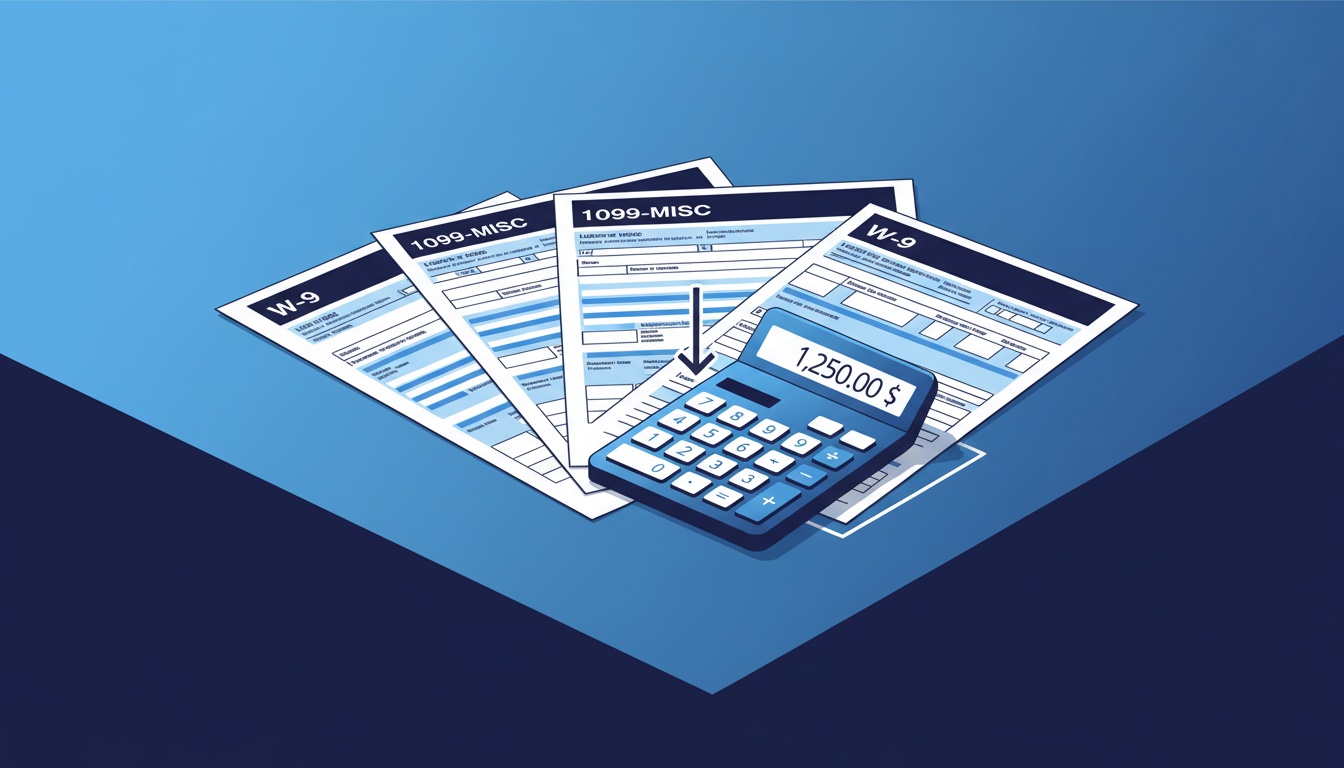
For prizes of $2,000 or more (in 2026), you must issue a Form 1099-MISC to the winner and file a copy with the IRS. The prize amount goes in Box 3: Other income.
Filing Deadlines
- To winner: January 31 of the year following the prize award
- To IRS (paper): February 28 of the year following the prize award
- To IRS (electronic): March 31 of the year following the prize award
Example: A sweepstakes that closes in November 2026 with a winner receiving a $3,000 prize requires the 1099-MISC to be issued to the winner by January 31, 2027, and filed with the IRS by February 28 or March 31, 2027 (depending on filing method). A winner receiving a $1,500 prize in 2026 does not require a 1099-MISC — but that winner still owes income tax on the prize and should be informed of this in your official rules.
What Information You Need From the Winner
To complete the 1099-MISC, you need the winner's:
- Full legal name
- Complete mailing address
- Social Security Number (SSN) or Employer Identification Number (EIN) — collected via Form W-9
Collect W-9s before delivering prizes
Don't deliver the prize before receiving a completed W-9. Once the winner has the prize, your leverage for obtaining the required tax information is gone. Include W-9 collection as a mandatory step in your winner verification process — and state in your official rules that winners must provide tax documentation as a condition of prize receipt.
The $5,000 Threshold: When Backup Withholding Applies
For prizes over $5,000, an additional requirement kicks in: backup withholding. You must withhold 24% of the prize value and remit it to the IRS on the winner's behalf — unless the winner provides a completed W-9 with their TIN (Taxpayer Identification Number).
This creates a practical challenge for non-cash prizes. If you're awarding a $10,000 car, you can't withhold 24% of a car. You have two options:
- Gross-up the prize: Provide additional cash alongside the non-cash prize to cover the withholding. If the prize is worth $10,000, you'd provide $2,400 in cash to cover the 24% withholding. (The prize package then has a total FMV of $12,400, which may trigger additional withholding — consult a tax professional for large prizes.)
- Winner pays withholding: Require the winner to pay the withholding amount before you release the non-cash prize. Some winners decline prizes rather than pay the tax liability — this is common for vehicles and vacations. Your official rules should state that winners are responsible for all taxes, fees, and expenses associated with prizes.
Prize Tax Handling Process
Determine prize FMV
Establish the fair market value of each prize tier. For cash: face value. For non-cash: published retail price or appraisal. Document your FMV calculation.
Send winner notification with W-9 request
When notifying the potential winner, immediately include a W-9 request. State clearly that prize delivery is contingent on receipt of completed W-9 with valid TIN.
Verify TIN and complete withholding analysis
For prizes $2,000-$4,999: verify TIN is provided via W-9; no withholding required. For prizes $5,000+: calculate 24% withholding requirement. Determine whether to gross up or require winner contribution. Prizes under $2,000: no W-9 or withholding required, but inform winner of their personal tax obligation.
Deliver prize and document everything
Complete prize delivery with full documentation. Keep winner's W-9, prize valuation, delivery confirmation, and any withholding calculations in your records.
Issue 1099-MISC by January 31
File 1099-MISC with the prize amount in Box 3. Send copy to winner at their W-9 address by January 31. File with IRS by the applicable deadline (paper: Feb 28; electronic: Mar 31).
For a complete guide to the winner notification and prize delivery process beyond tax documentation, see winner fulfillment best practices.
What Winners Owe: Setting Expectations
Sweepstakes winners are responsible for paying income tax on prizes. The prize is treated as ordinary income — taxed at the winner's marginal rate — not as a capital gain or gift. For a winner in the 22% tax bracket, a $5,000 prize results in roughly $1,100 in federal income tax owed at year-end.
Your official rules must inform winners of this reality. Include language such as:
Winner is solely responsible for all federal, state, and local taxes on the prize. Winner may be required to complete and return an IRS Form W-9 prior to prize delivery. A Form 1099-MISC will be issued to U.S. winners for prizes valued at $2,000 or more (per IRS requirements effective 2026). All prizes constitute taxable income regardless of value. Prizes will be awarded as described; no cash equivalent or substitution will be made except at Sponsor's discretion.
State income taxes add to winner obligations
In addition to federal income tax, most states impose state income tax on prize winnings. Some states (California, for example) tax sweepstakes prizes at rates up to 13.3% for high-income winners. Your official rules should reference that state and local taxes are the winner's responsibility, not just federal taxes. California, New York, and New Jersey residents in particular face high combined tax rates on large prizes.
Vehicle Prizes: Special Considerations
Vehicle prizes are a common source of tax compliance errors because of their high value and the withholding complexities involved. Key points:
- The taxable FMV is the MSRP of the vehicle, including standard equipment. Dealer add-ons, taxes, and registration fees may or may not be included depending on what's provided.
- At $5,000+, backup withholding is required unless winner provides W-9.
- Many winners prefer to sell the prize rather than accept it — which is their right, but the tax obligation is based on FMV at time of award, not their sale price.
- If you pay cash in lieu of the vehicle, the cash payment is directly taxable and reportable.
Travel Prizes: Valuing Experiences
Travel prizes (flights, hotels, experiences) must be valued at FMV — the retail price a consumer would pay for the same package. Do not use your negotiated or comped rate. If you obtained the travel at a significant discount or as a media trade, the taxable value is still the consumer retail price.
- Use published retail rates for flights and hotels (what a consumer would pay booking today)
- Document your FMV calculation with screenshots or quotes from public booking sites
- Include the value of all components: flights, hotel, transfers, meals, event tickets
When choosing between prize types, consider the tax burden your winners will face. Our sweepstakes prize ideas guide can help you select prizes that balance appeal with practical winner experience.
 Revup
Revup
Revup tracks prize values and flags tax reporting requirements automatically — so you know which winners need W-9s and 1099s before prizes are awarded.
Tax Reporting in Your Official Rules: Required Language
Tax Compliance Checklist for Official Rules
- State that all prizes constitute taxable income and all taxes are the winner's responsibility
- State that winners may be required to complete a W-9 as a condition of prize receipt (required for prizes $2,000+)
- State that 1099-MISC will be issued for prizes valued at $2,000 or more (current 2026 threshold; subject to annual inflation adjustment)
- State that the prize must be accepted as awarded — no cash equivalent (unless offered)
- State that backup withholding may apply to prizes over $5,000 unless winner provides W-9
- Include prize ARV (approximate retail value) for each prize tier
- State that ineligible winners or those who fail to provide required documentation will forfeit the prize
Download: State Law Summary PDF (includes tax thresholds)
A state-by-state reference guide covering prize tax rates, withholding requirements, and state income tax exposure for sweepstakes winners — useful for brands and compliance teams planning national promotions.
No spam. Unsubscribe anytime.
Frequently Asked Questions
Do I need to issue a 1099 for every prize?
Only for prizes with an FMV of $2,000 or more per recipient per calendar year (as of 2026, per the One Big Beautiful Bill Act — previously $600). Prizes under $2,000 don't require a 1099-MISC, though they're still taxable income for the winner. You no longer need to collect a W-9 for prizes under $2,000, which significantly reduces administrative burden for smaller promotions. Keep records of all prizes awarded regardless of value.
What if the winner refuses to provide a W-9?
If a winner refuses to provide their TIN (SSN or EIN) on a W-9, you should apply backup withholding at 24% before delivering any prize payment. For non-cash prizes, you may choose to disqualify the winner and select an alternate — which is why your official rules should explicitly state that providing required documentation is a condition of prize receipt.
What if the winner is a minor?
Minors can win sweepstakes prizes, but the tax documentation (W-9) must typically be completed by a parent or guardian. The 1099-MISC would be issued in the minor's name and SSN. For large prizes to minors, consult a tax advisor about custodial arrangements.
Are sweepstakes prizes subject to self-employment tax?
No. Sweepstakes prizes are not self-employment income — they're reported as "other income" on the winner's tax return and are not subject to the 15.3% self-employment tax that applies to business income. They are subject to ordinary income tax rates.
For a complete compliance picture, see our guides on official rules requirements, state registration and bonding, the Complete Guide to Sweepstakes, Contest & Instant Win Laws, and the interactive sweepstakes law map for state-by-state overlays.