Retail foot traffic is harder to earn than ever. Even when shoppers walk through the door, they're comparison-shopping on their phones, scanning for online coupons, and leaving without buying if nothing captures their attention. The retailers winning today aren't just merchandising better — they're turning the physical store into an interactive marketing channel.
In-store contests, sweepstakes, and giveaways bridge the gap between the physical shopping experience and digital engagement. A QR code on an endcap display captures an email address. A spin-to-win game at checkout drives impulse purchases. A multi-store scavenger hunt generates weeks of repeat visits. These aren't gimmicks — they're proven promotional mechanics adapted for the retail floor.
This guide covers the best in-store promotion formats for retailers, how to structure them for compliance and maximum engagement, and where to place signage so shoppers actually participate.
Why In-Store Promotions Still Matter
Ecommerce captures headlines, but physical retail still accounts for over 80% of total U.S. retail sales. The challenge isn't that shoppers don't visit stores — it's that retailers struggle to convert foot traffic into measurable marketing outcomes. Most in-store visitors leave without giving you their email, phone number, or any identifiable data.
In-store promotions solve this by giving shoppers a reason to engage digitally while they're physically present. The exchange is simple: you offer a chance to win something valuable, and they give you their contact information and opt in to future marketing.
The best in-store promotions accomplish multiple goals simultaneously:
- Capture first-party data — email addresses, phone numbers, and marketing opt-ins from shoppers who would otherwise remain anonymous
- Increase dwell time — shoppers who engage with a promotion spend more time in the store and visit more departments
- Drive repeat visits — multi-entry promotions or daily-play games bring shoppers back throughout the campaign period
- Create social sharing — winners and participants share their experience, extending your reach beyond the store walls
- Boost basket size — purchase-linked bonus entries incentivize larger transactions at checkout
QR Code Entry Campaigns
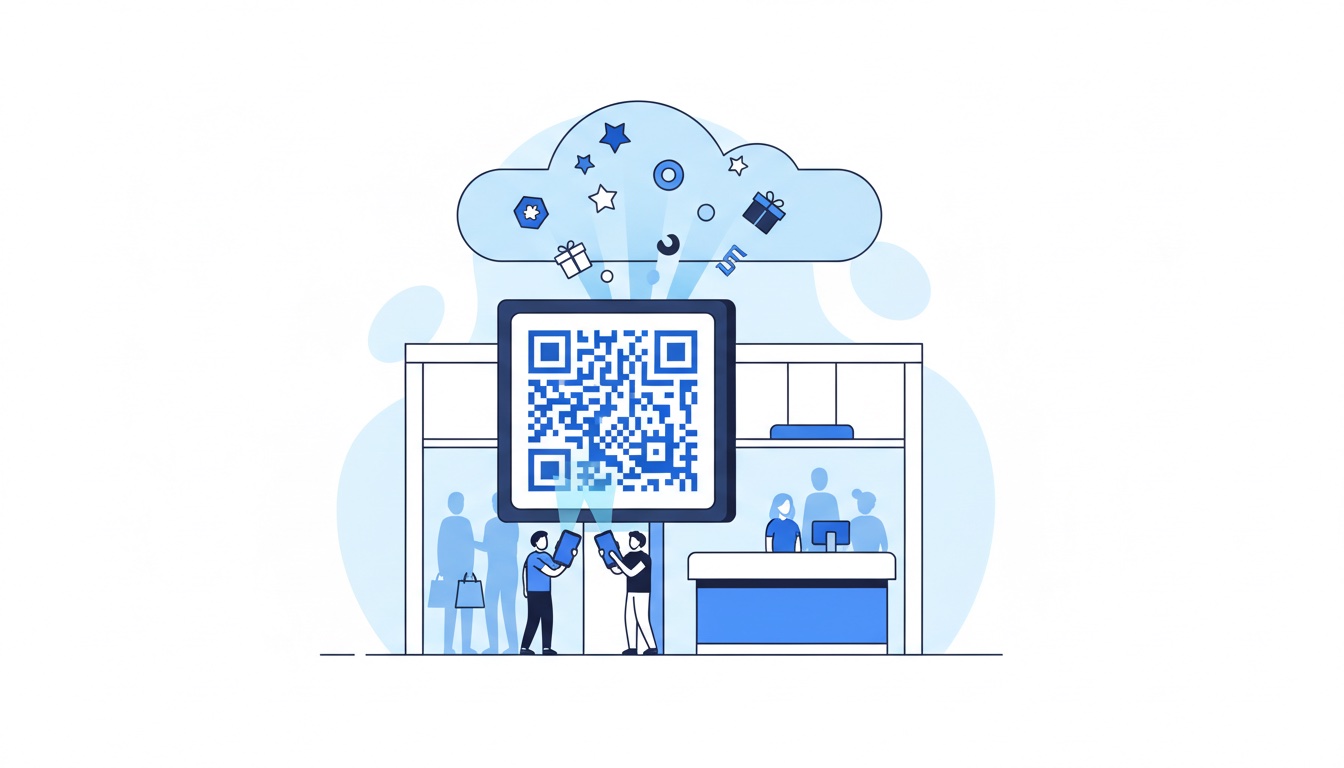
QR codes are the connective tissue between your physical store and your digital promotion. A shopper scans a code with their phone camera, lands on an entry form or game, enters their information, and you've captured a lead. The entire interaction takes 15-30 seconds.
QR code promotions work because they require zero friction: no app downloads, no account creation, no special hardware at the point of entry. Every smartphone made in the last five years has a built-in QR scanner.
Where to Place QR Codes In-Store
Placement determines participation rates. The most effective QR code positions for retail promotions:
- Endcap displays: High-visibility locations at the end of aisles where shoppers naturally pause. Pair the QR code with an eye-catching display showing the prize.
- Shelf talkers and hang tags: Small signs attached to shelves near featured products. Effective for brand-specific promotions where entry is tied to a product category.
- Checkout counter: Captive audience while waiting in line. Receipt-adjacent placement catches shoppers post-purchase.
- Window and entrance signage: Large-format QR codes visible from outside the store. These pull foot traffic from passersby who wouldn't otherwise enter.
- Fitting rooms (apparel): Shoppers have their phones out, they're browsing, and they have idle time between trying on items.
- Shopping carts and baskets: Visible throughout the entire shopping trip, generating repeated exposure to the promotion.
Size your QR codes for scanning distance
A QR code should be at minimum 1 inch x 1 inch for scanning within 6 inches (shelf talkers), 3-4 inches for scanning at arm's length (endcaps), and 8+ inches for scanning from several feet away (entrance signage). Too-small QR codes are the single most common reason in-store promotions underperform — if shoppers can't scan easily on the first try, they won't try a second time.
QR Code Campaign Types
| Campaign Type | How It Works | Best For |
|---|---|---|
| Scan-to-enter sweepstakes | QR leads to entry form, winner drawn at end of campaign | Email/data capture at scale |
| Scan-to-win instant game | QR leads to spin wheel or scratch card with instant result | High engagement, repeat visits |
| Scan for bonus entries | QR on shelf gives extra entries when product is purchased | Driving specific product sales |
| Scan to reveal offer | QR leads to mystery discount (10%-50% off) plus sweepstakes entry | Conversion at checkout |
| Multi-scan scavenger hunt | Multiple QR codes throughout store, collect scans to enter | Increasing dwell time and store exploration |
H-E-B, the Texas-based grocery chain, demonstrated the power of app-driven in-store promotions with their 2025 Big Thanks Texas Giveaway. Shoppers entered by scanning at checkout through the H-E-B app, linking a purchase moment to a digital sweepstakes entry. The program drove significant app downloads and repeat visits throughout the campaign period.
 Revup
Revup
Revup generates unique QR codes for your in-store promotions — each linking to branded entry forms, instant win games, or landing pages. No app required for shoppers.
Checkout and Point-of-Sale Promotions
The checkout counter is your highest-intent location for promotion engagement. Shoppers have already committed to a purchase, they're standing still, and they often have idle time while waiting. Checkout-adjacent promotions convert at significantly higher rates than mid-aisle placements.
Checkout Promotion Formats
- Post-purchase QR scan: A QR code printed on the receipt or displayed on the payment terminal screen. "You just saved $12 — now enter to win a $500 shopping spree." The purchase creates positive momentum that carries into the entry.
- Register display with tablet: A dedicated tablet at the register showing a branded entry form or instant win game. Cashiers can prompt shoppers to participate during the transaction.
- Receipt-based entry: Shoppers receive a unique code on their receipt and enter it online at a campaign landing page. This bridges the in-store purchase to a later digital engagement.
- Bag stuffers and inserts: Promotional cards included in shopping bags with QR codes for entry. These extend the promotion window beyond the store visit — shoppers discover the card at home and enter later.
Purchase-Linked Bonus Entries
Many retail promotions offer bonus entries for shoppers who make a purchase. This is legally permissible as long as you provide an equally accessible alternative method of entry (AMOE) that requires no purchase. The typical structure:
- Standard entry: Anyone can enter once for free via an online form (the AMOE)
- Bonus entries: Shoppers who make a qualifying purchase receive additional entries (e.g., one bonus entry per $25 spent)
- Disclosure requirement: Official rules must clearly state that no purchase is necessary and describe the free entry method
Purchase-linked entries require a free alternative
Under U.S. sweepstakes law, any promotion where a purchase increases the chance of winning must offer an equally accessible free entry method. The free method must provide the same odds per entry as the purchase method. Failing to offer this makes your promotion an illegal lottery. See the full requirements in our no-purchase-necessary guide.
For a complete breakdown of how purchase-linked promotions work legally, see our guide to no-purchase-necessary law and our purchase sweepstakes guide.
In-Store Gamification
Gamified promotions outperform standard entry forms because they add entertainment value to the interaction. Instead of "fill out this form for a chance to win," shoppers get "spin the wheel and find out if you won right now." The psychology is simple: immediate feedback loops are more motivating than delayed ones.
Spin-to-Win Wheels
Digital spin-to-win wheels are the most popular gamified format for retail. A shopper scans a QR code, enters their information, and spins a virtual wheel for an instant result. The wheel format works because it's visually engaging, universally understood, and creates a moment of excitement that shoppers are inclined to share.
Effective prize tiers for a retail spin-to-win:
- Grand prize (1-3 winners): High-value item — $500 shopping spree, premium product bundle, VIP experience
- Mid-tier (20-50 winners): $25-$50 store gift cards, popular products, branded merchandise
- Frequent wins (hundreds): 10-20% discount codes, free samples, small gift cards, loyalty points
- "Try again" / consolation: A small coupon or incentive to return — ensures even non-winners get value
The key to spin-to-win success is maintaining a high perceived win rate. When shoppers see others walking away with prizes (even small ones), they're more likely to participate. Aim for at least 1 in 5 spins resulting in some kind of win.
Digital Scratch Cards
Scratch-to-reveal mechanics work well for mobile-first entry. After scanning a QR code and completing the entry form, the shopper sees a digital scratch card on their phone. They swipe to reveal their result. The tactile interaction — even on a screen — creates a moment of suspense that standard forms cannot match.
Prize Drop and Match Games
For brands seeking higher engagement at flagship locations or during major promotional events, prize drop animations and match-to-win games add novelty. These formats work best when displayed on in-store screens or tablets rather than on the shopper's personal phone, creating a shared spectacle that draws other shoppers in.
Revup
Build instant win games with spin-to-win wheels, scratch cards, and more — all from the Revup platform. Set prize tiers, control win rates, and capture entries automatically.
For a deep dive into instant win mechanics, odds calculations, and compliance, see our complete guide to running instant win games.
In-Store Scavenger Hunt Promotions
Scavenger hunts turn the entire store into a promotional experience. Shoppers follow clues, scan QR codes at multiple locations, and earn entries or unlock prizes by completing the hunt. This format excels at two things standard promotions cannot do: dramatically increasing dwell time and ensuring shoppers visit specific departments or product displays.
How a Retail Scavenger Hunt Works
In-Store Scavenger Hunt Flow
Entry point
Shopper sees a scavenger hunt poster at the entrance or receives a prompt card at the door. They scan the first QR code to start — this captures their name, email, and phone number.
Follow the clues
Each QR code station includes a clue pointing to the next location in the store. Stations are placed near featured products, seasonal displays, or high-margin departments the retailer wants to highlight.
Scan at each station
Each QR scan is logged against the shopper's entry. Some hunts require scanning all stations; others award entries for each station scanned, incentivizing full completion but not requiring it.
Complete the hunt
After scanning the final station, the shopper is directed to a completion page — either a confirmation of sweepstakes entry or an instant win game as a reward for finishing.
Winner selection
Completed hunts are entered into a drawing, or each scan triggers an instant win check. Grand prize typically goes to a random drawing from all participants who completed the full hunt.
Scavenger Hunt Best Practices
- Keep it to 4-6 stations. More than six and completion rates drop sharply. The hunt should take 10-15 minutes, not 45.
- Make clues fun but not hard. The goal is store exploration, not puzzle-solving frustration. "Find the QR code near the seasonal fruit display" works. Cryptic riddles don't.
- Place stations near high-margin or featured products. Every station is a merchandising opportunity. The shopper is standing in front of the product for 10-20 seconds while they scan and read the next clue.
- Offer partial credit. Award entries for each station scanned, with bonus entries for completing the full hunt. This way, shoppers who can't finish still participate and you still capture their data.
- Run it on weekends or during events. Scavenger hunts work best with higher foot traffic. Launch during a grand opening, holiday weekend, or in-store event for maximum participation.
Scavenger hunts drive 3-4x the dwell time of standard promotions
A standard QR-scan sweepstakes entry takes 15-30 seconds. A scavenger hunt keeps shoppers engaged for 10-15 minutes while guiding them through multiple departments. That additional dwell time directly correlates with higher basket sizes — shoppers who spend more time in the store spend more money.
Seasonal and Event-Driven Retail Promotions
The most successful in-store promotions are tied to moments that shoppers already associate with excitement, deals, and shopping. Timing your promotion around a seasonal event or store milestone gives it built-in relevance and urgency.
Holiday Promotions
Major retail holidays — Black Friday, back-to-school, Valentine's Day, Mother's Day, Fourth of July — are natural anchors for in-store sweepstakes. Shoppers are already in a buying mindset, foot traffic is elevated, and the promotion adds a layer of engagement that differentiates your store from competitors running the same sales.
- Black Friday / Cyber Week: "Scan to win" at every register during the busiest shopping days of the year. Offer hourly prizes to maintain urgency throughout the day.
- Back-to-school: Family-oriented scavenger hunt through school supply aisles. Grand prize: a semester's worth of supplies or a technology package.
- Valentine's Day: "Gift of love" instant win — shoppers in gift departments scan to win premium items for their partner.
- Summer kickoff: Memorial Day through Labor Day running promotion with weekly prize drawings. Keeps engagement high through the slower summer retail months.
Store Milestone Promotions
- Grand opening: The single best moment for an in-store promotion. New stores need foot traffic, email lists, and local buzz — a sweepstakes delivers all three. Offer a compelling grand prize (e.g., "$1,000 shopping spree") to maximize initial interest.
- Anniversary: "Celebrating 10 years — 10 days of prizes." Daily drawings tied to the anniversary create multiple touchpoints and repeat visits.
- Remodel or relaunch: Use a scavenger hunt format to guide shoppers through the newly redesigned space, highlighting new departments and products.
- Community events: Tie your promotion to a local event, charity drive, or farmers' market partnership for community goodwill and cross-promotion.
Loyalty-Linked Promotions
If your store has an existing loyalty program, sweepstakes and contests are powerful tools for both rewarding current members and driving new signups. The loyalty program provides the data infrastructure; the promotion provides the excitement.
Rewarding Existing Members
- Loyalty-exclusive sweepstakes: Only loyalty members can enter. This rewards your best customers and creates FOMO for non-members watching from the sidelines.
- Points-for-entries: Members can redeem loyalty points for additional sweepstakes entries. This activates dormant point balances and increases perceived program value.
- Tier-based multipliers: Gold members get 3x entries, Silver gets 2x, standard gets 1x. This reinforces the value of higher loyalty tiers and encourages members to level up.
Driving New Signups
- "Join to enter" sweepstakes: Non-members can enter the sweepstakes by signing up for the loyalty program. This is the most effective loyalty acquisition mechanic available — the sweepstakes prize provides the incentive, and you capture a loyalty member for the long term.
- In-store signup bonus: Shoppers who sign up for the loyalty program in-store (versus online) get bonus sweepstakes entries. This drives in-store loyalty enrollment at the register or kiosk.
- Referral entries: Loyalty members earn extra entries for referring friends who also join and enter the promotion. This creates a viral loop that extends beyond the store.
Sweepstakes are the highest-converting loyalty signup incentive
Standard loyalty signup incentives (10% off first purchase, earn double points) convert at predictable but modest rates. Adding a sweepstakes entry as a signup bonus creates outsized perceived value — shoppers react to the potential of a grand prize far more than a guaranteed small discount. Pair the sweepstakes with the standard signup offer for maximum conversion.
Revup
Revup's form builder captures email, phone, address, and custom fields — everything you need to build a loyalty list from your in-store promotion.
How to Structure a Retail In-Store Contest
Regardless of format — QR code sweepstakes, instant win game, scavenger hunt, or loyalty-linked promotion — the structural process for planning and launching an in-store contest is consistent. Here's the step-by-step flow:
Retail In-Store Promotion Process
Define the goal
What's the primary outcome? Email capture, repeat visits, basket size increase, loyalty signups, product awareness? Your goal determines the format, prize structure, and success metrics.
Choose the promotion type
Sweepstakes (random drawing), instant win (pre-seeded moments), or contest (skill-based). Most retail in-store promotions are sweepstakes or instant win games.
Design the prize structure
Match prize value and type to your audience and goal. Grand prize should be compelling enough to drive initial awareness. Smaller prizes should be frequent enough to maintain engagement throughout the campaign.
Build the digital entry experience
Create the entry form, landing page, or instant win game. For QR code campaigns, generate unique QR codes linking to the entry experience. Test on multiple devices — shoppers will be using their personal phones.
Draft official rules
Include all legally required elements: eligibility, entry methods, AMOE, prize details, odds, winner selection, notification, and state-specific disclosures. File state registrations if required.
Produce in-store signage and materials
Design, print, and distribute all physical materials — posters, shelf talkers, register displays, receipt prints, bag inserts. Include abbreviated rules or link to full rules on every piece.
Train store staff
Brief cashiers, floor associates, and managers on the promotion mechanics, how to answer shopper questions, and how to direct shoppers to the entry point.
Launch, monitor, and adjust
Go live, monitor entry rates daily, and adjust signage placement or staff prompting based on participation data. Promote across digital channels simultaneously.
Promotion Types Matched to Retail Goals
Different in-store promotion formats serve different objectives. This table maps the most common retail goals to the promotion format best suited to achieve them:
| Retail Goal | Best Promotion Format | Why It Works | Complexity |
|---|---|---|---|
| Email / data capture | QR code sweepstakes | Low friction, high completion rates | Low |
| Increase foot traffic | Multi-week sweepstakes with daily entries | Shoppers return daily for new entries | Low-Medium |
| Boost basket size | Purchase-linked bonus entries | Spend thresholds incentivize larger carts | Medium |
| Increase dwell time | In-store scavenger hunt | 10-15 min engagement vs. 30-sec scan | Medium-High |
| Drive loyalty signups | Join-to-enter sweepstakes | Sweepstakes prize incentivizes enrollment | Low |
| Product awareness | Shelf display instant win | Shopper engages directly at the product | Medium |
| Social buzz / sharing | Spin-to-win with photo moment | Winners share results on social media | Medium |
| Grand opening traffic | High-value sweepstakes with QR entry | Compelling prize draws first visitors | Low-Medium |
| Holiday sales lift | Hourly instant win prizes | Urgency and frequency drive store visits | Medium |
In-Store Signage and Promotion Placement
The best promotion in the world doesn't matter if shoppers don't see it. In-store signage and placement strategy is the single biggest variable in participation rates — more important than prize value, game mechanic, or digital experience quality.
High-Traffic Placement Zones
- Store entrance (mandatory): A large-format poster or standing banner at the entrance establishes awareness before the shopper begins their trip. This is non-negotiable — every in-store promotion needs entrance signage.
- Checkout lanes: Counter cards, register screens, or hanging signs above the queue. Shoppers waiting in line are a captive audience with phones in hand.
- Endcaps: The highest-visibility aisle positions. Place QR codes alongside product displays for category-specific promotions.
- Department transitions: The spaces between departments where shoppers naturally slow down and reorient. Signage here catches attention during the navigation pause.
Signage Design Principles
- Lead with the prize. "Win a $500 Shopping Spree" is your headline, not "Scan This QR Code." Shoppers need to understand what's in it for them before they'll take action.
- Make the QR code prominent. The QR code should be the second-largest element on the sign, after the prize headline. Don't bury it in a corner.
- Include a 3-step instruction: "1. Scan the code. 2. Enter your info. 3. Find out if you won." Shoppers need to know the process is fast and simple before they commit.
- Add abbreviated rules. Include "No purchase necessary. See official rules at [URL]. Open to U.S. residents 18+. Ends [date]." on every piece of signage. This is both a legal requirement and a trust signal.
- Use brand colors and imagery. The signage should look like it belongs in your store. Generic, clip-art-style promotion signage feels untrustworthy and underperforms branded materials by a wide margin.
Every piece of promotion signage must include abbreviated rules
FTC guidelines and state laws require that promotional materials include key disclosures: no purchase necessary, eligibility restrictions, promotion end date, and how to access full official rules. Omitting these from in-store signage creates compliance risk — and it's the most frequently overlooked element in retail promotions.
Digital Signage and Screens
Retailers with digital signage networks (in-store screens, checkout monitors, digital endcaps) can run animated promotion content that significantly outperforms static signage. Moving visuals — a spinning wheel animation, a countdown timer, a scrolling winner feed — draw the eye and create urgency that static posters cannot.
If you have in-store screens, allocate a rotation slot to the promotion during the campaign period. Even 10-15 seconds per rotation cycle is enough to build awareness over a full shopping trip.
Compliance for In-Store Retail Promotions
In-store sweepstakes and contests are subject to the same federal and state laws as any other promotion. The physical retail context introduces a few additional considerations that online-only promotions don't face.
State Registration Requirements
Several states require sweepstakes registration and bonding before the promotion can legally run. The thresholds that matter most for retail:
- New York: Registration required if total prize value exceeds $5,000
- Florida: Registration and bonding required if total prize value exceeds $5,000
- Rhode Island: Registration required if total retail value of prizes exceeds $500. This requirement applies specifically to retail/in-store promotions (which is exactly what this article covers). Online-only sweepstakes are exempt from RI registration.
The Rhode Island $500 threshold is particularly relevant for retail. A promotion offering a $500 shopping spree as a grand prize triggers RI registration by itself. Even a promotion with fifty $15 gift cards as instant win prizes hits the threshold. If your promotion is open to Rhode Island residents, plan for this registration.
Rhode Island's $500 threshold catches most retail promotions
Rhode Island requires sweepstakes registration when the total retail value of all prizes exceeds $500 — but only for promotions with a physical retail component. Since this article covers in-store promotions, RI registration almost certainly applies if your prizes exceed $500 ARV. File early — RI requires registration before launch.
For a full state-by-state breakdown, see our guide to sweepstakes registration and bonding requirements.
No-Purchase-Necessary Compliance
This is the compliance issue that most frequently trips up retailers. If your promotion is linked to a purchase — even indirectly — you must provide an equally accessible free entry method. "Equally accessible" means:
- The free entry method must be clearly communicated in the store and on all promotional materials
- Free entries must carry the same weight (odds per entry) as purchase-linked entries
- The free method must not be materially more burdensome than the purchase method
- Staff must not discourage or fail to mention the free entry option
In practice, the most common AMOE for retail promotions is an online entry form accessible via a URL printed on signage. Some promotions also accept mail-in entries. The critical point: if a cashier is prompting shoppers to enter after purchase but the signage near the entrance doesn't mention the free entry option, you have a compliance problem.
For detailed guidance, see our no-purchase-necessary law guide and AMOE guide. For a broader comparison of entry formats, see our sweepstakes entry methods guide.
Display and Disclosure Requirements
In-store promotions must make certain disclosures available to participants before entry:
- Abbreviated rules on signage: No purchase necessary, eligibility, end date, how to access full rules
- Full official rules accessible: Link on signage, QR code to rules page, or printed copies available at customer service
- Odds disclosure: Either specific odds or a statement that odds depend on number of entries
- Winner list availability: How and when the winner list will be made available
For a complete walkthrough of official rules requirements, see our guide to writing sweepstakes official rules and how to run a sweepstakes legally.
In-Store Promotion Launch Checklist
Use this checklist to ensure your retail promotion is ready before launch day. Missing any of these items risks compliance issues, poor participation, or operational problems.
Retail In-Store Promotion Launch Checklist
- Promotion type defined (sweepstakes, instant win, or contest)
- Prize structure finalized with total retail value calculated
- Official rules drafted and reviewed by legal counsel
- State registrations filed (NY, FL, RI if total prize value exceeds thresholds)
- Free alternative method of entry (AMOE) set up and accessible
- Digital entry experience built and tested on iOS and Android
- QR codes generated, tested for scannability at intended distances
- Entry form captures required fields (name, email, age verification, opt-in)
- In-store signage designed with abbreviated rules included
- Signage printed and distributed to all participating locations
- Store staff briefed on promotion mechanics and common questions
- Staff trained to mention both purchase and free entry methods
- Digital signage rotation updated (if applicable)
- Landing page or widget live and accessible at QR code URLs
- Cross-channel promotion scheduled (email, social, website)
- Winner notification process documented
- Prize fulfillment logistics confirmed
- Post-campaign reporting plan in place (entry rates, conversions, ROI)
Measuring In-Store Promotion ROI
In-store promotions generate both direct and downstream value. Measuring ROI requires tracking metrics at each stage of the funnel — from awareness through entry to post-promotion conversion.
Entry and Engagement Metrics
- Total entries: The raw count of sweepstakes or instant win entries across all locations and the campaign period
- Entry rate: Entries divided by estimated foot traffic during the promotion period. A healthy in-store QR code promotion converts 2-5% of foot traffic into entries.
- Completion rate (scavenger hunts): What percentage of shoppers who started the hunt completed all stations? Aim for 60%+ completion.
- Entries per location: If running across multiple stores, compare participation rates to identify high-performing and underperforming locations. Differences usually indicate signage placement or staff engagement issues.
- Daily entry trend: Track entries over time to identify patterns. A declining trend mid-campaign suggests you need to refresh signage or add new promotional pushes.
Data Capture Metrics
- New email addresses captured: The single most valuable metric for most retail promotions. Compare against your pre-campaign list size for percentage growth.
- New loyalty signups (if applicable): If the promotion was tied to loyalty enrollment, track new member signups attributed to the campaign.
- Opt-in rate: What percentage of entrants opted in to future marketing communications? This determines the long-term value of the captured data.
- Phone numbers captured: Valuable for SMS marketing campaigns. Track alongside email for multi-channel reach.
Revenue and Traffic Metrics
- Foot traffic lift: Compare foot traffic during the promotion period against the same period in prior weeks or the prior year. Isolate the promotion effect from seasonal trends.
- Average basket size: Did shoppers who entered the promotion spend more per visit? Compare average transaction value for promotion participants versus non-participants.
- Repeat visit rate: For multi-entry promotions (daily entries allowed), track how many participants returned for additional entries. Each return visit is an additional sales opportunity.
- Redemption rate (instant win coupons): If instant win prizes included discount codes, track the percentage that were redeemed. This measures whether the promotion drove incremental purchases.
Calculating Total ROI
The ROI formula for in-store promotions accounts for both the direct revenue impact and the long-term value of captured data:
- Direct revenue lift: (Average basket increase during promotion) x (number of promotion participants)
- Data value: (New email/SMS subscribers) x (estimated lifetime value per subscriber based on your existing email/SMS revenue data)
- Total cost: Prize costs + signage production + platform fees + staff time + state registration fees
- ROI = (Direct revenue lift + Data value - Total cost) / Total cost
Most retail in-store promotions achieve positive ROI within the campaign period from direct revenue lift alone. The captured email and SMS subscribers provide ongoing value for months or years after the promotion ends.
For a complete framework on measuring promotional ROI, see our guide to measuring sweepstakes ROI.
Revup
Revup's analytics dashboard tracks entries, opt-ins, and engagement in real time across all your promotion touchpoints — in-store QR codes, landing pages, and embedded widgets.
Referral and Share Mechanics for In-Store Promotions
The most effective in-store promotions extend beyond the store walls through referral and sharing mechanics. When a shopper enters your promotion, they should have an easy way to bring friends into the funnel — both for additional entries and for broader campaign reach.
How Referral Works In-Store
After completing their entry, the shopper sees a share screen: "Share with a friend for bonus entries." They can text, email, or share a unique referral link via social media. When their friend enters the promotion (either in-store or online), the original entrant receives additional entries.
This mechanic is particularly powerful for retail because it converts a single store visit into multiple entries from people who may not have visited the store otherwise. The referred friend now knows about both the promotion and the store.
Social Sharing from In-Store Experiences
- Winner moments: When an instant win player wins, show a branded "I won!" screen optimized for screenshots and social sharing. Some retailers create physical photo-op stations near the promotion display.
- Shareable results: Even non-winning results can be shareable if framed positively — "I played the Summer Spin at [Store Name] — try your luck!" with a link to the promotion.
- Hashtag campaigns: Create a branded hashtag for the promotion and display it on signage. Monitor and reshare participant posts for additional organic reach.
Frequently Asked Questions
Do I need a mobile app for in-store promotions?
No. QR code-based promotions work through the shopper's mobile browser — no app download required. The shopper scans the QR code with their phone's camera, which opens a web-based entry form or game directly. This browser-based approach eliminates the friction of app downloads and works with virtually every smartphone. If you have an existing app with a significant install base, you can offer the promotion through both the app and QR codes to maximize reach.
How many entries should I allow per person?
This depends on your goal. For maximum data capture (one-time email collection), limit entries to one per person for the entire campaign. For driving repeat visits, allow one entry per person per day — this incentivizes shoppers to return daily. For purchase-linked promotions, you might allow one entry per qualifying purchase (with the AMOE limited to one free entry per day). Whatever limit you choose, state it clearly in your official rules and enforce it technically through the entry platform.
Can I require a purchase to enter an in-store sweepstakes?
No. Under U.S. sweepstakes law, you cannot require a purchase as the sole method of entry. You can offer bonus entries for purchases, but you must always provide a free alternative method of entry that gives the same odds per entry. The free method must be clearly communicated on in-store signage and in your official rules. For full details, see our no-purchase-necessary law guide.
What prize values work best for retail in-store promotions?
Grand prize value depends on your market and campaign scope. For single-location promotions, a $250-$500 shopping spree at your store is typically sufficient to drive strong participation. For multi-location or regional campaigns, $1,000-$5,000 grand prizes generate broader awareness. The most important factor isn't the grand prize value — it's the frequency of smaller wins. A promotion with a $500 grand prize and 200 instant win $10 gift cards will outperform a promotion with only a $2,000 grand prize and no smaller prizes, because participants see others winning and believe they can too.
How long should an in-store promotion run?
Two to four weeks is the sweet spot for most retail in-store promotions. Shorter than two weeks doesn't give enough time for word-of-mouth to build and repeat visits to accumulate. Longer than four weeks and engagement drops — signage becomes invisible, staff stops mentioning it, and shoppers develop "promotion fatigue." Exceptions: seasonal campaigns tied to a specific holiday (one week is fine) and major grand opening promotions (may warrant 6-8 weeks to establish the new location).
Do I need to register my in-store sweepstakes with any states?
If the promotion is open to residents of New York, Florida, or Rhode Island and total prize value exceeds state thresholds, yes. New York and Florida require registration when total prizes exceed $5,000. Rhode Island requires registration when total prize retail value exceeds $500 — an unusually low threshold that catches most retail promotions. Registration typically must be filed 30-90 days before launch depending on the state. See our state registration guide for full details.
Can I run the same promotion across multiple store locations?
Yes, and multi-location promotions are very common in retail. Use the same digital entry experience (landing page, instant win game) across all locations, with individual QR codes per store so you can track entry rates by location. Your official rules should clearly state which locations are participating. If locations span multiple states, ensure compliance with all applicable state laws — the promotion is governed by the laws of every state where participants can enter.
How do I handle the AMOE for an in-store-only promotion?
Even if your promotion is designed for in-store entry, the AMOE must be accessible without visiting the store. The standard approach is to provide an online entry form at a URL printed on promotional materials and your website. Some promotions also accept mail-in entries. The key is that the free entry method cannot require a store visit, since that would create a geographic barrier that could be construed as consideration. Display the AMOE URL prominently on in-store signage and on your website.
What data should I collect from in-store promotion entries?
At minimum: name, email address, and age verification (checkbox confirming 18+ or 21+ depending on your promotion). For maximum marketing value, also collect phone number (with SMS opt-in), zip code (for location-based marketing), and a marketing communications opt-in. Avoid asking for too many fields — every additional field reduces completion rates. For an in-store QR code scan, 4-5 fields is the maximum before shoppers abandon the form. You can always collect additional information through post-entry email sequences.
For additional industry-specific promotion ideas, explore our guides to ecommerce contest ideas, CPG sweepstakes examples, and restaurant sweepstakes ideas. Retail teams running online-to-offline campaigns can also review Revup's ecommerce promotions solution. For the complete legal framework, start with how to run a sweepstakes legally and our industry sweepstakes guide.
In-store promotions are one of the few marketing tactics that simultaneously drive foot traffic, capture first-party data, increase basket size, and build your email list. The brands doing this well aren't choosing between physical and digital — they're using promotions to connect the two, turning every store visit into a measurable marketing event.