Text-to-win sweepstakes are among the highest-converting entry methods available to marketers. A participant sees a keyword, sends a text, and enters your promotion in under ten seconds — no form to fill out, no app to download, no page to load. That simplicity is why SMS entry consistently outperforms web forms for in-store, event, broadcast, and out-of-home campaigns.
But that same simplicity conceals serious legal complexity. The Telephone Consumer Protection Act (TCPA) governs every automated text message sent to a mobile phone, and violations carry penalties of $500 to $1,500 per message. A single campaign that texts 50,000 entrants without proper consent could generate $25 million to $75 million in statutory liability. This is not hypothetical — TCPA class actions are among the most actively litigated consumer protection claims in the United States.
This guide covers everything you need to run a text-to-win sweepstakes that converts at scale without exposing your brand to regulatory and litigation risk: SMS entry mechanics, TCPA consent requirements, carrier compliance, auto-response formatting, marketing opt-in strategy, and performance measurement. For the broader legal framework that applies to all promotional formats, see our sweepstakes and contest rules hub.
How Text-to-Win Sweepstakes Work
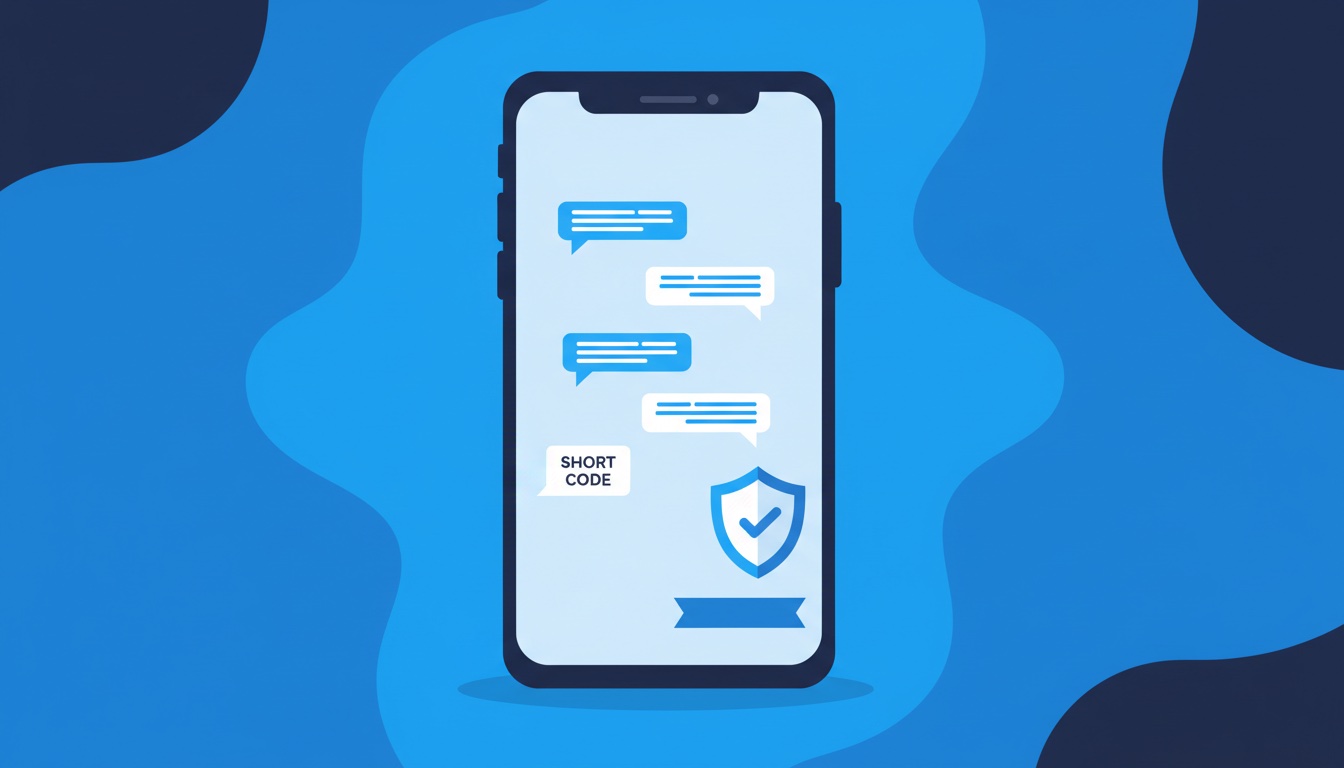
The text-to-win mechanic is deceptively straightforward. A participant texts a keyword (e.g., "WIN" or "SUMMER") to a short code or phone number, and the system processes the entry and responds with a confirmation. Behind that simple interaction is a multi-step flow involving message routing, consent capture, data storage, and compliance validation.
Basic Mechanics
Promotional materials — print ads, in-store signage, TV spots, radio reads, social posts, product packaging — display the call-to-action: "Text KEYWORD to 12345 to enter." When the participant sends the text, their message routes through a wireless carrier to an SMS aggregator, then to your sweepstakes platform. The platform validates the entry (checks keyword, deduplicates, verifies eligibility window) and sends an automated confirmation reply.
Entry Flow
In the simplest version, a single text constitutes a complete entry. More commonly, the confirmation message includes a link to a mobile-optimized web form where the participant provides additional information — name, email, age verification, and agreement to official rules. This hybrid approach (SMS trigger + web form completion) captures richer data while preserving the low-friction entry point.
Auto-Response and Confirmation
Every text-to-win system sends at least one automated reply: the entry confirmation. This message is legally critical — it must include specific disclosures required by both the TCPA and wireless carrier guidelines. We cover the exact requirements in the auto-response section below.
Winner Selection
Winner selection for text-to-win sweepstakes follows the same rules as any legally compliant sweepstakes: random drawing from the combined entry pool. Text entries are pooled with entries from all other methods (online form, mail-in, etc.) and a winner is selected using a certified random number generator. For more on random selection methods, see our guide to picking a random winner.
Text-to-Win Entry Flow
Participant sees the CTA
Promotional materials display: 'Text KEYWORD to 12345 to enter.' The keyword, short code, and required disclosures (Msg & Data Rates May Apply, terms link) must all be visible.
Participant sends the keyword
The entrant sends a text message with the keyword to the designated short code or phone number. This initial text constitutes the entry trigger and, in most implementations, the first expression of consent.
Platform validates the entry
The system checks the keyword, confirms the promotion is active, deduplicates against the phone number, and records the entry with a timestamp.
Auto-response confirms entry
An automated reply confirms the entry and includes all required disclosures: program name, message frequency, 'Msg & Data Rates May Apply,' STOP to opt out, HELP for help, and a link to terms/official rules.
Optional: data enrichment
The confirmation may include a link to a mobile web form where the entrant provides name, email, age verification, and marketing preferences. This step captures richer data without adding friction to the initial entry.
Entry enters the drawing pool
The validated entry joins the combined pool with all other entry methods. At promotion close, a random drawing selects the winner from the full pool.
TCPA Compliance: The Non-Negotiable
The Telephone Consumer Protection Act (TCPA), 47 U.S.C. Section 227, is the primary federal law governing automated text messages sent to mobile phones. Enacted in 1991 and repeatedly updated, the TCPA restricts the use of auto-dialers, prerecorded messages, and automated texts. Every auto-response in a text-to-win campaign falls under its scope.
The TCPA applies to your campaign regardless of whether the participant initiated contact. While the entrant's initial text-to-enter message is participant-initiated, every subsequent automated message you send — confirmation texts, follow-up messages, reminder texts, winner notifications, and especially marketing messages — must comply with TCPA consent requirements.
TCPA penalties are per-message, not per-campaign
TCPA violations carry statutory damages of $500 per unsolicited message, trebled to $1,500 per message for willful violations. These damages are per text, per recipient. A campaign that sends three unauthorized texts to 10,000 people creates potential liability of $15 million to $45 million. TCPA class actions are among the most frequently filed class actions in the United States, with thousands brought each year.
Express Written Consent vs. Express Consent
The TCPA distinguishes between two levels of consent, and the distinction matters enormously for text-to-win campaigns:
- Express consent: The participant knowingly agreed to receive calls or texts. Texting a keyword to a short code generally constitutes express consent to receive a response related to that interaction (the entry confirmation).
- Express written consent: A higher standard required for telemarketing and advertising messages. Must be in writing (including electronic), clearly authorize the specific types of messages, include the phone number being authorized, and not be a condition of purchase. This is what you need if you want to send marketing texts to entrants after the sweepstakes.
What Constitutes an "Autodialer"
The TCPA restricts the use of "automatic telephone dialing systems" (ATDS). The Supreme Court's 2021 decision in Facebook v. Duguid narrowed the definition of an ATDS to equipment that generates or stores numbers using a random or sequential number generator. However, many state laws use broader definitions, and the FCC continues to interpret the TCPA expansively. The safest approach: treat every automated SMS system as subject to TCPA requirements regardless of the technical architecture.
Transactional vs. Marketing Messages
This distinction is critical for text-to-win campaigns. Transactional messages — entry confirmations, winner notifications, required disclosures — relate directly to the participant's sweepstakes entry and generally require only express consent (which the initial text provides). Marketing messages — promotional offers, future campaign announcements, brand communications — require express written consent, which must be obtained separately and cannot be a condition of entry.
Revocation of Consent
The TCPA guarantees participants the right to revoke consent at any time, through any reasonable means. While STOP is the standard SMS opt-out keyword, courts have held that consent can also be revoked by calling customer service, sending an email, or even replying with non-standard language like "unsubscribe" or "cancel." Your system must be prepared to honor opt-out requests received through any channel, not just the STOP keyword. Once consent is revoked, all messaging must cease — there is no grace period.
FCC One-to-One Consent Rule (2025)
The FCC's December 2023 order, effective January 27, 2025, requires one-to-one consent for telemarketing messages. Consumers must consent to receive messages from one specific seller at a time. This means brands running text-to-win campaigns cannot share entrant phone numbers with partner companies for marketing without obtaining separate, specific consent for each partner. If your sweepstakes involves co-sponsors or promotional partners, each entity that will send marketing messages needs its own explicit consent from the entrant.
Opt-In Requirements for Text-to-Win
The opt-in is the legal and operational foundation of every text-to-win campaign. Getting it wrong doesn't just risk fines — it can invalidate your entire SMS list and expose you to class action litigation. Understanding the different consent standards and when each applies is essential.
Single Opt-In
In a single opt-in flow, the participant's initial text to the short code constitutes their consent. They text the keyword, receive a confirmation, and they're entered. This is sufficient for transactional messages only — entry confirmation, winner notification, and sweepstakes-related communications. It is generally not sufficient for ongoing marketing messages.
Double Opt-In
In a double opt-in flow, after the participant texts the keyword, the system responds with a message asking them to confirm their intent — typically by replying "YES" or "Y." Only after this second confirmation is the entry recorded and/or the marketing opt-in activated. Double opt-in is considered the gold standard for compliance because it creates an unambiguous consent record.
| Single Opt-In | Double Opt-In | |
|---|---|---|
| Consent mechanism | Keyword text = consent | Keyword text + confirmation reply |
| Sufficient for entry confirmation? | Yes | Yes |
| Sufficient for marketing messages? | Risky — debated | Yes — strong consent record |
| Entry friction | Lowest | Slightly higher (one extra reply) |
| Entry drop-off | Minimal | 5-15% drop at confirmation step |
| Legal defensibility | Moderate | Strong |
| Carrier preference | Accepted | Preferred |
| Recommended for | Transactional-only campaigns | Any campaign with marketing intent |
When Does Sweepstakes Entry Equal Marketing Consent?
It doesn't — not automatically. A participant who texts a keyword to enter a sweepstakes has consented to receive messages related to that sweepstakes entry. They have not consented to receive ongoing marketing communications, future promotions, product announcements, or any messages unrelated to the specific promotion they entered.
To add entrants to a marketing SMS list, you must obtain separate, affirmative consent that clearly describes the marketing messages they'll receive, the frequency, and the ability to opt out. This consent cannot be bundled with or required as a condition of sweepstakes entry. See our section on "Text-to-Win and Marketing Opt-In" below for implementation strategies.
Never make marketing opt-in a condition of entry
Under both the TCPA and sweepstakes law, you cannot require participants to consent to marketing messages in order to enter your sweepstakes. Entry must be available without subscribing to any messaging program. If your entry flow automatically opts participants into marketing, you've created both a TCPA violation (consent was not freely given) and a potential sweepstakes compliance issue (you've added consideration to a free entry method).
Short Codes vs. Long Codes vs. Toll-Free Numbers
The phone number you use for your text-to-win campaign affects cost, throughput, carrier compliance, and participant trust. There are three main options, each with distinct advantages and trade-offs.
| Dedicated Short Code | Shared Short Code | 10DLC (Long Code) | Toll-Free Number | |
|---|---|---|---|---|
| Format | 5-6 digit number (e.g., 12345) | 5-6 digit number (shared) | Standard 10-digit number | 10-digit (800, 888, etc.) |
| Monthly cost | $500-$1,000+ | $50-$200 | $2-$15 | $2-$15 |
| Setup time | 8-12 weeks (carrier approval) | Days to weeks | Days (registration required) | Days to weeks |
| Throughput | High (100+ msgs/sec) | Moderate (shared capacity) | Low-Moderate (limited by carrier) | Moderate (higher than 10DLC) |
| Carrier filtering risk | Very low (pre-approved) | Low (pre-approved) | Moderate (depends on registration) | Low-Moderate |
| Brand recognition | High (custom vanity codes) | Low (shared with others) | Moderate | Moderate |
| Best for | High-volume national campaigns | Budget-conscious campaigns | Local or regional campaigns | Moderate-volume campaigns |
| CTIA compliance | Required (part of approval) | Handled by provider | 10DLC registration required | Toll-free verification required |
Vanity Short Codes
A vanity short code maps to a word or brand name on the phone keypad — for example, 74986 spells "REVUP." Vanity codes are easier for participants to remember, especially in radio and TV campaigns where the number must be recalled from audio alone. They cost the same as random short codes but require an additional availability check during the application process. If the vanity code you want is taken, you can apply for a different one or request a transfer from the current leaseholder.
Choose your number type based on campaign scale
For national campaigns with TV, radio, or major retail distribution, a dedicated short code is worth the investment — high throughput, carrier pre-approval, and vanity number options (e.g., text WIN to 74986 / REVUP). For regional campaigns or brands running their first text-to-win promotion, toll-free numbers or 10DLC offer a lower-cost entry point with adequate throughput.
Entry Flow Design: Building the Participant Experience
The design of your text-to-win entry flow directly impacts conversion rates, data quality, and compliance posture. Every message in the flow must serve a purpose — confirm entry, capture data, provide required disclosures, or (with proper consent) extend the marketing relationship.
Minimal Flow: Entry Only
The simplest implementation: participant texts keyword, receives entry confirmation. One inbound message, one outbound message. This flow captures only the phone number and is best suited for campaigns where the primary goal is engagement volume rather than data capture.
Standard Flow: Entry + Data Enrichment
Participant texts keyword, receives confirmation with a link to a mobile web form. The form captures name, email, age verification, official rules acceptance, and optional marketing opt-ins. This is the most common implementation because it balances low entry friction with meaningful data capture.
Advanced Flow: Entry + Qualification + Marketing Opt-In
Participant texts keyword, receives confirmation. A follow-up message (within the transactional scope) links to a form that captures full contact details, qualification questions (e.g., purchase intent, product interest), and a separate, clearly disclosed marketing SMS opt-in. This flow maximizes data value but requires careful consent architecture.
Keyword Strategy
The keyword participants text to enter should be short, memorable, and unambiguous. Best practices for keyword selection:
- Keep it short: 3-7 characters is ideal. Longer keywords increase typing errors and entry abandonment.
- Make it relevant: "WIN," "SUMMER," or your brand name are better than random strings. The keyword should connect to the promotion or brand.
- Avoid confusion: Don't use keywords that are similar to existing keywords on the same short code (if using a shared code). Avoid words easily confused with STOP, HELP, or other system commands.
- Use unique keywords per channel: Assign different keywords to different media placements (WINRADIO, WINTV, WINSTORE) to enable channel-level attribution.
Regardless of which flow you choose, every auto-response must include the required disclosures covered in the auto-response requirements section below. For a broader view of how text-to-win fits with other entry methods, see our sweepstakes entry methods guide.
 Revup
Revup
Revup handles text-to-win entry flows end-to-end — from short code provisioning and keyword setup to auto-response compliance and winner selection.
Carrier Compliance and CTIA Guidelines
Federal law (TCPA) is only one layer of SMS compliance. Wireless carriers — Verizon, AT&T, T-Mobile, and their MVNOs — enforce their own rules through the CTIA (Cellular Telecommunications Industry Association) guidelines. Carrier non-compliance can result in your messages being filtered, your short code being suspended, or your campaign being shut down entirely — even if you're technically TCPA-compliant.
CTIA Short Code Monitoring Program
If you use a short code (dedicated or shared), your campaign is subject to CTIA monitoring. The CTIA conducts regular audits of short code programs to verify compliance with its Short Code Monitoring Handbook and Messaging Principles and Best Practices. Audits check for proper opt-in flows, required disclosures, opt-out functionality, and content standards.
Audit failures result in a Notice of Non-Compliance (NNC) with a defined remediation window — typically 5-10 business days. Failure to remediate within the window can result in suspension of the short code across all carriers. The CTIA does not provide advance notice of audits; they are conducted randomly and in response to consumer complaints.
Content Standards
Carriers prohibit certain content categories in SMS programs, regardless of consent. For sweepstakes, the most relevant restrictions include:
- Alcohol-related promotions: Must include age-gating and comply with TTB regulations. See our alcohol sweepstakes rules guide.
- Cannabis and CBD: Prohibited on most carrier networks, even in legal states
- Gambling or lottery language: Carriers may flag sweepstakes that use terms like "jackpot," "lottery," or "gambling" — use "sweepstakes," "drawing," and "winner"
- SHAFT content: Sex, Hate, Alcohol, Firearms, Tobacco — these categories face heightened scrutiny and additional carrier requirements
10DLC Registration
If you use a standard 10-digit long code (10DLC) instead of a short code, you must register your brand and campaign with The Campaign Registry (TCR). Carriers use this registration to approve your messaging program and assign a trust score that affects deliverability and throughput. Unregistered 10DLC traffic is increasingly filtered or blocked by major carriers.
The registration process involves two steps: brand registration (your company's identity and business details) and campaign registration (the specific messaging program, including sample messages and use case). Your trust score — based on business size, reputation, and messaging history — determines your throughput limits. New brands typically start with lower scores and can improve over time with compliant messaging practices.
Carrier suspension has no due process
Unlike TCPA enforcement (which involves litigation), carriers can suspend your short code or filter your messages immediately and without advance notice. If a carrier determines your campaign violates its guidelines, your text-to-win promotion stops working — mid-campaign, with no appeal timeline. Prevention is the only strategy: build compliance into the campaign from day one, not after a suspension notice.
Auto-Response Message Requirements
Every automated text message sent in a text-to-win campaign must include specific disclosures. These requirements come from three sources: the TCPA, the CTIA guidelines, and wireless carrier policies. Missing any required element can trigger compliance failures during audits, carrier filtering, or legal action.
Required Elements in the Entry Confirmation
The first auto-response — the entry confirmation — is the most critical message in the entire campaign. It must include:
- Program name or brand identifier: The participant must know who is texting them (e.g., "Revup Summer Sweepstakes")
- Confirmation of entry: Clear statement that the participant has been entered (e.g., "You're entered to win!")
- Message frequency disclosure: How many messages the participant should expect (e.g., "Up to 3 msgs" or "1 msg/entry")
- "Msg & Data Rates May Apply": This exact phrase (or substantially similar) is required by CTIA guidelines
- Opt-out instructions: "Reply STOP to opt out" or "Text STOP to cancel" — must be included in at least the first message and periodically thereafter
- Help instructions: "Reply HELP for help" — directs participants to support information
- Link to terms or official rules: A URL where participants can review the full terms, privacy policy, and official rules
Sample Compliant Entry Confirmation
Revup Summer Sweeps: You're entered to win! No purchase necessary. Up to 3 msgs. Msg&Data Rates May Apply. Reply STOP to opt out, HELP for help. Rules: revup.com/rules
STOP Response
When a participant replies STOP, your system must immediately send a single confirmation message and then cease all further messaging to that number. The STOP confirmation should follow this pattern:
Revup Summer Sweeps: You've been unsubscribed and will receive no more msgs. Reply HELP for help or contact support@revup.com.
HELP Response
When a participant replies HELP, your system must respond with program information and a way to reach customer support. The HELP response should include the program name, a brief description, a customer support phone number or email, and the STOP instructions:
Revup Summer Sweeps: For help, contact support@revup.com or call 1-800-555-0199. Msg&Data Rates May Apply. Reply STOP to opt out.
Character Limits and Formatting
A standard SMS message is limited to 160 characters. Compliance disclosures alone consume 80-100 characters, leaving limited room for creative messaging. This constraint is one of the defining challenges of text-to-win campaigns. Strategies for managing character limits:
- Use URL shorteners for rules and terms links (but use branded shorteners, not generic ones that carriers may flag)
- Abbreviate where CTIA allows: "Msg&Data Rates May Apply" is the accepted abbreviated form
- Split into two messages if necessary: The confirmation can span two SMS segments, but be aware this counts as two messages for frequency disclosure purposes
- Use MMS for richer content: MMS messages support 1,600 characters and can include images, giving more room for both creative and compliance content
Draft compliance content first, creative second
When writing auto-response messages, insert all required disclosures first — program name, frequency, rates, STOP, HELP, rules link. Count the remaining characters. That's your creative space. Working in the opposite direction (writing creative copy then squeezing in disclosures) invariably leads to missing required elements or exceeding character limits.
Text-to-Win and Marketing Opt-In: Building Your SMS List
One of the most valuable outcomes of a text-to-win campaign is the opportunity to build an SMS marketing list. Phone numbers captured through sweepstakes entry represent engaged consumers who have already interacted with your brand. But converting a sweepstakes entrant into a marketing subscriber requires navigating a careful legal boundary.
The Legal Boundary
Under the TCPA, consent to receive sweepstakes-related messages (entry confirmations, winner notifications) does not extend to marketing messages (promotional offers, product announcements, future campaigns). Marketing messages require separate express written consent that specifically describes the marketing content, message frequency, and the fact that consent is not required to enter the sweepstakes.
Implementation Strategies
There are two compliant approaches to capturing marketing consent during a text-to-win campaign:
- Post-entry opt-in message: After confirming the entry, send a separate message asking if the participant would like to receive marketing messages. The participant must affirmatively reply (e.g., "YES") to opt in. This must be clearly framed as optional and separate from the sweepstakes entry.
- Web form opt-in: Include a clearly labeled, unchecked checkbox on the data enrichment web form (linked from the confirmation text) that says something like: "Yes, I'd like to receive promotional text messages from [Brand]. Up to 4 msgs/month. Msg & Data Rates May Apply. Consent not required to enter sweepstakes." This is often the strongest approach because it creates a documented, written consent record.
What You Cannot Do
- Auto-enroll entrants into a marketing SMS program based on their sweepstakes entry alone
- Use pre-checked opt-in boxes on web forms
- Bundle marketing consent with sweepstakes entry (e.g., "By entering you agree to receive marketing messages")
- Send marketing messages to entrants who only consented to transactional sweepstakes communications
- Make marketing opt-in a condition of sweepstakes entry — this violates both TCPA and no purchase necessary requirements
Maximizing Marketing Opt-In Rates
Even though marketing opt-in must be voluntary, you can influence opt-in rates through smart positioning and clear value propositions. Strategies that increase marketing opt-in conversion without violating consent rules:
- Lead with value: Tell participants what they'll get by opting in — exclusive offers, early access, VIP content. "Get 10% off your next purchase" converts better than "Subscribe to our texts."
- Time it right: Present the marketing opt-in immediately after the entry confirmation, when engagement is highest. Participants are most receptive to your brand in the seconds after entering your sweepstakes.
- Set expectations: "Up to 4 msgs/month" is reassuring. Vague frequency language ("periodic messages") suppresses opt-in rates because participants fear spam.
- Make it easy: On the web form, the opt-in checkbox should be clearly visible (not buried below the fold) with concise language. On SMS, a single reply "Y" should complete the opt-in.
State-Specific SMS Regulations
The TCPA sets the federal floor, but several states impose additional requirements that apply to text-to-win campaigns. Failing to comply with state-level SMS laws can create liability even when your campaign is TCPA-compliant at the federal level.
States with Enhanced SMS Protections
- Florida (Florida Telephone Solicitation Act): Requires prior express written consent for all commercial text messages. Florida's definition of "commercial" is broader than the TCPA's "telemarketing" trigger, potentially covering some sweepstakes-related messages. Effective July 1, 2021, Florida also imposed registration requirements for certain commercial callers.
- Oklahoma: The Oklahoma Computer Crimes Act restricts unsolicited text messages and imposes penalties beyond federal TCPA damages.
- Connecticut: Requires "clear and conspicuous" disclosure of material terms in any commercial electronic message, which includes SMS.
- Maryland: Imposes additional consent requirements for automated telephone communications, including texts.
- Washington: The Washington Automatic Dialing and Announcing Device Act requires explicit prior consent for automated messages sent to mobile phones and provides a private right of action.
- California (CCPA/CPRA): While not SMS-specific, California's privacy laws affect how you collect, store, and use phone numbers captured through text-to-win campaigns. Entrants have the right to request deletion of their data, which must extend to phone numbers captured via SMS entry.
- Illinois (Biometric Information Privacy Act): While primarily focused on biometric data, Illinois's aggressive privacy enforcement posture means any data collection — including phone numbers — faces heightened scrutiny. Illinois also has a strong consumer fraud act that can apply to deceptive promotional practices.
In addition to SMS-specific laws, many states have state-level sweepstakes regulations that affect text-to-win campaigns — including registration requirements in New York, Florida, and Rhode Island (where the $500+ threshold applies to retail/in-store promotions only) for promotions above certain prize thresholds. These state-level requirements overlap with the broader legal requirements for running contests and sweepstakes, so brands running text-to-win campaigns should review both SMS-specific and general promotional compliance obligations.
National campaigns must comply with the strictest state
If your text-to-win campaign is open to residents of all 50 states, you must comply with the most restrictive state law that applies. In practice, this means designing your consent flow and disclosures to satisfy Florida's requirements (the most aggressive state for SMS regulation) unless you geo-fence certain states out of the promotion.
Text-to-Win Compliance Checklist
Use this checklist before launching any text-to-win campaign. Each item addresses a specific compliance requirement from the TCPA, CTIA guidelines, carrier policies, or sweepstakes law.
Pre-Launch Compliance Checklist
- Short code or phone number is properly provisioned and registered with carriers (CTIA for short codes, TCR for 10DLC, carrier verification for toll-free)
- Keyword is unique, not trademarked, and correctly configured in the SMS platform
- Entry confirmation auto-response includes all required disclosures: program name, frequency, Msg & Data Rates, STOP, HELP, rules link
- STOP keyword correctly triggers immediate opt-out and confirmation message
- HELP keyword correctly triggers help/support response with contact information
- Official rules specifically describe the text-to-win entry method, including keyword, number, message frequency, and data rates disclosure
- Official rules include a valid AMOE (online form or mail-in) as required by sweepstakes law
- Marketing opt-in is separate from sweepstakes entry and not a condition of participation
- Marketing consent language meets TCPA express written consent requirements (describes message types, frequency, rates, and voluntary nature)
- All promotional materials displaying the text-to-win CTA include required disclosures: Msg & Data Rates May Apply and terms/rules link
- State registration completed for applicable states (NY, FL, RI) based on prize value
- Age verification mechanism in place if promotion is restricted to 18+ or 21+ (especially for alcohol-related promotions)
- Data retention and privacy policy updated to cover phone number collection via SMS entry
- Throughput tested — number type can handle expected entry volume without carrier throttling
- Opt-out processing confirmed — STOP triggers removal from all message types within required timeframe
- Consent records are being archived with timestamps, phone numbers, and keyword data for litigation defense
Common Mistakes in Text-to-Win Campaigns
These are the errors we see most frequently in text-to-win campaigns — and each one carries real compliance or performance consequences.
1. Bundling Marketing Consent with Sweepstakes Entry
This is the single most common TCPA violation in text-to-win campaigns. Brands assume that because a participant texted their short code, they've consented to receive marketing messages. They haven't. The initial text constitutes consent for transactional messages related to the sweepstakes. Marketing messages require separate, affirmative, documented consent. Every marketing text sent to an entrant who only consented to sweepstakes communications is a potential $500-$1,500 TCPA violation.
2. Missing Required Disclosures in Auto-Responses
Omitting "Msg & Data Rates May Apply," STOP instructions, or program identification from auto-response messages. These omissions are caught during CTIA audits and can result in short code suspension. They're also ammunition in TCPA litigation. The fix is simple: use a template for all auto-response messages that includes every required disclosure, then fill in the creative content around it.
3. No AMOE Offered
A text-to-win entry that requires sending a text message could be argued to involve "consideration" — the participant incurs messaging charges. While standard messaging rates are generally not treated as consideration, the safest approach is to always offer a free alternative method of entry such as an online form or mail-in option. Omitting the AMOE entirely converts your sweepstakes into a potential lottery.
4. Inadequate Opt-Out Processing
When a participant texts STOP, your system must immediately cease all messages to that number — not just marketing messages, but all messages. Delayed opt-out processing (even by hours) creates per-message liability for every text sent after the STOP request. Test your opt-out flow before launch and monitor it throughout the campaign.
5. Using Unregistered Numbers
Sending text-to-win campaign messages from an unregistered 10DLC number or an unverified toll-free number. Carriers increasingly filter unregistered traffic, which means your entry confirmations may never reach participants — they'll text the keyword and receive nothing in return. Register your number and verify deliverability before launching any campaign.
6. Ignoring Throughput Limits
A national TV spot or major retail promotion can generate thousands of entries per minute. If your number type can't handle the volume, participants will experience delayed confirmations or no response at all. Dedicated short codes handle 100+ messages per second; 10DLC numbers may be limited to 15-75 messages per segment. Match your number type to your expected peak volume.
7. No Age Gate for Restricted Products
Running a text-to-win promotion for alcohol, tobacco, or other age-restricted products without an age verification step. Carrier guidelines require age-gating for age-restricted content, and FTC regulations prohibit marketing age-restricted products to minors. Implement age verification in the entry flow — either via the auto-response (reply with birth year) or the web form.
8. Failing to Archive Consent Records
If your brand faces a TCPA claim, you must produce evidence that each recipient consented to receive messages. This means logging and archiving every inbound keyword text (with timestamp, phone number, and keyword), every opt-in confirmation, and every marketing consent action. If you can't produce the consent record, courts will presume consent was not obtained.
Revup
Revup automatically archives all consent records, manages opt-in/opt-out processing, and generates compliant auto-responses — so your text-to-win campaigns are audit-ready from day one.
Text-to-Win Campaign Ideas
Text-to-win works across industries and campaign types. The key is matching the SMS entry mechanic to the context where participants will encounter it. Here are five proven formats.
Retail and In-Store Promotions
Point-of-sale signage, shelf talkers, and receipt messaging drive text-to-win entries from customers who are already in the buying mindset. A grocery chain running "Text FRESHWIN to 12345" on shelf displays generates entries from shoppers who see the promotion while browsing. This format pairs naturally with purchase-based sweepstakes — the text entry serves as the AMOE while a receipt-upload path provides purchase-verified entries.
Placement matters. The most effective in-store text-to-win placements are at the point of decision (shelf-level signage near the promoted product) and at the point of wait (checkout lanes, deli counters, pharmacy pickup). Anywhere a customer has idle time and a phone in hand is a high-conversion location for SMS entry.
Event and Venue Activations
Concerts, sporting events, festivals, and trade shows are ideal text-to-win environments. Attendees have their phones in hand, they're engaged and receptive, and the promotional display (jumbotron, banner, stage screen) reaches a captive audience. A "Text HALFTIME to 55555 to win courtside seats" campaign at a basketball game can generate thousands of entries in a 15-minute window.
The key to event-based text-to-win is timing. Display the CTA during natural breaks — halftime, intermission, between sets — when attendees are looking at their phones anyway. The urgency of a limited entry window ("Text in the next 10 minutes") drives significantly higher conversion than an open-ended campaign running throughout the event.
Broadcast Media Tie-Ins
Radio and television spots with text-to-win CTAs combine mass reach with immediate action. Radio is particularly effective — listeners are mobile, often in cars or at work, and texting a keyword is the lowest-friction response to an audio prompt. "Text SUMMER to 77777 for a chance to win a vacation" during morning drive time leverages peak listenership for maximum entry volume.
For television, display the keyword and short code on-screen for at least 8-10 seconds — long enough for viewers to grab their phones and type the message. Pair the visual CTA with a verbal call-to-action from the host or announcer. Consider using a unique keyword per show or time slot to measure which broadcasts drive the most entries.
Product Packaging and Inserts
On-pack or in-pack text-to-win prompts turn every product unit into a promotional touchpoint. A beverage brand printing "Text the code under this cap to 12345 to enter" on millions of bottles creates ongoing entry opportunities tied directly to product consumption. This format works especially well for repeat-purchase products where consumers see the CTA multiple times.
The economics are compelling: once the packaging is printed, the promotional touchpoint exists for the entire product lifecycle at zero incremental media cost. A CPG brand producing 10 million units with an on-pack text-to-win CTA has effectively placed 10 million "ads" for the cost of a packaging plate change.
Cross-Channel Campaigns
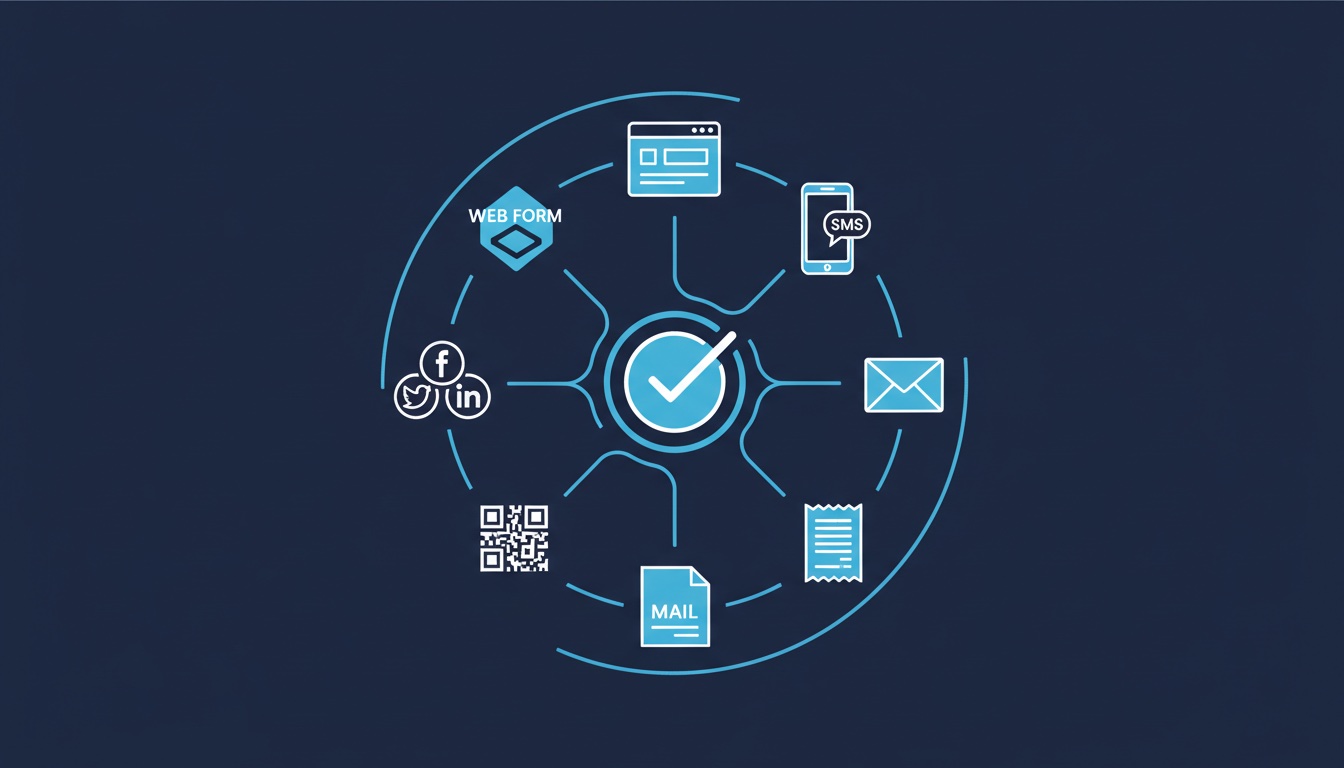
The strongest text-to-win campaigns don't rely on SMS alone. They use text-to-win as one entry channel within a broader multi-channel sweepstakes that also includes an online form entry, social media contest or giveaway, and potentially an email-driven campaign. The text-to-win component captures mobile-first audiences while the web form captures desktop users and serves as the primary AMOE. All entries feed into the same drawing pool.
In a cross-channel structure, each entry method serves a distinct audience and context: SMS for on-the-go mobile users, web forms for at-desk audiences, social media for community engagement and viral reach. Pairing text-to-win with Instagram giveaways is especially effective — the social post drives awareness while SMS captures the entry, giving you both social proof and a direct mobile contact. The unified drawing pool ensures compliance with the equal odds requirement, and the diversified entry paths maximize total participation across all audience segments.
Measuring Text-to-Win Performance
Text-to-win campaigns generate clear, measurable data at every stage of the entry funnel. Track these metrics to evaluate performance and optimize future campaigns.
Key Metrics
| Metric | What It Measures | Benchmark Range | How to Improve |
|---|---|---|---|
| Keyword send rate | % of people who see the CTA and text the keyword | 2-8% (varies by media type) | Clearer CTA, higher-value prize, simpler keyword |
| Entry completion rate | % of keyword senders who complete full entry (if web form required) | 60-80% | Shorter form, mobile optimization, faster load time |
| Marketing opt-in rate | % of entrants who consent to ongoing marketing | 30-50% | Clear value proposition, separate consent step |
| SMS list growth | Net new subscribers added during the campaign | Varies by campaign scale | Broader media reach, longer campaign window |
| Opt-out rate | % of subscribers who text STOP during or after campaign | 2-5% per campaign | Appropriate message frequency, relevant content |
| Cost per entry | Total campaign cost / total entries | $0.50-$3.00 | Higher-reach media, lower short code costs, better CTA |
| Carrier deliverability | % of auto-responses successfully delivered | 95-99% | Proper number registration, content compliance, throughput capacity |
Attribution and ROI
Text-to-win campaigns offer cleaner attribution than most digital marketing channels. Each entry is tied to a unique phone number and timestamp, and the keyword itself can be unique per media channel (e.g., "WINRADIO" for radio, "WINTV" for television, "WINSTORE" for in-store). This allows precise channel-level attribution of entry volume, marketing opt-ins, and downstream conversion.
To calculate total campaign ROI, factor in all costs (short code lease, per-message fees, platform subscription, media spend, prize value, administration) against all value generated (email addresses captured, SMS subscribers acquired, purchase data collected, brand impressions delivered). For a complete framework on measuring promotion ROI, see our sweepstakes ROI guide.
Post-Campaign Analysis
After the campaign concludes, analyze entry patterns to inform future text-to-win promotions. Key questions to investigate:
- Which media channels drove the most keyword texts? Which drove the highest-quality entries (measured by form completion and marketing opt-in)?
- What time of day and day of week saw peak entry volume? This informs media placement timing for future campaigns.
- What was the drop-off rate between initial keyword text and web form completion? If it's above 40%, your form is too long or your landing page isn't mobile-optimized.
- How did carrier deliverability perform? Any evidence of throttling or filtering during peak periods?
- What was the marketing opt-in conversion rate, and how does it compare to your other acquisition channels?
Text-to-Win and Alternative Methods of Entry
Every sweepstakes must provide a free entry path. Whether text-to-win itself qualifies as a free entry method is a nuanced question.
The argument for counting text-to-win as a free entry: most mobile plans include unlimited texting, and standard carrier charges for a single text message are minimal (typically $0.00-$0.20). Courts and regulators have generally not treated standard messaging rates as "consideration" that would convert a sweepstakes into a lottery.
The argument against: some participants have prepaid or limited plans where each text incurs a meaningful charge. Additionally, the "Msg & Data Rates May Apply" disclosure itself acknowledges that the entry is not entirely free. Some regulators may view this as sufficient consideration to require a separate AMOE.
The safe practice — and the one recommended by virtually all sweepstakes attorneys — is to always offer a web-based or mail-in AMOE in addition to the text-to-win entry. This removes any argument about consideration and ensures compliance with the no purchase necessary requirement. The online form AMOE should be prominently disclosed in the official rules and on all promotional materials.
Use the web form AMOE as your data enrichment tool
The online form that serves as your AMOE also serves as your most powerful data capture tool. While text-to-win entries initially capture only a phone number, the web form AMOE captures name, email, demographics, and marketing preferences. Promote both entry methods: text-to-win for mobile audiences and the web form for desktop users and data-rich entry.
Drafting Official Rules for Text-to-Win
Your official rules must specifically address the text-to-win entry method. Standard sweepstakes rules templates often omit SMS-specific requirements. At minimum, the rules must include:
- Exact keyword and number: "To enter via text message, text [KEYWORD] to [NUMBER]" with the specific keyword and short code/number
- Message and data rates disclosure: Statement that standard message and data rates may apply
- Device requirements: Statement that a text-messaging-capable mobile device is required for SMS entry
- Carrier responsibility disclaimer: Statement that the sponsor is not responsible for delayed, misdirected, or undelivered messages
- Entry limits: Whether multiple text entries are allowed and, if so, how many per day/week/promotion period
- Opt-out instructions: How to stop receiving messages (text STOP)
- AMOE description: Complete description of the alternative free entry method
- Compatible carriers: List of supported carriers (or statement that the program is available on all major U.S. carriers)
- Privacy: How phone numbers will be used and stored, including whether they will be shared with third parties
Sample Official Rules Language for SMS Entry
SMS Entry: During the Promotion Period, text [KEYWORD] to [SHORT CODE] from a mobile phone with text messaging capability. You will receive an automated reply confirming your entry. Standard message and data rates may apply depending on your mobile carrier plan. Text messaging entry is available on participating carriers: AT&T, T-Mobile, Verizon, and all major U.S. carriers. The Sponsor is not responsible for delayed, misdirected, garbled, or undelivered text messages. Limit one (1) text message entry per person per day during the Promotion Period.
For a full walkthrough of official rules drafting, see our guide to writing sweepstakes official rules.
Frequently Asked Questions
Can I send marketing texts to everyone who entered my text-to-win sweepstakes?
No — not without separate consent. Texting a keyword to enter a sweepstakes constitutes consent to receive messages related to that sweepstakes (entry confirmation, winner notification). It does not constitute consent to receive marketing messages. To add entrants to a marketing SMS list, you must obtain separate express written consent that clearly describes the marketing messages, frequency, and the fact that consent is not a condition of sweepstakes entry. Sending marketing texts without this consent is a TCPA violation.
How much does it cost to run a text-to-win sweepstakes?
Costs vary based on number type and campaign scale. A dedicated short code runs $500-$1,000+ per month plus setup fees and a 8-12 week approval process. Toll-free or 10DLC numbers cost $2-$15 per month. Per-message costs typically range from $0.01-$0.05 per SMS segment. Add platform fees, carrier fees, and any web form development costs. A mid-scale national campaign might cost $3,000-$10,000 total, while an enterprise campaign with a dedicated short code can run $15,000-$50,000+.
Is text-to-win considered a free entry method, or do I need an AMOE?
Text-to-win is generally considered a free or near-free entry method, since standard messaging rates are typically not treated as "consideration" under sweepstakes law. However, best practice — and the recommendation of virtually all sweepstakes attorneys — is to always offer an additional free AMOE (online form or mail-in) alongside the text-to-win option. This eliminates any argument that the messaging charges constitute consideration. See our AMOE guide for implementation details.
What happens if my short code gets suspended mid-campaign?
If a carrier or the CTIA suspends your short code, your text-to-win entry method stops working immediately. Participants who text the keyword will not receive a response, and their entries may not be recorded. This is why pre-launch compliance is critical: ensure your auto-responses include all required disclosures, your opt-out processing works correctly, and your content complies with carrier guidelines. If suspension occurs, you must resolve the compliance issue with the carrier/CTIA before messaging resumes. Your AMOE (online form or mail-in) becomes the primary entry method during any outage.
Can I run a text-to-win sweepstakes for an alcohol brand?
Yes, but with additional requirements. Alcohol-related SMS programs must include age-gating (verifying the entrant is 21+), comply with TTB regulations, and meet carrier content standards for age-restricted products. The entry flow must include an age verification step before confirming entry. Additionally, some carriers impose additional restrictions on alcohol-related messaging programs. See our alcohol sweepstakes rules guide for full details.
How do I handle text-to-win entries from landlines or VoIP numbers?
Not all phone numbers can send or receive text messages. If a participant attempts to text from a landline or incompatible VoIP number, the message will either fail to deliver or arrive at your system without a valid return path for the auto-response. Your official rules should specify that a text-messaging-capable mobile device is required for SMS entry and direct participants without SMS capability to the alternative entry method (web form or mail-in).
Revup
Ready to launch a compliant text-to-win sweepstakes? Revup handles short code setup, TCPA-compliant auto-responses, consent management, and winner selection — all from one platform.
Text-to-win sweepstakes remain one of the most effective entry methods for reaching mobile-first audiences, driving engagement at physical locations, and building valuable SMS subscriber lists. The compliance requirements are substantial — TCPA, CTIA, carrier policies, and state regulations all apply — but they're manageable with proper planning and the right platform infrastructure.
For the complete guide to all entry methods and how they compare, see our sweepstakes entry methods guide. For a step-by-step walkthrough of running a compliant sweepstakes from start to finish, see how to run a sweepstakes legally. And for a broader view of sweepstakes law and compliance, visit our sweepstakes and contest rules hub.